
HBOT for Wellness Recovery in Active Adults: A Practical Guide
If you train hard, work long hours and still try to squeeze in a social life, “recovery” can start to feel like a luxury. Yet it’s often the missing piece between feeling consistently energised and feeling like you’re always catching up. That’s where hyperbaric oxygen therapy (HBOT) enters the conversation. You may have heard it mentioned by athletes, biohackers or clinics offering advanced therapies—but what does the science actually say, and how might it fit into a sensible wellness routine for active adults?
In this guide, we’ll walk through what HBOT is, how it works (in plain English first, then a little deeper), what benefits it may support for wellness recovery, what a typical session feels like, and how to decide if it’s a good option for you. We’ll also cover practical recovery steps you can use right away, because the best outcomes come from stacking the fundamentals with the right technology—rather than relying on any single intervention.
What “wellness recovery” really means for active adults
Recovery isn’t just what happens after a marathon or a heavy deadlift session. For most active adults, it’s the ongoing process of restoring capacity—physically, mentally and metabolically—so you can keep showing up for training, work and life without running on empty.
Wellness recovery typically includes:
- Muscle and connective tissue repair after training or impact sports
- Nervous system downshifting after stress, travel, poor sleep or high workload
- Immune resilience during busy periods
- Brain and cognitive recovery after long screen time, decision fatigue and disrupted sleep
- Inflammation management so normal training stress doesn’t tip into persistent aches and niggles
Active adults often do many things “right”, yet recovery still lags due to a few common bottlenecks:
- Under-sleeping (especially shortened deep sleep)
- Eating enough protein but not enough total energy, fibre, or micronutrients
- Training intensity outpacing recovery capacity
- Chronic stress elevating baseline arousal
- Limited time for restorative practices during the week
HBOT doesn’t replace the basics, but it may support recovery by improving oxygen availability to tissues and influencing cellular processes involved in repair and inflammation control.
HBOT explained: what it is and what it isn’t
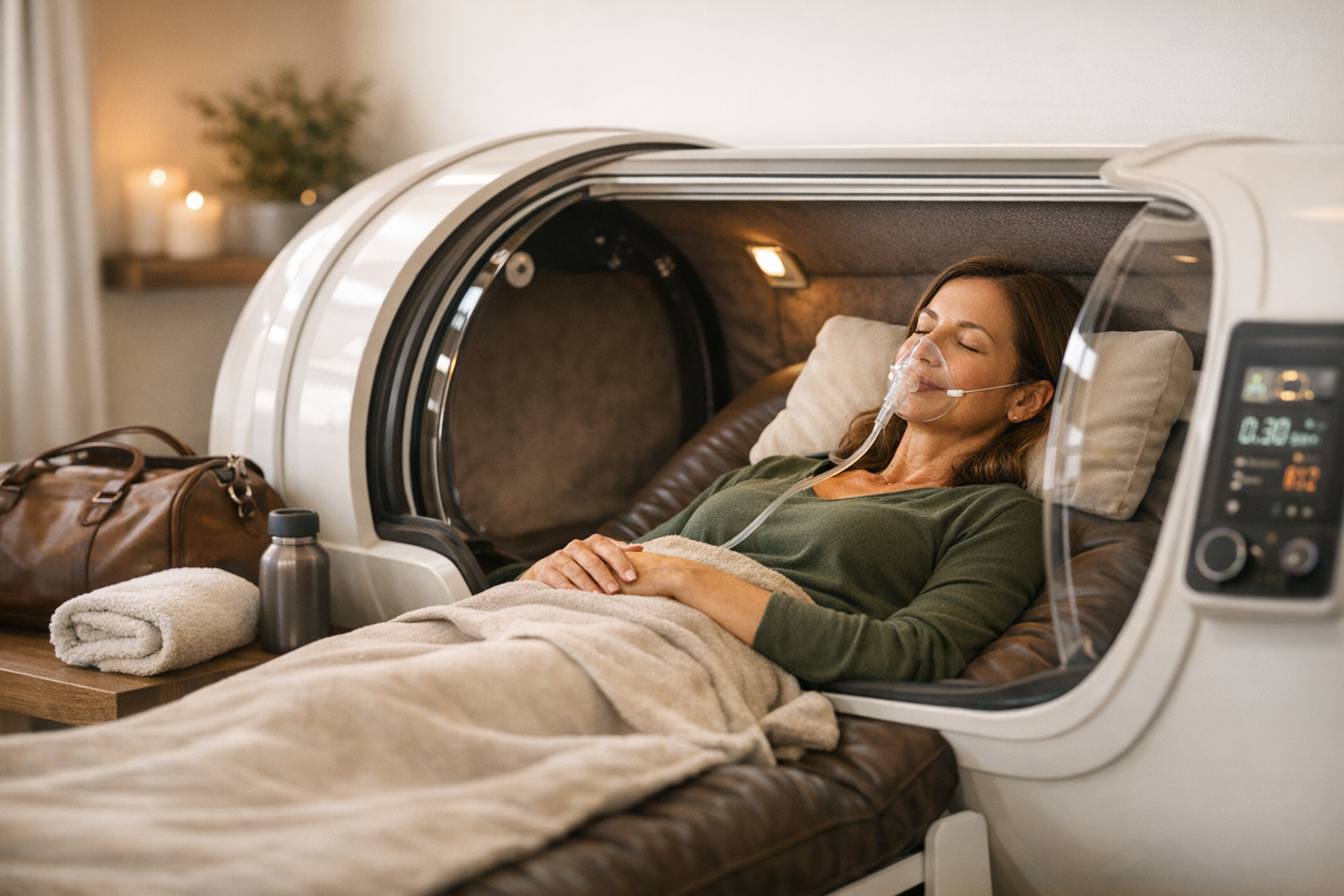
Hyperbaric oxygen therapy (HBOT) involves breathing oxygen in a pressurised chamber. The pressure is typically higher than normal atmospheric pressure, allowing more oxygen to dissolve into the plasma (the liquid portion of your blood), not just carried by haemoglobin. This can increase oxygen delivery to tissues temporarily.
Two important clarifications:
- HBOT is not the same as a quick “oxygen bar”. Those deliver oxygen at normal pressure and do not create the same physiological effects.
- Not all chambers are equal. Medical-grade and clinical hyperbaric systems operate at defined pressures with protocols and safety standards. “Mild hyperbaric” options can feel similar but may deliver different physiological exposure.
A simple way to picture it
Think of oxygen as a key ingredient for producing energy (ATP) and supporting tissue repair. Under normal conditions, your blood carries oxygen mainly on red blood cells. Under pressure, more oxygen dissolves directly into the plasma, which can help oxygen reach areas with compromised circulation or high demand.
A slightly more scientific view (without the headache)
Increased dissolved oxygen can influence:
- Mitochondrial function (energy production pathways)
- Inflammatory signalling and oxidative stress balance (dose matters)
- Angiogenesis (formation of new blood vessels) in certain contexts
- Collagen synthesis and wound healing pathways
- Immune function and antimicrobial activity in specific settings
In clinical medicine, HBOT is used for specific indications under defined protocols. In a wellness context, the interest is in how controlled oxygen exposure may support recovery, resilience and performance when used thoughtfully as part of a broader plan.
How HBOT may support wellness recovery for active adults
Let’s translate the physiology into the outcomes active adults care about—without overpromising. Research is evolving, and individual responses vary, but HBOT may support several recovery-relevant areas.
1) Post-training tissue recovery and soreness management
Training creates micro-damage in muscle and connective tissue—a normal and necessary stimulus for adaptation. The goal of recovery is not to eliminate that process, but to support efficient repair so you can train consistently.
HBOT may support recovery by:
- Increasing oxygen availability to recovering tissues
- Supporting cellular repair processes that are oxygen-dependent
- Influencing inflammatory balance after intense training blocks
Realistic expectation: some people report feeling “fresher” after a series of sessions, particularly during high training loads or after impact-heavy sport. It’s not typically an instant, one-session transformation.
2) Energy, mental clarity and “brain recovery”
If you’re physically active but cognitively overloaded (meetings, deadlines, constant notifications), recovery needs to include the brain and nervous system. Oxygen plays a role in brain metabolism, and controlled hyperbaric exposure is being studied for effects on cognitive and neurological function in certain contexts.
In wellness practice, HBOT may support:
- Reduced perceived fatigue
- Improved focus for some individuals
- A greater sense of restoration when paired with adequate sleep and nutrition
Realistic expectation: think of HBOT as a potential “supportive environment” for recovery rather than a cure for burnout. If your baseline is chronically depleted, rebuilding capacity still requires sleep, stress reduction and workload boundaries.
3) Injury rehabilitation support (alongside proper care)
When you’re rehabbing a niggle—tendon irritation, a strain, a post-op recovery plan—oxygen delivery can be one limiting factor in tissue repair. HBOT has recognised roles in specific medical scenarios, and it’s also explored as an adjunct for recovery in certain injury contexts.
Important: HBOT should not replace an appropriate diagnosis, physiotherapy plan, graded loading programme or medical assessment. It may be considered as an adjunct in a comprehensive rehabilitation strategy.
4) Recovery during travel, high stress and sleep disruption
Active adults often struggle not because training is excessive, but because life stress is. Poor sleep and stress can shift the body into a higher-inflammatory, higher-cortisol state that slows recovery.
HBOT sessions are typically quiet, still and screen-free—an underrated benefit. Many clients describe it as a “forced pause” that pairs well with breathwork or a guided relaxation track.
Realistic expectation: HBOT won’t “cancel out” jet lag or short sleep, but it may support recovery when you’re navigating a demanding schedule.
What an HBOT session is like (so you know what to expect)
If the idea of a pressurised chamber feels a bit sci-fi, you’re not alone. A well-run clinic experience is calm, structured and safety-led.
Before your first session
A reputable provider should review:
- Your medical history and current medications
- Ear and sinus health (pressure equalisation matters)
- Respiratory considerations (e.g., asthma control)
- Any contraindications (more on this below)
You’ll also receive guidance on clothing (typically cotton) and what you can bring in, depending on the chamber type and safety policies.
During the session
- Pressurisation: you’ll feel a similar sensation to take-off or landing on a plane. You’ll be coached on equalising your ears.
- Time in chamber: sessions commonly last around 60–90 minutes, depending on protocol.
- What you do: relax. Some clinics allow listening to audio; others keep it minimal. Many people nap.
- Depressurisation: pressure returns to normal gradually.
After the session
People often report:
- A calm, relaxed feeling
- Improved sleep that night (not universal, but common)
- Occasional mild fatigue (especially early in a series)
Hydration and a normal balanced meal afterwards are sensible, especially if you trained earlier in the day.
Who HBOT may be a good fit for (and who should avoid it)
HBOT is not “for everyone”, and that’s a good thing. The best clinics screen properly and tailor recommendations.
HBOT may be worth considering if you’re an active adult who:
- Is in a high training block and wants to support recovery quality
- Is returning to training after a period of reduced capacity
- Feels run down from combined training + work stress
- Is rehabbing an injury alongside professional care
- Travels frequently and struggles with restoration
HBOT may not be appropriate if you have:
- Untreated pneumothorax (a key contraindication)
- Certain ear or sinus conditions that prevent safe pressure equalisation
- Some lung conditions where pressure changes pose risk
- Severe claustrophobia (though some people do well with coaching and gradual exposure)
Note: suitability depends on individual health status and the type of chamber/protocol. A proper assessment is essential.
HBOT vs other recovery tools: how it compares
It helps to place HBOT in the wider recovery toolkit. Many clients at LIVBETTER are already doing the basics and are deciding which advanced support is most sensible for their goals.
HBOT compared with common recovery modalities
- Sleep: still the foundation. HBOT cannot replace consistent, adequate sleep.
- Nutrition: protein, total energy intake, hydration and micronutrients remain non-negotiable.
- Sauna / heat: may support cardiovascular adaptation and relaxation; different stressor, different mechanism.
- Cold exposure: can reduce perceived soreness; timing matters if hypertrophy is a goal.
- Massage: helpful for symptoms and relaxation; varies with therapist skill and frequency.
- Compression: may support venous return and perceived recovery in some people.
Where HBOT often sits best: when you want a structured, passive recovery input that supports oxygen availability and tissue-level restoration—especially during intense periods when your own recovery bandwidth is limited.
How to get the most from HBOT (without overcomplicating it)
HBOT tends to work best as part of a plan. Here’s a practical, clinician-minded approach.
Step 1: Get clear on your “recovery target”
Choose one primary goal for a 2–6 week window, such as:
- “Feel fresher across a high-mileage run block”
- “Support recovery while increasing strength training volume”
- “Improve restoration while work stress is high”
- “Support rehab consistency without flare-ups”
This helps avoid the common trap of trying to measure everything at once.
Step 2: Use a realistic protocol mindset
Many people explore HBOT in a short series rather than a one-off session. Your provider may suggest a protocol based on goals, training load and response. Keep expectations grounded: you’re looking for marginal gains that add up—better sleep, better consistency, fewer “flat” days.
Step 3: Pair HBOT with the essentials that amplify recovery
If you want HBOT to be a meaningful addition, stack it with these evidence-led fundamentals:
- Protein distribution: aim for a protein-containing meal 3–4 times per day to support muscle repair. (Exact targets depend on body size and training.)
- Hydration + electrolytes: especially if you sweat heavily or train in heat.
- Sleep timing: protect a consistent sleep window; prioritise morning light and a wind-down routine.
- Active recovery: low-intensity movement (walk, easy cycle, mobility) to support circulation.
- Deloads: schedule lower-volume weeks; recovery is programmed, not improvised.
Step 4: Track simple signals, not perfection
You don’t need a spreadsheet to know if something is helping. Track 3–5 simple markers for two weeks:
- Sleep quality (1–10)
- Morning energy (1–10)
- Training readiness or motivation
- Muscle soreness duration
- Resting heart rate or HRV (if you already use a wearable)
Bring these observations back to your provider so your plan can be adjusted intelligently.
Safety and side effects: what to know upfront
HBOT is generally well-tolerated when delivered appropriately, but it’s still a medical-grade intervention in many settings and should be treated with respect.
Possible side effects
- Ear discomfort or barotrauma: the most common issue if equalising is difficult
- Sinus pressure: particularly if you’re congested
- Temporary fatigue or light-headedness: occasionally reported
- Claustrophobia: manageable for many with coaching and a calm environment
A high-quality clinic will explain risks clearly, screen carefully and modify or stop a session if needed.
How LIVBETTER approaches HBOT for recovery-minded clients
At LIVBETTER, we view HBOT as one tool in a wider performance and wellness strategy. The goal is to help you think better, feel better and live better—without turning recovery into a second job.
For active adults, HBOT is often considered alongside:
- Advanced recovery therapies (where appropriate)
- Nutrition support grounded in real food and sustainable routines
- Stress and sleep optimisation strategies that fit a busy schedule
- Training load awareness (so you recover from the work you’re actually doing)
If you’re curious, the most helpful starting point is a conversation about your training, lifestyle stressors, sleep, and what “better” would look like in day-to-day life. From there, we can discuss whether HBOT makes sense, what a sensible trial looks like, and how to evaluate your response.
A practical recovery plan you can start this week
Whether or not HBOT is on your list right now, you can improve recovery quickly by tightening the basics. Here’s a simple 7-day plan designed for active adults.
Daily (10–20 minutes total)
- Morning light: 5–10 minutes outdoors soon after waking to support circadian rhythm.
- Protein anchor: include a meaningful protein portion at breakfast or lunch (whichever is easiest to control).
- Downshift practice: 3–5 minutes of slow breathing (e.g., longer exhale) to reduce stress arousal.
3 times this week
- Zone 2 movement: 30–45 minutes easy cardio to support circulation and recovery.
- Mobility “minimum effective dose”: 8–12 minutes focusing on hips, ankles, thoracic spine.
1–2 times this week
- Training audit: ask: “Is my hardest session placed after my best sleep night?” If not, adjust.
- Meal prep shortcut: stock two high-protein options you can assemble in under 10 minutes.
If you layer HBOT on top of this kind of routine, you give the therapy a far better chance of translating into a real-world difference you can feel.
Frequently asked questions about HBOT for wellness recovery
How quickly will I notice results?
Some people notice changes in sleep quality or perceived recovery after a few sessions; others need a short series. Your baseline stress, sleep, training load and nutrition will heavily influence what you notice.
Can I do HBOT on the same day as training?
Often, yes—timing depends on your schedule and how you respond. Some people prefer HBOT on rest days for a deeper recovery feel; others use it after heavier training. Your provider can help plan around your week.
Is HBOT only for elite athletes?
No. Many “active adults” have elite-level stress, even if they’re not elite competitors. HBOT may be useful when your recovery demand is high and your time is limited.
Do I need to change my diet or supplements?
Supplements aren’t the focus. If anything, tightening the fundamentals—protein distribution, hydration, fibre, and consistent meals—tends to make every recovery tool work better. Any targeted additions should be evidence-based and personalised.
Bottom line: HBOT can be a smart recovery ally when used well
HBOT is not a magic switch, but it can be a well-supported, time-efficient way to enhance recovery—particularly when training load, work stress and limited sleep are competing for your body’s resources. If you’re an active adult looking for a clinically grounded wellness edge, it’s worth considering as part of a comprehensive plan that still prioritises the essentials.
If you’d like guidance on whether HBOT fits your current training and lifestyle, LIVBETTER can help you build a recovery strategy that’s modern, evidence-led and realistic—so you can keep performing, without constantly feeling depleted.
Next Steps
Want to learn more? Check out these articles:
HBOT for Recovery After Demanding Weeks: A Practical Guide
HBOT for Cellular Recovery and Wellness: An Evidence Guide
HBOT for Training Recovery for Busy Professionals [Guide]
Check out our Therapies to see which options fit your goals.