
HBOT for Cellular Recovery and Wellness: An Evidence Guide
Introduction
If you’ve ever wished you could “recharge” the way you plug in your phone, you’re not alone. Modern life asks a lot of our bodies: longer workdays, disrupted sleep, digital overload, training stress, travel, and the background hum of always being “on”. It’s no surprise many people start looking for therapies that support recovery at a cellular level—without adding more complexity to their schedule.
Hyperbaric Oxygen Therapy (HBOT) is one of the most talked-about options in performance and wellness circles, and for good reason: it uses a simple ingredient (oxygen) delivered in a highly controlled way to support the body’s natural repair processes. But what does the science actually say? What can you realistically expect, and who is it most useful for?
In this guide, we’ll unpack HBOT for cellular recovery and wellness: how it works, what “cellular recovery” really means, where evidence is strongest, how sessions feel, and how to integrate HBOT into a broader LIVBETTER-style routine for energy, clarity, and resilience.
What is HBOT (and what it isn’t)?
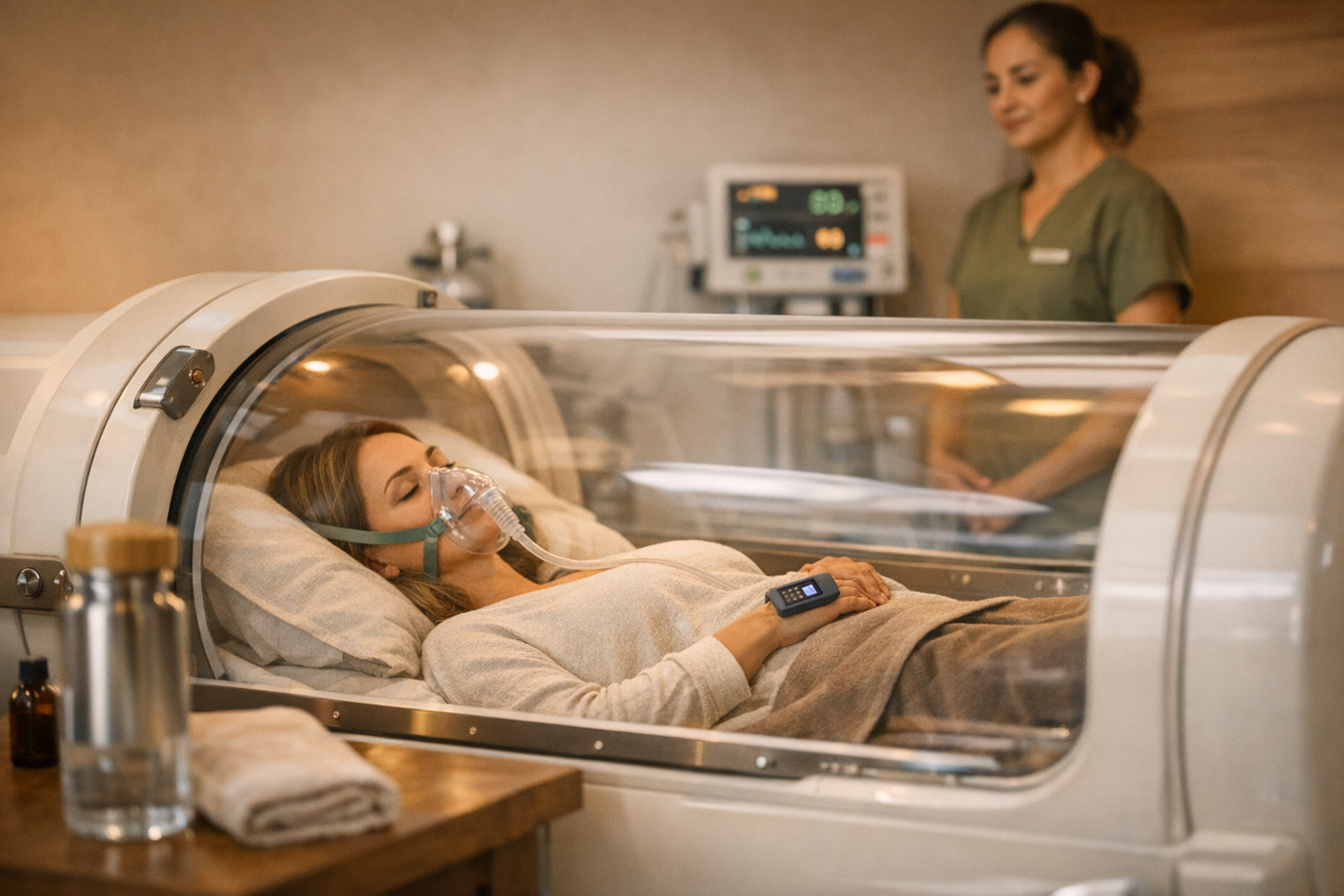
HBOT is a treatment where you breathe oxygen in a pressurised chamber. The increased pressure helps your lungs take in more oxygen than they can at normal atmospheric pressure, increasing the amount of dissolved oxygen in your blood plasma. That extra dissolved oxygen can then be delivered more readily to tissues.
It’s important to distinguish a few terms you might see online:
- Medical-grade HBOT: Delivered in a clinical setting, typically at higher pressures and with specific protocols.
- Mild hyperbaric therapy (mHBOT): Lower pressure, often using ambient air or oxygen enrichment. Research is growing, but results may not mirror medical-grade protocols.
- “Oxygen therapies” (non-hyperbaric): Oxygen bars or concentrated oxygen breathing without pressure. These are not the same as HBOT.
HBOT isn’t a “quick fix” and it’s not best thought of as a standalone solution. It may support recovery and wellness as part of a broader plan that includes sleep, nutrition, movement, and stress regulation.
The science in plain English: how HBOT may support cellular recovery
When people say “cellular recovery”, they often mean a combination of:
- Better tissue oxygenation
- Support for energy production (mitochondrial function)
- Balanced inflammation
- Healthier blood vessel function and circulation
- Collagen and tissue repair processes
- Nervous system recovery from chronic stress and overload
HBOT may influence several of these via well-described physiological mechanisms.
Increased dissolved oxygen and tissue delivery
Under pressure, more oxygen dissolves directly into the plasma. This matters because plasma can reach areas where red blood cell delivery may be less efficient, especially in tissues with compromised microcirculation.
Supporting angiogenesis and microcirculation
Some research suggests hyperbaric exposure can support signalling pathways involved in angiogenesis (the formation of new blood vessels). In plain terms, improved microcirculation may help tissues receive nutrients and oxygen more consistently over time.
Inflammation and oxidative balance: a nuanced story
You’ll often hear that HBOT “reduces inflammation”. The reality is more nuanced and more interesting.
HBOT can transiently increase reactive oxygen species (ROS). That sounds negative, but in controlled doses ROS act like signals that prompt the body to upregulate protective antioxidant systems and repair processes—similar to how exercise is a “good stress” when dosed properly. This is sometimes described as a hormetic effect.
In wellness terms: HBOT may help the body become more efficient at managing oxidative stress, but benefits depend on the right protocol and on your individual context.
Mitochondria, energy, and recovery
Mitochondria use oxygen to produce ATP (cellular energy). If oxygen delivery is limited—or if the system is under chronic stress—energy production can feel sluggish.
HBOT may support recovery in people who feel “wired but tired”, particularly when that feeling is tied to poor sleep, high stress, heavy training loads, or long periods of cognitive demand. It’s not a stimulant; the goal is steadier energy and improved recovery capacity.
Who may consider HBOT for wellness and performance?
HBOT is used in medicine for specific indications, but many people explore it in a wellness context to support recovery and resilience. You may consider HBOT if you are:
- Training regularly and want to support recovery between sessions
- Busy and cognitively loaded, looking to support mental clarity and sustain performance
- Managing high stress and seeking nervous system support alongside lifestyle changes
- Recovering from intense periods (work deadlines, travel, disrupted sleep)
- Focused on healthy ageing, aiming to support circulation, tissue integrity, and cellular resilience
A key point: if you’re dealing with persistent fatigue, breathlessness, dizziness, or sleep disruption, it’s sensible to rule out underlying medical contributors (iron deficiency, thyroid issues, sleep apnoea, etc.) before relying on any wellness therapy.
What does the evidence say about HBOT for cellular recovery and wellness?
Research is strongest for certain medical uses of HBOT. For wellness and “optimisation”, the evidence is emerging—promising in areas, mixed in others, and highly dependent on protocol.
Here’s a grounded way to interpret the landscape.
Areas with clearer physiological rationale
Even when wellness outcomes are hard to measure, several mechanisms are well established:
- Increased plasma oxygen delivery under pressure
- Changes in inflammatory and oxidative signalling
- Potential support for tissue repair pathways
- Microcirculatory effects
These mechanisms help explain why some people report improved recovery, reduced “heaviness” after training blocks, and a more stable sense of energy.
Cognitive performance and brain health: cautious optimism
There is ongoing research into HBOT and neurological recovery. Some studies explore impacts on cognition, neuroplasticity, and brain perfusion in specific contexts.
For general wellness users, it’s more realistic to frame HBOT as something that may support brain energy and recovery—especially when paired with sleep optimisation, stress management, and targeted nutrition—rather than a guaranteed “brain upgrade”.
Inflammation and immune resilience
HBOT may influence immune signalling and inflammation, but outcomes vary based on dose, baseline health, and what else you’re doing (training intensity, alcohol intake, sleep debt, nutrient status).
If you’re looking for inflammation support, don’t overlook the basics that are shown to matter:
- Consistent sleep timing
- Adequate protein and omega-3 intake (food-first)
- Resistance training and zone 2 cardio
- Reducing ultra-processed foods and excess alcohol
- Stress regulation habits you can maintain
HBOT can be an adjunct—not a substitute.
What an HBOT session is like (so you can decide with confidence)
If you’ve never been in a hyperbaric chamber, the unknown is often the biggest barrier.
Before your session
You’ll typically be guided through a quick screening to check suitability and minimise risks. You may be asked to:
- Avoid heavy alcohol beforehand
- Arrive well-hydrated
- Wear appropriate clothing (depending on clinic protocols)
- Remove certain items for safety
During the session
Most people describe it as calm and surprisingly relaxing.
You may notice:
- Ear pressure changes, similar to flying. You’ll be coached on equalising techniques.
- A sense of warmth or mild fatigue.
- Some people nap; others read or listen to audio.
After the session
Common experiences include:
- A relaxed, “reset” feeling
- Mild tiredness (especially early on)
- Improved sleep that night for some
Wellness outcomes often build gradually. If you’re using HBOT to support recovery, it’s usually best thought of as a series rather than a one-off.
How many sessions do you need?
This depends on your goal, baseline stress load, and what else you’re doing. In general:
- Acute support (after a demanding period): a short run may be helpful.
- Recovery and performance support: people often experiment with weekly sessions or structured blocks.
- Longer-term wellness goals: protocols may involve multiple sessions over weeks.
The most clinically sensible approach is to:
- Define a measurable goal (sleep quality, training readiness, perceived recovery, HRV trend, focus).
- Commit to a reasonable trial period.
- Review response and adjust.
At LIVBETTER, the aim is to keep this practical and data-informed, not complicated.
Safety, side effects, and who should avoid HBOT
HBOT is generally well tolerated when properly supervised, but it’s not for everyone.
Common side effects
- Ear or sinus discomfort (from pressure changes)
- Temporary fatigue
- Rarely, headaches
When extra caution is needed
You should disclose:
- Lung conditions (including a history of pneumothorax)
- Ear surgery or chronic sinus problems
- Uncontrolled seizures
- Pregnancy
- Claustrophobia (many people still manage well with the right support)
A reputable provider will screen carefully and tailor protocols to your needs.
HBOT in a LIVBETTER recovery plan: what to do alongside it
HBOT works best when it’s reinforcing the fundamentals. If you want genuine “cellular recovery”, treat oxygen as one pillar in a wider system.
1) Make your sleep oxygen-friendly
Try this for 7 days:
- Keep a consistent wake time (even after a late night)
- Get 5–10 minutes of outdoor light within an hour of waking
- Aim for a wind-down routine that is genuinely repeatable (not perfect)
- Keep your bedroom cool and dark
If you snore heavily, wake unrefreshed, or rely on caffeine to function, consider screening for sleep-disordered breathing.
2) Train in a way your mitochondria can actually adapt to
A simple weekly structure for many busy professionals:
- 2–3 resistance sessions (full body)
- 1–3 zone 2 cardio sessions (20–45 minutes)
- 1 shorter higher-intensity session if recovery allows
If you’re always sore, restless at night, or your mood is flat, you may be under-recovering. HBOT may support recovery, but it can’t compensate for chronic overload.
3) Prioritise protein, micronutrients, and hydration
For tissue repair and recovery, consistency beats perfection:
- Include a quality protein source at each meal
- Add colourful plants daily for polyphenols and fibre
- Hydrate earlier in the day (especially if training)
- Don’t under-eat when training hard
Keep supplements minimal unless there’s a clear evidence-based reason (or a documented deficiency).
4) Build a realistic stress downshift
If your nervous system never gets a break, cellular recovery is harder.
Try one of these daily (choose one):
- 5 minutes of nasal breathing with longer exhales
- 10-minute walk after lunch
- A “digital sunset” 30 minutes before bed
These are boring on purpose—because they work when repeated.
Practical ways to track whether HBOT is helping you
Wellness can feel subjective, so use simple markers.
Track these for 2–4 weeks
- Sleep quality (1–10) and sleep timing consistency
- Training readiness or perceived soreness
- Energy stability across the day (not just morning energy)
- Mood and stress reactivity
- Resting heart rate and HRV trends (if you already use a wearable)
A helpful reflection question
After 3–5 sessions, ask:
“Do I recover faster from the same workload?”
If the answer is consistently yes, you’re likely on the right track. If not, review the basics first (sleep, stress, nutrition, training load) before assuming HBOT is ineffective.
HBOT vs other advanced therapies: how to choose
At LIVBETTER, we often see people trying to decide between therapies rather than layering everything at once.
A simple way to think about it:
- HBOT: oxygen delivery + recovery signalling; may support tissue recovery and resilience.
- Red light therapy (photobiomodulation): local or systemic support for recovery; commonly used for muscle recovery and skin health.
- Cold exposure: may support stress resilience; can be useful, but not always ideal immediately after strength training if muscle growth is a priority.
- Sauna/heat: circulation, relaxation, cardiovascular conditioning; can support sleep for some.
The best choice depends on your goal, your schedule, and your recovery capacity. If you’re already depleted, the “strongest” therapy isn’t always the best first move.
What to look for in a high-quality HBOT provider
If you’re considering HBOT for cellular recovery and wellness, look for:
- Clear screening and safety protocols
- Transparent explanation of pressure, oxygen delivery, and session duration
- Staff who can coach ear equalisation and comfort
- Clean, calm environment (it matters more than you think)
- A plan to measure outcomes, not just sell sessions
At LIVBETTER, our approach is high-end and technology-enabled, but always grounded in what helps you function better in real life: think better, feel better, and LIVBETTER.
A realistic takeaway
HBOT is a credible, science-informed tool that may support cellular recovery and overall wellness—particularly when you’re balancing high demands, training stress, and the need for consistent energy.
It’s not magic, and it’s not a replacement for sleep, movement, and nutrition. But when used thoughtfully, it can be a valuable part of a comprehensive recovery plan.
If you’re curious, the best next step is simple: define what “better” means for you (sleep, recovery, clarity, resilience), trial a sensible protocol, and track your response. That’s how you turn a trending therapy into a practical, personalised strategy.
Next Steps
Want to learn more? Check out these articles:
HBOT for Training Recovery for Busy Professionals [Guide]
HBOT for Post-Travel Recovery: Reset Jet Lag and Energy
HBOT for Soft Tissue Recovery: A Practical, Evidence-Based Guide
Check out our Therapies to see which options fit your goals.