
HBOT for Recovery After Demanding Weeks: A Practical Guide
Ever finish a relentless week and feel like your body is still “switched on” days later? You’re sleeping, you’re eating reasonably well, you’ve even tried a quiet night in—yet the foggy head, heavy limbs and low motivation linger. That post-pressure slump is common in high-performing, high-responsibility lives. The question is what to do next: do you simply wait it out, or can you support recovery in a smarter, more structured way?
Hyperbaric oxygen therapy (HBOT) is one option people are increasingly exploring when they want to feel more like themselves after a demanding period—without guessing, over-supplementing, or relying on willpower alone. HBOT involves breathing oxygen in a pressurised environment. It’s not new, and it’s not mystical; it’s a physiology-based approach that may support recovery processes in the body by increasing the amount of oxygen dissolved in the blood plasma.
In this guide, we’ll walk through what “recovery after demanding weeks” actually means in your body, how HBOT works, what the evidence suggests it may help with, and how to get the most out of it alongside fundamentals like sleep, nutrition and stress regulation. We’ll keep it realistic, science-led, and practical—because recovery shouldn’t feel like another job.
What “demanding weeks” do to your recovery systems
When people say they’ve had a demanding few weeks, it usually isn’t just one thing. It’s long hours, high cognitive load, disrupted meals, too much sitting (or too much training), travel, alcohol creeping in, late-night screens, and reduced time outdoors—often all at once. The body adapts impressively, but the bill eventually comes due.
Common signs you may be under-recovered
Not medical diagnosis—just patterns clinicians see frequently in busy professionals and active people.
- Persistently “tired but wired”: you’re exhausted, yet sleep feels light or broken.
- Brain fog: slower recall, reduced mental sharpness, poorer focus.
- Heavier-than-usual training sessions: the same workout feels harder than it should.
- More niggles: aches, stiffness, slower bounce-back after training.
- Low mood or irritability: stress tolerance drops; small things feel big.
- Skin looks dull: often reflecting sleep debt and higher stress load.
- More colds: immune resilience can dip after sustained stress and reduced sleep.
The physiology in plain English
Recovery is not just “rest”. It’s active repair, regulation and rebalancing across multiple systems:
- Nervous system: sustained stress can keep the sympathetic (“go”) system dominant, while parasympathetic (“restore”) tone drops.
- Inflammation and oxidative stress: intense training, poor sleep and chronic stress may increase inflammatory signalling and free radical load. This is normal in small doses; it becomes a problem when it accumulates.
- Muscle and connective tissue repair: hard sessions and long sitting both create micro-stress that needs adequate blood flow, oxygen and nutrients to resolve.
- Energy metabolism: mitochondria (your cells’ energy engines) are sensitive to sleep, nutrition, stress and activity balance.
So, when you’re trying to “recover after demanding weeks”, you’re really trying to support a return to baseline: better sleep depth, steadier energy, clearer cognition, less soreness and better adaptability.
What is HBOT and why oxygen matters for recovery
Hyperbaric oxygen therapy (HBOT) involves breathing oxygen while inside a chamber with pressure greater than normal atmospheric pressure. In simple terms, the higher pressure helps oxygen dissolve more readily into your blood plasma (not just carried by haemoglobin), which can increase oxygen delivery to tissues.
Oxygen is not a stimulant. It’s a fundamental ingredient in aerobic energy production and tissue repair processes. Many recovery pathways—collagen formation, cellular signalling, immune function—are oxygen-dependent. When oxygen availability in tissues increases, certain repair and regulation processes may be supported.
How HBOT differs from “oxygen bars” or breathing devices
Breathing oxygen at normal pressure is not the same as HBOT. The combination of pressure and oxygen is what changes the amount dissolved in plasma. That’s the key physiological distinction and why HBOT is considered a clinical-grade modality rather than a wellness gimmick.
What a session typically feels like
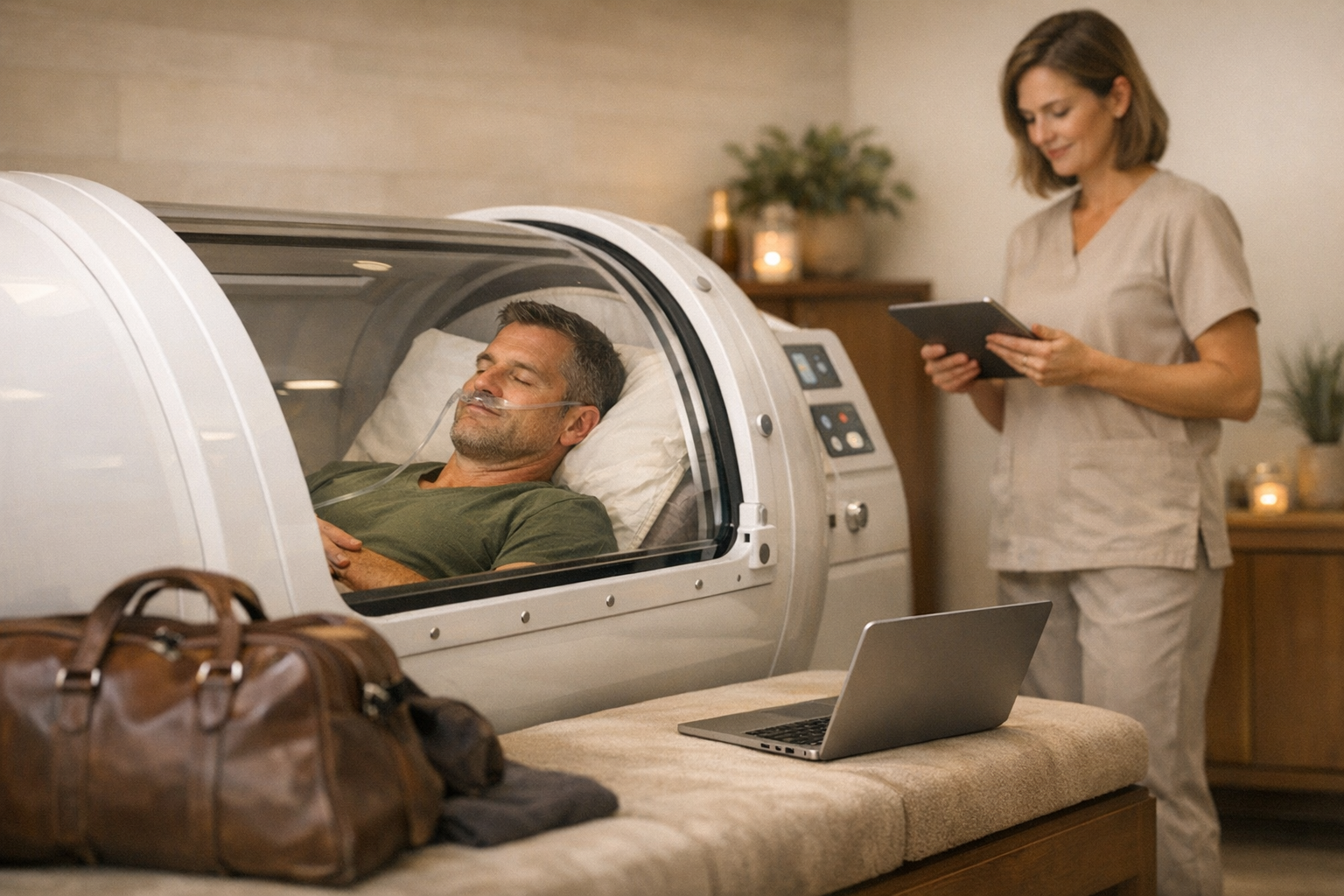
Most people find HBOT sessions surprisingly calm. You’ll lie comfortably while the chamber pressurises (similar to the ear pressure changes on a plane). Many people read, listen to audio, or simply rest. If you’re new to it, a clinician will talk you through ear-equalising techniques and safety checks.
HBOT for recovery after demanding weeks: what it may support
It’s important to set expectations correctly. HBOT is not a magic reset button. However, there are plausible mechanisms and growing interest in using it to support recovery and performance—particularly when someone is run down, inflamed, or dealing with slower tissue recovery.
1) Tissue oxygenation and repair capacity
Hard training, minor strains, and general wear-and-tear increase demand for repair. Oxygen plays a role in processes such as collagen synthesis and angiogenesis (formation of new small blood vessels). By increasing oxygen availability, HBOT may support the conditions required for tissue recovery.
2) Post-exertional soreness and training fatigue
Delayed onset muscle soreness (DOMS) and heavy legs after intense blocks can reflect micro-damage plus inflammatory signalling. While recovery is multifactorial, improved oxygen delivery may help some people feel less “stuck” in that sore, sluggish state—especially when paired with sleep and nutrition improvements.
3) Inflammation modulation (within a balanced plan)
Inflammation is not the enemy; it’s part of adaptation. The issue is when it stays elevated due to cumulative stressors. Research suggests hyperbaric oxygen can influence inflammatory pathways and oxidative stress responses in certain contexts. For someone coming off a demanding period, this may translate into feeling more settled and resilient—but results vary and should be viewed as supportive rather than guaranteed.
4) Cognitive clarity and mental recovery
“Brain fog” after long work weeks is often a mix of sleep debt, stress chemistry, reduced movement, and screen load. Oxygen availability and cerebral blood flow are part of the picture. Some people report improved clarity and focus after a series of sessions. The best outcomes tend to occur when HBOT is integrated with behavioural recovery basics rather than used in isolation.
5) A structured recovery ritual (which matters more than you think)
One underrated benefit: HBOT creates a protected window where you can’t multitask, scroll endlessly, or squeeze in another email. Recovery needs friction against modern life. A scheduled session can become a deliberate “downshift” that supports nervous system recalibration.
Who HBOT can be a good fit for (and who should pause)
HBOT is often considered by people who are generally healthy but feel run down, as well as active individuals balancing training with demanding work.
HBOT may be worth exploring if you:
- have had several intense weeks of work or training and feel slower to bounce back than usual
- are prioritising recovery as part of performance, not as an afterthought
- want a non-pharmaceutical, technology-enabled support alongside lifestyle foundations
- are dealing with repeated “low-level” soreness or fatigue patterns and want a structured plan
You should speak to a clinician before HBOT if you:
- have unmanaged ear/sinus issues or struggle to equalise pressure
- have certain lung conditions (or a history of pneumothorax)
- are pregnant, or have complex medical conditions requiring personalised advice
- are currently unwell with fever or acute infection
In a high-quality setting, screening and safety protocols are standard. If anyone downplays contraindications, that’s a sign to choose a more clinically guided provider.
What an evidence-informed HBOT recovery plan can look like
There isn’t one universal protocol because recovery needs depend on your training load, sleep debt, stress level, and baseline health. That said, most people do better with a series of sessions rather than a one-off “quick fix”.
Key variables that shape your plan
- Frequency: some people choose 2–5 sessions per week during an intense recovery phase.
- Total number of sessions: often a short block (for example, 5–10 sessions) is used to assess response.
- Timing: sessions may be scheduled after intense training blocks, travel-heavy weeks, or during high-stress periods.
- Stacking: HBOT can be paired thoughtfully with other recovery tools (more on this below).
How to tell if it’s helping (without over-analysing)
Use simple markers for 1–2 weeks:
- Sleep quality: do you fall asleep more easily, wake less, or feel more refreshed?
- Energy curve: is your afternoon slump less severe?
- Training feel: does your usual session feel more “available” again?
- Mood and stress tolerance: are you less irritable, more patient, more steady?
- Soreness: do niggles resolve more quickly with your normal mobility work?
If you track wearables, look at trends (resting heart rate, HRV) rather than single-day fluctuations. The goal is to identify direction of travel, not to chase perfect numbers.
How to maximise recovery alongside HBOT (your non-negotiables)
HBOT can be a valuable adjunct, but it works best when it supports fundamentals—not when it replaces them. Think of recovery like a table: HBOT can be a strong extra leg, but the tabletop still needs sleep, nutrition, movement and stress regulation.
Sleep: focus on depth, not just hours
After demanding weeks, your sleep may be longer but lighter. Try this for 7 days:
- Set a “screens down” buffer of 30–60 minutes before bed (yes, even if it’s not perfect every night).
- Drop bedroom temperature slightly; cooler rooms often support deeper sleep.
- Caffeine cut-off: aim for mid-day rather than late afternoon, depending on sensitivity.
- Morning light: 5–10 minutes outdoors early in the day helps anchor circadian rhythm.
Nutrition: rebuild, don’t restrict
After stress-heavy periods, people often unintentionally under-eat protein, fibre, and micronutrients—then wonder why recovery drags.
- Protein anchor: include a meaningful protein portion at each meal (tailored to your body size and training).
- Colour and crunch: add at least two colourful plants daily to support micronutrients and gut health.
- Hydration + electrolytes: especially if you trained hard, travelled, or relied on caffeine.
If you want precision, a clinician-led nutrition review is more useful than guesswork supplements.
Movement: downshift without stopping completely
Complete rest can help briefly, but many people recover faster with low-intensity movement to support circulation and lymphatic flow.
- 20–40 minutes of easy walking most days
- gentle mobility for hips, thoracic spine and calves
- one true rest day per week where you actively do less
Stress physiology: give your nervous system a signal of safety
This is where many high performers struggle: you can’t “think” your way out of sympathetic dominance. Try one of these daily:
- Physiological sigh: two short inhales through the nose, long slow exhale through the mouth, repeated 3–5 times.
- 3-minute downshift: sit quietly, relax jaw/shoulders, slow exhale longer than inhale.
- Evening decompression: a short shower, stretching, or reading—anything that tells your brain the day is complete.
HBOT vs other recovery modalities: how to choose wisely
In a modern recovery landscape, it’s easy to collect therapies without a coherent plan. Here’s a grounded way to think about common options.
HBOT
- Best for: structured recovery blocks, supporting tissue oxygenation, post-demand periods where you feel under-recovered.
- Considerations: time commitment; suitability screening; best in clinically guided settings.
Cold exposure
- Best for: short-term mood lift, perceived soreness relief for some people.
- Considerations: not ideal immediately after strength training if hypertrophy is a key goal; can be too stimulating if you’re “tired but wired”.
Sauna/heat therapy
- Best for: relaxation, circulation, sleep support for many people.
- Considerations: hydration; avoid if you’re already depleted or dizzy.
Compression and massage
- Best for: short-term relief and improving how you feel in your body.
- Considerations: great adjuncts, but don’t replace sleep/nutrition.
The most effective plan is usually not “the most therapies”. It’s the right mix at the right time, with consistency.
What to expect from HBOT at LIVBETTER
At LIVBETTER, HBOT is positioned as part of a broader performance-oriented approach: helping you restore energy, reduce stress load, and support recovery without derailing your schedule. Expect a calm, premium environment with clinical-grade protocols, clear screening, and guidance that respects your goals and your time.
If you’re using HBOT for recovery after demanding weeks, we’ll typically focus on three things:
- Safety and suitability: ensuring HBOT is appropriate for you.
- Personalised dosing: session frequency and number based on how you’re feeling and what you’re doing outside the chamber.
- Integration: simple, sustainable habits that help your results last beyond the session.
A realistic 7-day recovery reset (with or without HBOT)
If you want a practical plan you can start immediately, here’s a simple template. If you’re doing HBOT, run this alongside your sessions to amplify recovery basics.
Day 1–2: Stabilise
- Pick a consistent bedtime and wake time.
- Walk 20 minutes outdoors.
- Eat protein at each meal; add one extra portion of vegetables.
- Do 3 minutes of slow exhale breathing before bed.
Day 3–5: Rebuild
- Add one low-intensity session (easy cycle, swim or brisk walk).
- Do 10 minutes of mobility (hips, calves, thoracic spine).
- Hydrate earlier in the day; reduce alcohol.
- If using HBOT: schedule sessions on days that are cognitively heavy or after training.
Day 6–7: Return to performance
- Reintroduce one moderate training session (not maximal).
- Plan your next week with two “recovery anchors” (walk + early night, or sauna + mobility).
- Keep caffeine intentional rather than automatic.
Most people notice that recovery is less about doing more, and more about doing the basics consistently—then using advanced therapies like HBOT to support the process.
FAQs about HBOT for recovery after demanding weeks
How quickly will I feel a difference?
Some people notice changes after a few sessions; others need a longer block, especially if the underlying issue is significant sleep debt or ongoing high stress. The goal is steady improvement, not an overnight transformation.
Can I train on the same day as HBOT?
Often yes, depending on your programme and how you feel. Many people choose HBOT on hard training days or the day after. For personalised guidance, it’s best to align sessions with your training calendar and recovery markers.
Is HBOT mainly for athletes?
No. Many users are busy professionals, parents, entrepreneurs, and anyone whose “demanding weeks” are more cognitive than physical. Mental load is still physiological load.
Is it safe?
When delivered with appropriate screening, protocols and supervision, HBOT has a well-established safety profile. Like any clinical-grade modality, it must be used responsibly and isn’t suitable for everyone.
The takeaway: make recovery a strategy, not a hope
After demanding weeks, your body doesn’t need punishment—it needs intelligent support. HBOT is one evidence-informed tool that may help support recovery by increasing oxygen availability to tissues and creating a structured environment for downshifting. It’s not a substitute for sleep, nutrition, movement and stress management, but it can be a valuable part of a comprehensive plan when you want to restore energy and performance in a time-efficient way.
If your baseline is “I’m fine, I just haven’t felt like myself in weeks,” that’s often the best time to act. Recovery works best when it’s proactive.
Next Steps
Want to learn more? Check out these articles:
HBOT for Cellular Recovery and Wellness: An Evidence Guide
HBOT for Training Recovery for Busy Professionals [Guide]
HBOT for Post-Travel Recovery: Reset Jet Lag and Energy
Check out our Therapies to see which options fit your goals.