
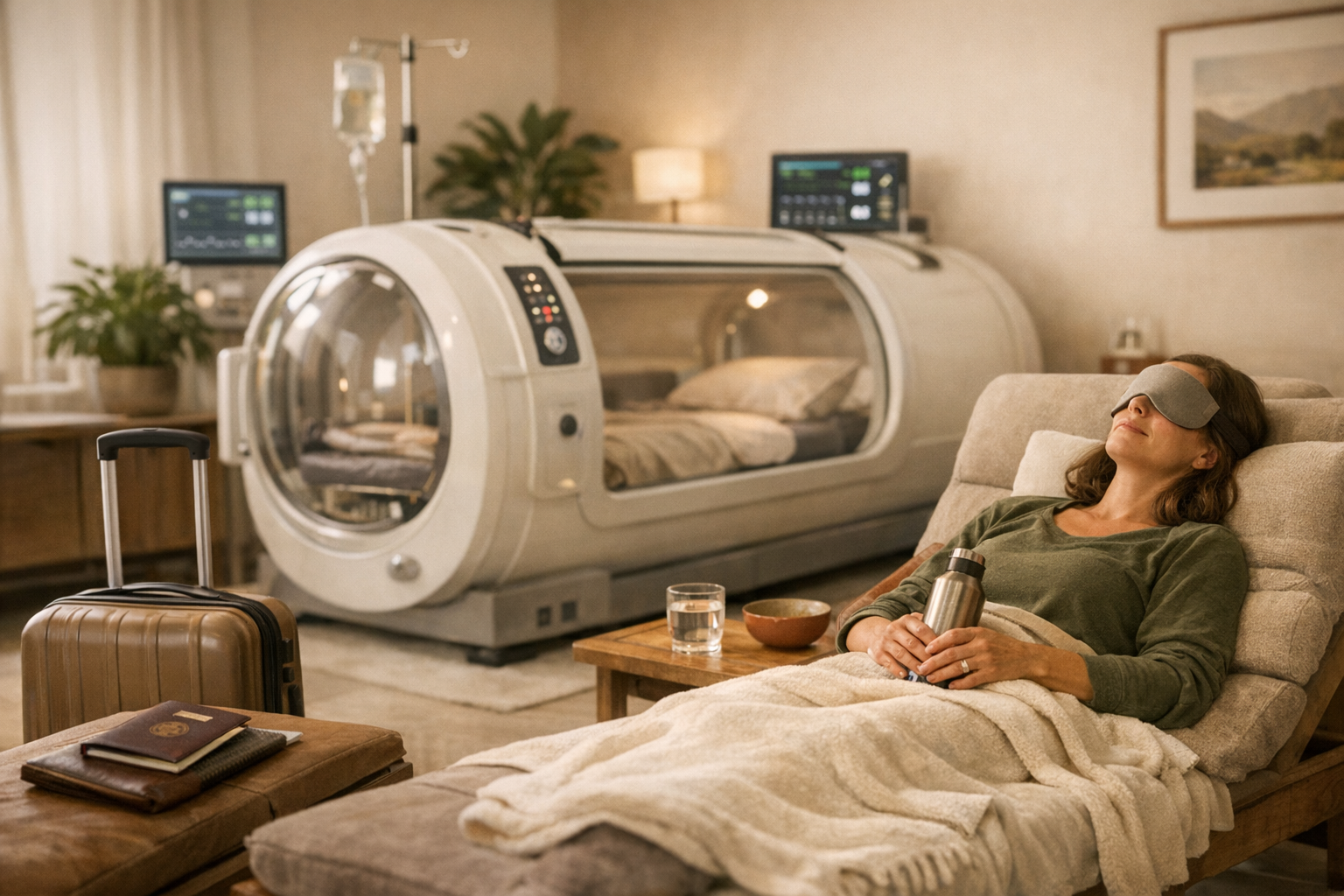
HBOT for Travel Recovery: Jet Lag, Sleep and Wellness Reset
Why travel knocks you off your game (and what helps)
If you’ve ever stepped off a long-haul flight feeling puffy, foggy and oddly “wired-but-tired”, you’re not imagining it. Travel stacks multiple stressors at once: lower cabin humidity, prolonged sitting, disrupted light exposure, unfamiliar food timings, and a sleep schedule that suddenly makes no sense. Even when the trip is exciting, your body still has to adapt.
The good news is that post-travel recovery can be approached like any other performance reset: reduce the biggest physiological stressors first, then support the systems that were pushed hardest—sleep, hydration status, circulation, and nervous system balance.
One therapy people are increasingly curious about is hyperbaric oxygen therapy (HBOT). You might have heard about it in the context of clinical medicine, sports recovery or injury rehabilitation. In a wellness setting, the question becomes: can HBOT support recovery after travel, and if so, how should you use it sensibly?
This article explains what’s happening in your body after travel, what HBOT is (and isn’t), what the evidence suggests, and a practical recovery plan you can start using straight away.
What is HBOT, in plain English?
Hyperbaric oxygen therapy involves breathing oxygen in a pressurised chamber. The increased pressure allows more oxygen to dissolve into the plasma (the liquid part of your blood), increasing oxygen delivery to tissues.
In clinical settings, HBOT is used for specific medical indications (for example, certain wound-healing scenarios and decompression illness). In a wellness context, some people use it to support recovery, reduce fatigue, and promote overall resilience—though it’s important to keep expectations realistic and individual.
At LIVBETTER, HBOT is positioned as a technology-enabled recovery tool that can be part of a comprehensive plan: sleep, nutrition, movement, stress management, and targeted therapies that help you feel like yourself again—without needing a week off work.
Why travel can leave you feeling inflamed, swollen and tired
Travel fatigue is not just “lack of sleep”. Several physiological mechanisms are at play:
1) Circadian disruption (jet lag)
Your circadian rhythm is regulated largely by light exposure, meal timing, activity, and social cues. When you cross time zones, your internal clock and the external world are suddenly misaligned. The result can include:
- Difficulty falling asleep or staying asleep
- Early waking
- Daytime sleepiness and poor concentration
- Changes in appetite and digestion
2) Dehydration and airway irritation
Aircraft cabins have low humidity. That can contribute to dryness, thirst, headaches, and a “hungover” feeling—even without alcohol. Dehydration can also make your circulation and lymphatic flow less efficient, which may worsen puffiness.
3) Prolonged sitting and sluggish circulation
Hours of limited movement can lead to fluid pooling in the legs and general heaviness. For most healthy travellers, this is mainly uncomfortable; for some, it can carry more serious risks, which is why movement and hydration matter.
4) Oxidative and inflammatory stress
Sleep loss, altered meal timing, alcohol, and stress can nudge your inflammatory and oxidative balance in the wrong direction. You may notice:
- Skin looking dull
- Muscles feeling achy
- Reduced exercise tolerance
- A general sense that you’re not fully “recharged”
5) Cognitive overload
Travel is a sensory and decision-heavy experience—navigation, schedules, crowds, unfamiliar environments. Add emails and work calls, and it’s a perfect recipe for mental fatigue.
How HBOT may support wellness recovery after travel
HBOT is not a jet-lag “cure”, and it won’t replace sleep. But it may help support some of the underlying biology that gets strained during travel.
Enhanced oxygen delivery to tissues
By increasing the amount of dissolved oxygen in plasma, HBOT may support tissue oxygenation. People often describe feeling clearer and more energised afterwards, which may be useful when travel has left you feeling mentally foggy.
Supporting recovery and reducing fatigue
In sports and recovery settings, oxygen-based therapies are explored for their potential role in recovery processes. While wellness outcomes vary, the principle is that improved oxygen availability can support the body’s normal repair and restoration pathways.
Circulation and swelling support (indirectly)
Travel-related puffiness is often driven by fluid shifts and reduced movement. HBOT is not a lymphatic drainage treatment, but some people find that a structured recovery session helps them feel less heavy and more “back to baseline”, especially when combined with light movement and hydration.
Nervous system “reset”
Many travellers return in a sympathetic (fight-or-flight) state: poor sleep, high stimulation, and a busy mind. A calm, structured session in a controlled environment may help some people downshift and feel more settled.
Important note: research on HBOT is strongest for specific medical uses. For general wellness and travel recovery, the evidence base is still developing, and individual responses vary. Think of HBOT as a supportive tool—not a promise.
Who might consider HBOT after travel?
HBOT for wellness recovery after travel may be worth considering if you:
- Feel persistently fatigued for several days after travelling
- Struggle with brain fog after long-haul flights
- Need to return to high performance quickly (busy work periods, leadership roles, demanding training blocks)
- Travel frequently and want a consistent, structured recovery routine
- Feel “run down” from cumulative stress, disrupted sleep and irregular meals
Who should be cautious or seek medical advice first?
HBOT involves pressure changes and is not suitable for everyone. You should always be screened appropriately. Speak with a clinician before HBOT if you:
- Have untreated pneumothorax (collapsed lung) or certain lung conditions
- Have uncontrolled sinus or ear problems (pressure equalisation difficulties)
- Are pregnant (unless medically indicated and supervised)
- Have severe claustrophobia
- Are recovering from certain ear surgeries or have active respiratory infections
This is not a complete list—an individual assessment is essential.
What a sensible “post-flight” recovery plan looks like
HBOT works best when it’s not used in isolation. The most reliable improvements after travel come from getting the basics right, then layering therapies.
Step 1: Re-anchor your body clock (first 24–48 hours)
Aim to align quickly with local time.
- Get outdoor daylight within 30–60 minutes of waking
- Keep caffeine to the morning (ideally before 12:00)
- Eat meals on local time, even if appetite is odd
- Keep naps short (20–30 minutes) and before mid-afternoon
Step 2: Rehydrate strategically
Instead of chugging litres at once, aim for steady intake.
- Start with 500–750 ml water on waking
- Add electrolytes if you’ve flown long-haul, exercised, or sweated significantly (choose low-sugar options)
- Limit alcohol for the first night or two back
Step 3: Move gently but consistently
You’re aiming for circulation and lymphatic flow, not punishment.
- 20–40 minutes of walking on day one
- A mobility routine focusing on calves, hips, thoracic spine
- Light resistance training day two or three if energy allows
Step 4: Prioritise sleep quality, not perfection
Your first night back may still be uneven.
- Keep the bedroom cool and dark
- Avoid heavy meals late
- Try a wind-down routine: shower, reading, light stretching
- Consider magnesium glycinate if appropriate for you (check with a clinician, especially if you have kidney issues or take medications)
Step 5: Consider targeted recovery therapies
This is where HBOT can fit.
- HBOT may support energy, clarity, and recovery as your system re-stabilises
- Other supportive options (depending on your goals) may include red light therapy, contrast therapy, or guided breathwork
HBOT timing: when to book a session after travel
There isn’t a one-size-fits-all answer, but these patterns are common:
Option A: “Land and recover” (within 24–72 hours)
Best for: long-haul travellers who need to feel sharp quickly.
- Focus: mental clarity, fatigue support, general recovery
- Pair with: daylight exposure, hydration, early bedtime
Option B: “Mid-week reset” (days 3–7)
Best for: people who can push through the first days but feel the cumulative dip later.
- Focus: restoring rhythm, supporting training return, stress reduction
- Pair with: light exercise progression and consistent meal timing
Option C: “Frequent flyer routine” (ongoing)
Best for: regular travellers.
- Focus: maintaining baseline resilience and reducing the depth of post-trip fatigue
- Pair with: a repeatable travel protocol (sleep, hydration, movement)
What does an HBOT session feel like?
Most people find HBOT comfortable and surprisingly relaxing once they understand the process.
- You’ll enter a pressurised chamber and breathe oxygen
- You may feel ear pressure similar to take-off/landing; staff guide you through equalisation techniques
- Sessions are typically quiet—you may rest, listen to audio, or simply switch off
- Afterwards, many people report feeling calmer, clearer, or ready for a good night’s sleep
At LIVBETTER, the aim is to make the experience feel premium, safe, and streamlined—high-end recovery that fits into a busy calendar.
Practical travel-recovery checklist (save this)
Use this as a simple, evidence-informed routine.
On the flight
- Drink water regularly; limit alcohol
- Move every 60–90 minutes (walk, calf pumps, ankle circles)
- Use an eye mask and reduce screen brightness
- Eat lightly and avoid high-salt meals where possible
First day after landing
- Daylight exposure early
- 20–40 minutes easy walking
- High-protein, colourful meals (think: eggs, yoghurt, fish, legumes, vegetables)
- Early, calming evening routine
Days 2–4
- Train lightly if energy returns
- Keep caffeine earlier
- Consider a recovery session (HBOT if appropriate) if fatigue and fog persist
Nutrition for recovery after travel (simple, not obsessive)
Food can help stabilise energy and mood after disrupted routines.
Prioritise these
- Protein at each meal to support satiety and recovery
- Fibre from vegetables, fruit, oats, legumes for gut rhythm
- Omega-3 sources (salmon, sardines, walnuts) to support a healthy inflammatory balance
- Polyphenol-rich foods (berries, olive oil, herbs, green tea)
Be mindful with these (for a couple of days)
- Very salty foods (may worsen water retention)
- Ultra-processed snacks (easy to overdo when tired)
- Alcohol (worsens sleep architecture and dehydration)
A realistic view: what HBOT can and can’t do for post-travel wellness
HBOT may support recovery by improving oxygen availability and supporting the body’s natural restoration processes. That said:
- It won’t instantly fix jet lag without light management and sleep timing
- It won’t replace hydration, movement and good nutrition
- It’s not a substitute for medical care if you feel unwell after travelling
Think of HBOT as an adjunct—particularly helpful for high-performing individuals who notice that travel disrupts sleep, cognition and training, and who value a structured recovery approach.
When to get checked after travel (don’t ignore red flags)
Most post-travel symptoms are harmless and resolve with routine recovery. But seek urgent medical care if you experience:
- Chest pain, shortness of breath, coughing blood
- One-sided leg swelling, redness, or significant calf pain
- Severe headache with neurological symptoms
- Persistent fever or severe illness after returning
How LIVBETTER supports travel recovery
LIVBETTER exists for exactly this modern problem: busy people who need to restore energy and clarity without turning wellness into a second full-time job. If you’re exploring HBOT for wellness recovery after travel, our team can:
- Screen suitability and discuss your goals
- Help you plan timing around your travel schedule
- Combine HBOT with practical recovery foundations (sleep, stress management, nutrition support)
If you travel often, consider building a repeatable “recovery ritual” you can rely on after each trip—your future self will thank you.
Key takeaways
- Travel fatigue is multi-factorial: circadian disruption, dehydration, reduced movement, and stress all contribute.
- HBOT may support wellness recovery after travel by enhancing oxygen delivery and supporting restoration pathways, but it’s not a stand-alone fix.
- The fastest improvements typically come from: daylight timing, hydration, gentle movement, and sleep consistency—then layering supportive therapies.
- Always get screened for HBOT suitability and seek medical advice if you have red-flag symptoms after travelling.
Next Steps
Want to learn more? Check out these articles:
HBOT for Recovery Between Demanding Work Weeks [Guide]
HBOT and Sleep Quality During Recovery: What Science Suggests
HBOT for Injury Recovery Support: What to Expect
Check out our Therapies to see which options fit your goals.