
HBOT for Sports Injury Recovery Guide [Step-by-Step Plan]
Introduction
If you’ve ever had an injury derail your training block, you’ll know the frustration: pain settles in, swelling hangs around, sleep gets disrupted, and suddenly your “quick recovery” becomes a slow negotiation with your body. The good news is that sports injury recovery has moved well beyond rest and wishful thinking. Alongside smart physiotherapy, progressive loading and good nutrition, advanced therapies like hyperbaric oxygen therapy (HBOT) are increasingly used to support the healing environment—especially when you want to recover well, not just quickly.
This guide explains HBOT in plain English: what it is, how it may support recovery from common sports injuries, what the evidence actually suggests, what a typical course looks like, and how to decide if it’s a sensible addition to your plan.
What is HBOT (hyperbaric oxygen therapy)?
HBOT involves breathing near-100% oxygen inside a pressurised chamber. The increased pressure allows more oxygen to dissolve into your blood plasma (in addition to what’s carried by haemoglobin), which may enhance oxygen delivery to tissues. That matters because oxygen is a key input for cellular energy, collagen formation, immune function, and the orchestration of tissue repair.
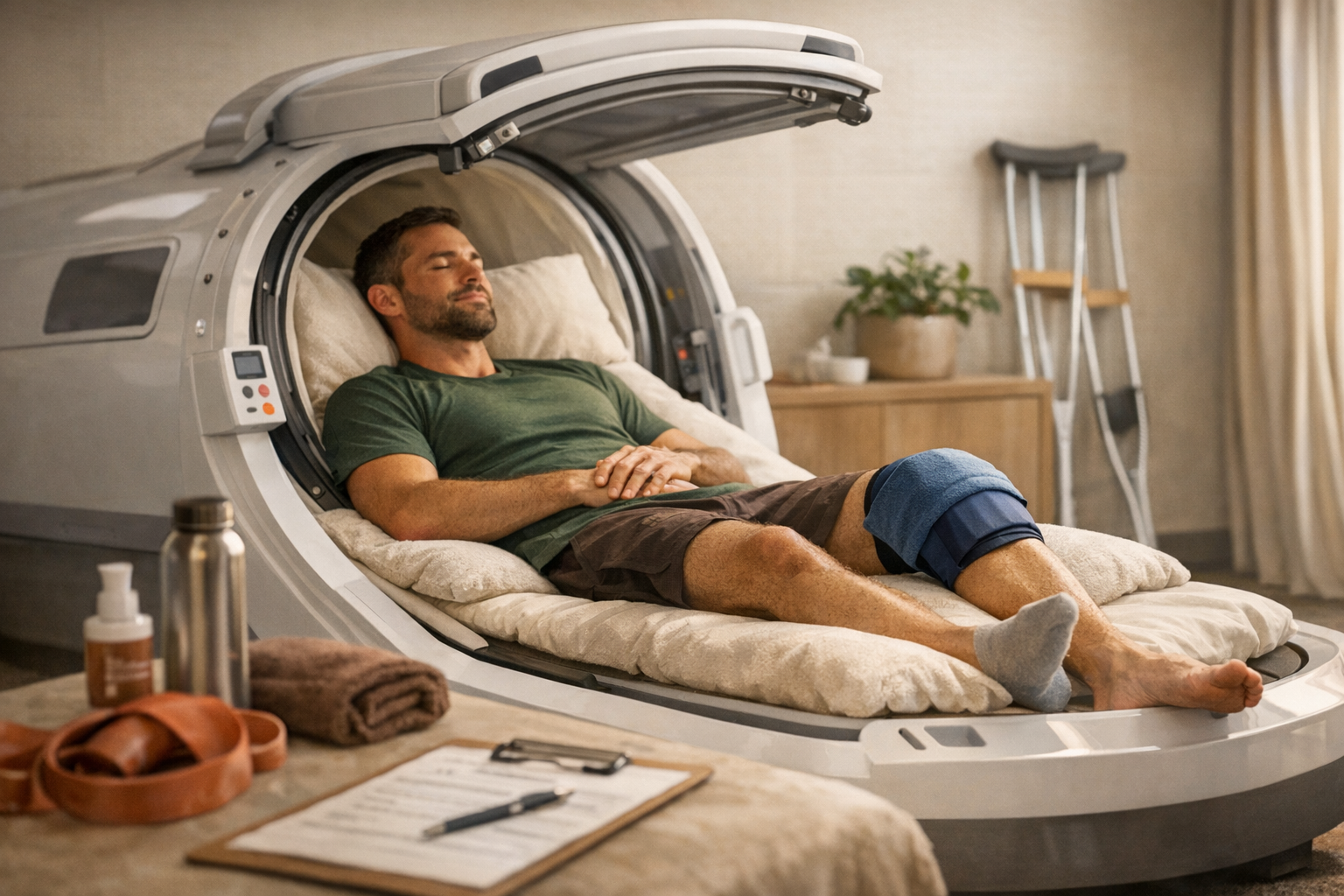
In a practical sense, a session is usually calm and straightforward: you lie or sit in the chamber while it pressurises, breathe normally, and then decompress at the end—similar to the sensation of changing altitude on a flight.
The key physiological idea (without the jargon)
Injured tissues can become relatively “oxygen-starved” because swelling, microvascular disruption, and pain-related movement changes can reduce local circulation. HBOT increases the amount of oxygen available in the bloodstream, which may:
- support the work of cells involved in repair
- help manage oedema (swelling) in some scenarios
- promote formation of new microvessels (angiogenesis)
- influence inflammation signalling (in a modulating, not “switch it off” way)
Why athletes consider HBOT for injury recovery
Most people first hear about HBOT in the context of wound care or decompression illness. In sport, interest tends to come from three pressures:
- Time: busy training schedules, seasons, and return-to-play targets.
- Performance: protecting conditioning and confidence while recovering.
- Complex injuries: where recovery is slower than expected, or the tissue is poorly vascularised.
HBOT isn’t a replacement for diagnosis, rehab, or progressive loading. It may be a supportive tool—one that aims to optimise the recovery “terrain” while you do the foundational work.
Sports injuries where HBOT may be considered
Evidence and clinical use are stronger for some categories than others. HBOT is not a one-size-fits-all answer, and it isn’t appropriate for every injury.
Soft tissue strains and tears (hamstring, calf, adductor)
Muscle injuries involve inflammation, fibre disruption, bruising and local swelling. HBOT may support tissue oxygenation and the cellular repair environment. That said, return-to-sport outcomes depend heavily on graded loading, strength restoration, and re-injury risk management.
Tendon and ligament problems (Achilles, patellar tendon, ankle sprain)
Tendons and certain ligaments have relatively limited blood supply, especially in specific regions. In theory, improved oxygen availability may support collagen synthesis and tendon remodelling. Practically, tendon rehabilitation still hinges on the right type and dose of loading.
Bone stress injuries and fractures
Bone healing is metabolically demanding and oxygen-sensitive. HBOT has established medical roles in specific bone-related conditions (for example, certain non-healing wounds and radiation-related injury). In sport, it may be considered as an adjunct in complex or slow-to-progress bone stress cases, always alongside medical oversight and structured return-to-impact.
Post-operative recovery (where clinically appropriate)
After surgery (for example, ACL reconstruction or tendon repair), the priority is surgeon-led protocols, swelling control, early movement where advised, and progressive rehab. HBOT may be used in some contexts to support tissue recovery, but timing and suitability must be individualised.
Concussion and brain health?
You may see HBOT discussed online for concussion. This is a nuanced area with mixed evidence and a lot of marketing noise. If you’re dealing with concussion symptoms, it’s essential to follow a clinician-led concussion pathway. HBOT should only be considered within an appropriately supervised plan.
What the evidence says (and what it doesn’t)
HBOT is a recognised medical therapy for several specific indications. For sports injury recovery, the evidence base is still evolving and varies by injury type.
What we can say responsibly:
- HBOT can increase oxygen delivery to tissues under pressure.
- Oxygen availability is important for healing processes, including collagen formation and immune function.
- For sports injuries, early research and real-world use suggest HBOT may support recovery in selected cases, but it is not a guaranteed shortcut.
- Outcomes are likely to be best when HBOT is paired with evidence-based rehab, sleep, nutrition, and load management.
A sensible way to think about HBOT is as an “amplifier” of recovery conditions, not a replacement for the work of rehabilitation.
HBOT for sports injury recovery: a step-by-step guide
This is the practical part—how to approach HBOT like a professional, not a gambler.
Step 1: Get the injury properly assessed
Before adding any advanced therapy, clarify:
- Diagnosis (what structure is involved?)
- Severity (grade of strain/tear, stress reaction vs fracture, ligament stability)
- Red flags (unexplained swelling, severe pain, neuro symptoms)
- Your sport-specific demands (sprinting, cutting, contact, endurance)
If you don’t have a clear diagnosis, HBOT decisions become guesswork.
Step 2: Build your “non-negotiables” recovery plan
HBOT works best when the basics are in place. Ensure you have:
- A rehab plan with progressive loading and clear milestones
- Pain and swelling management strategies
- A sleep plan (more on this below)
- Nutrition that supports repair (adequate protein, overall energy, and micronutrients)
- Training modifications to maintain fitness without aggravating tissues
Step 3: Decide whether HBOT is a sensible adjunct
HBOT may be worth discussing when:
- you have a diagnosed injury and a structured rehab plan
- swelling and pain are stubborn, or progress is slower than expected
- the tissue involved is relatively low in blood supply (certain tendon regions)
- you’re returning to high demands and want to support recovery capacity
HBOT may be less useful when:
- the main limiter is poor load management or inconsistent rehab
- you’re still unclear on the diagnosis
- you’re expecting HBOT to “fix” mechanics, strength deficits, or training errors
Step 4: Know what a typical HBOT course looks like
Protocols vary depending on the chamber type and clinical rationale. Many programmes involve multiple sessions per week for several weeks.
When planning, consider:
- How HBOT fits around physiotherapy sessions and strength work
- Whether you’ll train before or after sessions (often lighter training around HBOT feels best)
- Your competition calendar and travel
Consistency matters more than one-off sessions.
Step 5: Track what matters (so you’re not guessing)
Use simple metrics to judge whether your plan is working:
- Pain (0–10), at rest and during key movements
- Swelling (visual scale, tape measure where relevant)
- Range of motion (e.g., ankle dorsiflexion, knee flexion)
- Function tests (single-leg calf raises, hop tests, sprint exposure—clinician-guided)
- Training tolerance (what you can do the next day without flare-ups)
A good HBOT provider should encourage outcome tracking and coordination with your rehab team.
What happens during an HBOT session?
Most people find sessions surprisingly uneventful—in a good way.
You can generally expect:
- Pre-session check: confirmation of suitability, brief health screen, and safety steps.
- Pressurisation: a gradual increase in pressure; you may need to equalise ear pressure (like on a plane).
- Time at pressure: you relax and breathe normally. Some centres provide calming surroundings to make it genuinely restorative.
- Decompression: pressure returns to normal.
- Post-session: many people feel relaxed; some feel energised.
Common sensations
- Ear pressure changes (usually manageable with coaching)
- Mild warmth or coolness as pressure changes
- A sense of calm or sleepiness during the session
Safety, suitability, and contraindications
HBOT is generally well-tolerated when delivered by trained professionals with appropriate screening. Safety is non-negotiable.
Who should be cautious or may not be suitable
You’ll need individual clinical screening, but common considerations include:
- untreated pneumothorax (a strict contraindication)
- certain lung conditions
- uncontrolled high fever
- some ear/sinus issues that prevent equalising pressure
- certain medications (your clinician will advise)
- claustrophobia (often manageable, but discuss in advance)
Potential side effects
Possible side effects can include:
- ear or sinus barotrauma (pressure-related discomfort)
- temporary vision changes with intensive courses
- fatigue or headache in some individuals
- very rare oxygen-related complications when protocols are not appropriate
A reputable provider will explain risks clearly and tailor protocols.
How to combine HBOT with rehab (the smart way)
HBOT is not “instead of rehab”. It’s “alongside rehab”. Here’s how to integrate it.
Timing with physiotherapy and strength training
Practical tips that often work well:
- Schedule HBOT on days with lighter loading, especially early on
- If you lift heavy or do intense rehab, consider HBOT later in the day to prioritise quality movement first
- Keep your rehab plan consistent; don’t swap structured progress for more sessions
Don’t ignore graded exposure
For many sports injuries, tissues need progressive loading to remodel well. That includes:
- isometrics (pain-modulating, early-stage for some tendons)
- controlled eccentrics and heavy slow resistance (common for tendinopathy)
- plyometrics and sport-specific drills (later-stage)
HBOT may support the biology; loading teaches the tissue what it must tolerate.
Recovery essentials that make HBOT work harder for you
If you’re investing in advanced therapy, make sure your daily habits aren’t quietly sabotaging results.
Sleep: the simplest performance enhancer you’re under-using
Aim for a consistent schedule and protect the hour before bed.
Try:
- a fixed wake time 5–6 days per week
- dim lights and reduce screens for 30–60 minutes
- a cool, dark room
- caffeine cut-off 8 hours before sleep where possible
Nutrition: repair needs building materials
You don’t need a supplement cupboard. Focus on:
- protein spread across the day (e.g., 25–40 g per meal depending on size and needs)
- colourful fruit and veg for micronutrients
- sufficient overall energy intake (under-fuelling can slow recovery)
- hydration and electrolytes if you’re sweating or training
If you’re unsure, a sports dietitian can be a high-ROI addition.
Stress and nervous system load
Injury is stressful. High stress can worsen sleep and pain sensitivity.
Helpful options:
- 10 minutes of nasal breathing or a short walk daily
- keeping some training routine (within limits) to protect mood
- clear rehab milestones to reduce uncertainty
What results are realistic?
Think in terms of support, not miracles.
HBOT may help you:
- feel better supported during a demanding recovery phase
- improve comfort or swelling in some cases
- maintain momentum when paired with excellent rehab
But it won’t:
- instantly repair a tear
- override poor loading choices
- replace time needed for tissue remodelling
The most reliable wins come from stacking marginal gains: diagnosis, progressive rehab, sleep, nutrition, stress management, and—when appropriate—adjunctive therapies like HBOT.
Choosing an HBOT provider: a quick checklist
A high-quality service should feel clinical, calm, and transparent.
Look for:
- robust medical screening and clear contraindication checks
- trained staff who can explain pressure protocols and safety
- realistic expectations (no overpromising)
- willingness to coordinate with your physio/consultant
- clean, well-maintained equipment and clear operating procedures
- outcome tracking, not just session counting
At LIVBETTER, we focus on technology-enabled therapies delivered in a premium, supportive environment—designed to slot into busy lives while maintaining clinical standards. If you’re exploring HBOT, we’re happy to help you understand whether it fits your recovery plan.
A simple action plan you can start this week
If you’re considering HBOT for sports injury recovery, do these five things first:
- Confirm your diagnosis and current stage of healing with a qualified clinician.
- Write down your top three limitations (e.g., pain on stairs, swelling after training, reduced sprint speed).
- Set two measurable weekly markers (e.g., single-leg calf raises, ankle range, 24-hour response to rehab).
- Lock in sleep basics for seven days (consistent wake time, caffeine cut-off, dim lights).
- Discuss adjuncts intelligently: ask your provider what protocol they recommend, why, and how they’ll monitor progress.
Frequently asked questions
How many HBOT sessions do I need for a sports injury?
It depends on the injury type, severity, and your goals. Many programmes involve multiple sessions per week across several weeks. Your provider should explain the rationale and review progress rather than committing you to a one-size package.
Can I train on the same day as HBOT?
Often yes, but the best timing depends on your rehab stage and how your body responds. Many people prefer lighter training around sessions early on, then adjust as tolerated.
Is HBOT the same as “oxygen therapy” at a spa?
Not usually. HBOT is defined by both oxygen concentration and increased atmospheric pressure. Pressure is a major part of the mechanism. Always check that the service is delivering true hyperbaric therapy with appropriate screening.
Will HBOT get me back to sport faster?
It may support recovery conditions in selected cases, but return-to-sport depends on tissue healing timelines, functional testing, and sport-specific readiness. Use it as part of a comprehensive plan.
Final thoughts
Sports injury recovery is rarely about one magic intervention—it’s about creating the best environment for healing, then progressively rebuilding capacity. HBOT is an interesting and clinically grounded tool that may support that environment by improving oxygen availability under pressure. If you’re serious about returning stronger, pair it with excellent rehab, good sleep, sensible nutrition, and a plan you can execute consistently.
If you’d like guidance on whether HBOT could complement your current recovery programme, LIVBETTER can help you explore options in a measured, evidence-informed way.
Next Steps
Want to learn more? Check out these articles:
HBOT for Dental Implant Recovery: Your Practical Guide
HBOT for Wellness Recovery in Active Adults: A Practical Guide
HBOT for Recovery After Demanding Weeks: A Practical Guide
Check out our Therapies to see which options fit your goals.