
HBOT for Wellness Recovery in Active Adults: A Practical Guide
Training for a half marathon, squeezing in strength sessions between meetings, playing weekend football, or simply trying to stay consistently active—adult bodies are brilliantly adaptable, but they’re not invincible. If you’ve ever felt like your recovery can’t quite keep up with your schedule, you’re not alone. Sleep, nutrition, load management and stress are still the foundations, but many active adults are now curious about advanced, evidence-informed therapies that may support recovery without adding hours to the week.
One treatment that comes up frequently is hyperbaric oxygen therapy (HBOT). It can sound futuristic (and a bit intense), yet the principle is straightforward: in a controlled chamber, you breathe oxygen while the pressure is increased above normal atmospheric levels. In clinical settings, HBOT has well-established uses for specific medical indications. In the wellness and performance space, it’s being explored for how it may support the body’s own recovery processes—particularly when training loads, work stress and “life admin” are all happening at once.
This guide is written for active adults who want a clear, balanced understanding of HBOT for wellness recovery: what it is, what the science suggests, what a session feels like, who it may suit, and how to combine it sensibly with the basics. No hype, no miracle claims—just practical, science-led guidance in plain English.
What is HBOT (hyperbaric oxygen therapy)?
HBOT involves breathing oxygen in a pressurised environment. By increasing the surrounding pressure, more oxygen dissolves into the blood plasma (the liquid portion of your blood), not just carried by haemoglobin. This can increase oxygen delivery to tissues temporarily, which is one reason HBOT is used medically in certain conditions where oxygen supply is compromised.
You may see different terms used:
- Medical-grade HBOT: Typically delivered in a clinical hyperbaric facility, often at higher pressures, and used for recognised medical indications under medical supervision.
- Hyperbaric oxygen in wellness settings: Some centres offer protocols aimed at supporting recovery, sleep quality, training tolerance and general wellbeing. The pressure and oxygen concentration can vary depending on the equipment and local regulations.
At LIVBETTER, the goal is to apply advanced therapies responsibly—supporting modern, busy people who want to feel and perform at their best, while keeping expectations realistic and grounded in evidence.
Why active adults are interested in HBOT for recovery
Recovery isn’t just “rest day versus training day”. It’s a whole-body process influenced by sleep, nervous system balance, inflammation, circulation, nutrition, hydration, and stress hormones. Many active adults aren’t failing at recovery because they lack willpower—they’re simply operating under higher total load: training + work + family + screen time + travel + irregular meals.
HBOT is of interest because, in theory and in some emerging research contexts, increased oxygen availability may support processes involved in recovery, such as:
- Tissue repair and cellular energy production: Oxygen is a key ingredient for aerobic metabolism and cellular repair pathways.
- Inflammation modulation: Controlled oxygen exposure under pressure may influence inflammatory signalling. The nuance matters here: inflammation is not “bad”—it is part of adaptation. The aim is balance and appropriate resolution.
- Microcirculation support: Oxygen delivery at the tissue level is partly about blood flow through small vessels.
- Overall resilience: Some people report improved sleep quality, reduced perceived fatigue, or better training consistency when HBOT is used alongside solid fundamentals.
It’s important to be clear: HBOT is not a replacement for intelligent training, protein intake, or adequate sleep. Think of it more like a supportive tool that may help the body do what it already wants to do—recover and adapt—especially when life is busy.
How HBOT may work: the science in simple terms
Under increased pressure, the lungs can dissolve more oxygen into the bloodstream. That dissolved oxygen can reach tissues even when circulation is not ideal. The downstream effects are complex and still being studied in wellness contexts, but key mechanisms often discussed include:
1) Increased oxygen availability to tissues
More oxygen in plasma can enhance the gradient that drives oxygen into tissues. This may be relevant for areas under higher training stress, or where local swelling temporarily affects normal diffusion.
2) Support for cellular repair processes
Cells use oxygen to generate ATP (energy) via oxidative phosphorylation. Recovery from training involves protein synthesis, collagen remodelling, and tissue maintenance—all energy-demanding tasks. Adequate oxygen is one factor among many that supports these processes.
3) Influence on inflammation and oxidative stress pathways
Oxygen is also involved in signalling pathways related to oxidative stress. That sounds alarming, but controlled oxidative signals are normal and can trigger adaptive responses. The key is dose: pressure, oxygen concentration, and session frequency matter, and individual responses vary.
4) Potential effects on the nervous system
Some people describe feeling calmer or sleeping better after HBOT. While the exact mechanisms in wellness populations are still being clarified, it may relate to reduced sympathetic “fight-or-flight” tone, improved comfort from enforced rest, or changes in oxygen availability affecting brain metabolism.
In short: HBOT changes oxygen delivery in a way that may support recovery biology, but it’s not a magic switch. The most reliable results tend to come when HBOT is part of a comprehensive plan.
What does an HBOT session feel like?
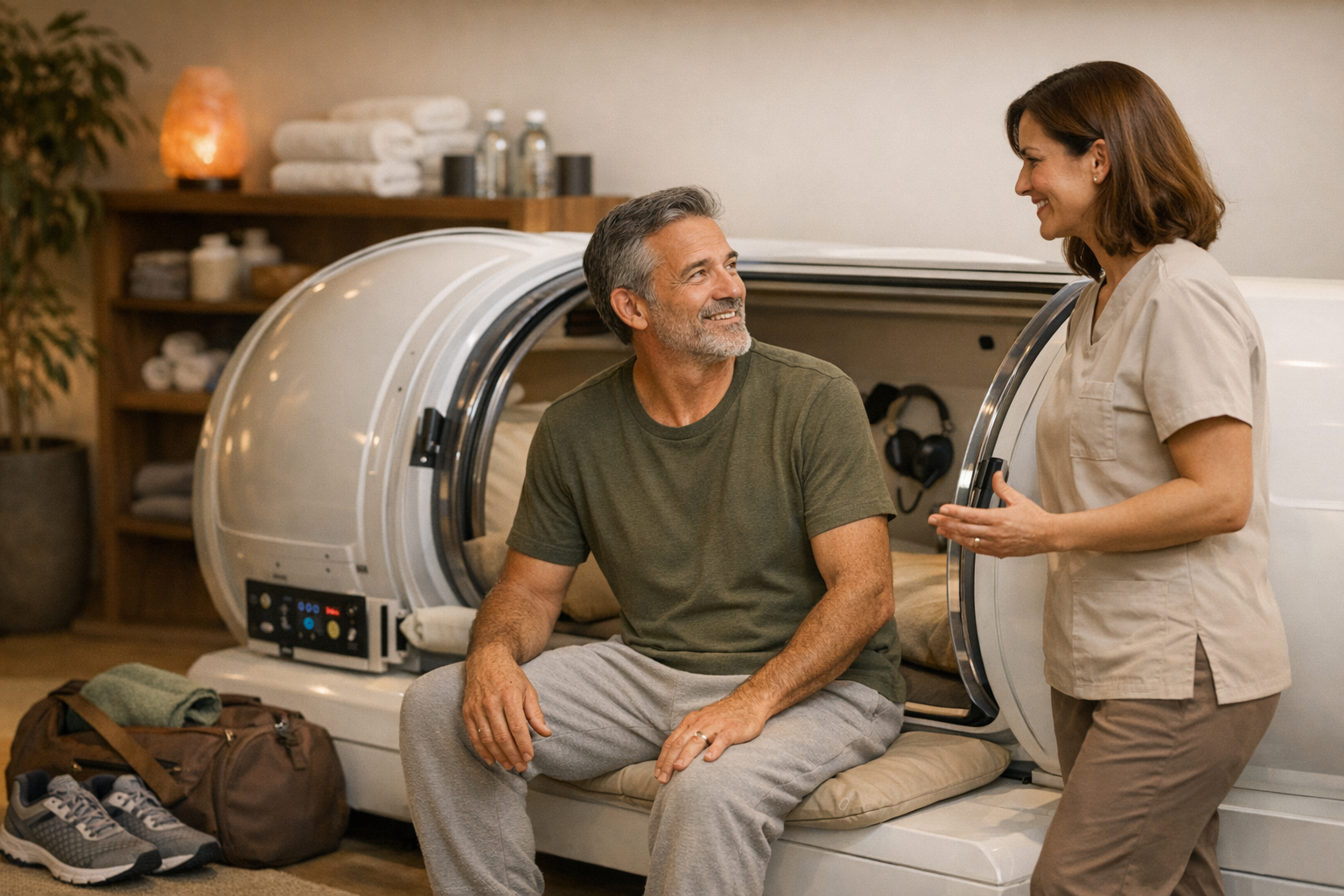
If you’re picturing something claustrophobic or medical, you’re not alone. Most people find HBOT surprisingly manageable once they know what to expect. While the exact experience depends on the chamber type, a typical session includes:
- Pre-session check-in: You’ll be asked about your health history, current symptoms, and any contraindications.
- Settling into the chamber: You’ll lie or sit comfortably. Many people use the time to relax, listen to an audio track, or practise calm breathing.
- Pressurisation: You may feel pressure changes in your ears (similar to take-off in a plane). Staff will guide you on equalising techniques (swallowing, yawning, gentle Valsalva).
- Time at pressure: This is the main part of the session. Most clients describe it as restful—some even nap.
- Depressurisation: Pressure is gradually reduced back to normal. Ear equalisation may be needed again.
Afterwards, people often report feeling relaxed. Some feel energised; others feel ready for an early night. It’s wise to avoid judging your response on a single session—patterns matter more than one-off impressions.
HBOT for wellness recovery: who might benefit most?
HBOT may be worth discussing with a qualified provider if you’re an active adult who:
- Trains consistently and wants to support recovery quality during high-load periods
- Feels “wired but tired”, where stress and activity are both high
- Has frequent DOMS (delayed onset muscle soreness) that disrupts training rhythm
- Struggles to get enough downtime and wants a structured recovery session built into the week
- Is returning to training after time off and wants to support gradual rebuilding (alongside a sensible programme)
On the other hand, HBOT may be less useful if the basics are currently missing—particularly sleep consistency, adequate calorie/protein intake, or realistic training volume. In those cases, you’ll likely get better returns by fixing fundamentals first.
Who should be cautious or avoid HBOT?
HBOT is not suitable for everyone, and proper screening matters. You should always disclose your medical history and follow provider guidance. In general, caution or avoidance may apply if you have:
- Untreated pneumothorax (collapsed lung) or certain significant lung conditions
- Acute respiratory infections or severe congestion (ear/sinus pressure equalisation becomes difficult)
- Uncontrolled seizure disorders
- Certain ear problems (e.g., recent ear surgery) that make pressure changes risky
- Claustrophobia (some people do well with coaching and gradual exposure, but it should be discussed openly)
If you’re pregnant, have complex medical conditions, or are taking specific medications, it’s particularly important to get individualised medical advice before starting.
HBOT expectations: what it can and can’t do
Let’s set a sensible frame. In wellness recovery, HBOT is best viewed as a supportive modality that may help certain aspects of recovery and wellbeing. It is not a guarantee of:
- Instant performance gains
- Injury “cures”
- Replacing proper rehab, physiotherapy, strength programming, or rest
What many active adults are realistically aiming for is more subtle but meaningful:
- Feeling less “beaten up” across a training block
- Improving sleep consistency
- Lowering perceived fatigue and stress load
- Maintaining training quality with fewer dips
If you approach HBOT as part of your recovery toolkit—alongside training periodisation, nutrition, hydration, and stress management—you’re far more likely to be happy with the experience.
How to integrate HBOT into a recovery plan (without overdoing it)
The biggest mistake active adults make with recovery tools is stacking too many things at once. If you start HBOT, cold plunges, sauna, new supplements, and a new training block in the same fortnight, you won’t know what’s helping—and you may simply add more stress.
Use a calm, structured approach.
Step 1: Define your goal for the next 4–6 weeks
Pick one primary aim:
- Support sleep quality
- Support training tolerance during a busy work period
- Support recovery between high-intensity sessions
- Support general wellbeing while you rebuild consistency
Step 2: Track a few simple markers
You don’t need a lab. Choose 3–5 indicators you can measure weekly:
- Sleep duration and perceived quality
- Morning resting heart rate (or HRV if you already use it)
- DOMS severity (0–10 scale)
- Training performance consistency (did you hit planned sessions?)
- Mood/irritability and afternoon energy
Step 3: Start with a sensible cadence
Protocols vary. Many people explore HBOT as a short block (for example, a series of sessions over several weeks) and then reassess. Your provider should guide you based on your goals, schedule, and response. More is not automatically better—especially for busy nervous systems.
Step 4: Place sessions strategically
Some active adults like HBOT:
- On a rest day as a dedicated recovery appointment
- After a heavy training day (particularly strength or high-intensity work), allowing a buffer before the next key session
- During travel-heavy weeks when sleep and hydration are compromised
If you’re experimenting, keep your training week stable for 2–3 weeks so you can actually interpret the effect.
What to do before and after HBOT for best results
Think of HBOT as a recovery amplifier: the cleaner your inputs, the better your outputs are likely to be.
Before your session
- Hydrate sensibly: Arrive well-hydrated, but avoid chugging litres right beforehand.
- Eat a balanced meal: Aim for protein + carbohydrate within a few hours of your session if you’re training that day.
- Manage congestion: If you’re blocked up, speak to your provider before attending—forcing ear equalisation is a recipe for discomfort.
- Plan a calm window: If possible, avoid rushing straight from a stressful meeting into the chamber. Even 10 minutes of slow breathing helps.
After your session
- Keep the day reasonable: A hard session immediately after may not match your goal if the aim is nervous system downshift.
- Prioritise sleep that night: A consistent bedtime and a darker, cooler room can compound the recovery effect.
- Note your response: Energy, mood, sleep onset, DOMS, and training performance over the next 24–48 hours.
HBOT compared with other recovery tools
If you’re choosing where to invest time, it helps to compare HBOT with more common recovery modalities. None is universally “best”; it’s about fit.
Sleep
The highest return-on-investment. If sleep is consistently under 7 hours, start here. HBOT may support sleep quality for some people, but it cannot replace time asleep.
Nutrition
Under-fuelling is a frequent reason active adults feel flat. A protein target spread across meals, adequate carbohydrate around training, and enough total energy often improves recovery more than any device.
Active recovery and mobility
Easy movement supports circulation, joint health and mood. It pairs well with HBOT, particularly on rest days.
Sauna and cold water
These can feel great and may influence soreness and stress tolerance. Timing matters: frequent cold immersion immediately after strength training may blunt some adaptation for hypertrophy/strength goals. If you use multiple modalities, be strategic rather than random.
Compression, massage, and physiotherapy
Excellent for symptom management and targeted support. HBOT is more systemic (whole-body). Many people combine hands-on work with HBOT during heavy training blocks.
A realistic “HBOT + fundamentals” recovery week for active adults
Here’s an example framework you can adapt. The aim is not perfection; it’s consistency.
Example week (training 4 days/week)
- Monday: Strength session + protein-forward meals + early bedtime
- Tuesday: Low-intensity cardio + mobility (20 minutes) + hydration focus
- Wednesday: Interval session + carbs around training + gentle evening walk
- Thursday: HBOT session + light movement + reduce late-night screen exposure
- Friday: Strength session + recovery meal + relaxed evening
- Saturday: Social sport or long run + post-session refuel
- Sunday: Rest day + meal prep + plan next week’s training load
Notice what’s missing: ten extra interventions. Recovery works best when you can actually maintain it.
Choosing a provider: what to look for
Because HBOT involves pressure changes and oxygen exposure, quality and safety standards matter. When considering a provider, look for:
- Clear screening and contraindication checks
- Trained staff who explain equalisation and monitor comfort
- Transparent protocols (session length, pressure, oxygen concentration) and realistic claims
- Clean, calm environment where you can genuinely rest
- Integration with a broader wellness plan (sleep, nutrition, stress management), not just selling sessions
At LIVBETTER, we view HBOT as one part of a modern recovery toolkit—alongside evidence-based nutrition support and other advanced therapies—so your plan feels coherent rather than piecemeal.
Frequently asked questions
How quickly might I notice a difference?
Some people notice improved sleep or reduced “general heaviness” within a few sessions, while others need a longer block to assess. Your baseline stress, training load and sleep debt all influence how quickly you’ll feel changes.
Can I train on the same day as HBOT?
Often yes, but timing depends on your goal. If you’re using HBOT to downshift and improve sleep, placing it later in the day after training may suit some people. If you’re prone to fatigue, you may prefer HBOT on a rest day. Your provider can help you experiment sensibly.
Is HBOT safe?
When delivered by trained professionals with appropriate screening, HBOT is generally well-tolerated. The most common issues are ear or sinus discomfort from pressure changes. This is precisely why proper instruction and gradual equalisation are important.
Do I need to do anything special afterwards?
No dramatic routines needed. Hydrate, eat normally, and prioritise sleep. The simplest post-session habit is a short note in your phone: energy, mood, sleep that night, and how your body feels in the next training session.
The bottom line: should you try HBOT for wellness recovery?
If you’re an active adult with a full diary and you’re already doing the basics reasonably well, HBOT may be a valuable addition—particularly during demanding training blocks or stressful seasons of life. It’s not a shortcut, but it can be a structured, technology-enabled way to support recovery capacity and promote a sense of restored readiness.
If you’re curious, the best next step is a short consultation to discuss your training routine, sleep, stress load, and goals—so any HBOT plan is tailored, measured and sensible. That’s how you turn a “wellness trend” into a genuinely useful tool.
Next Steps
Want to learn more? Check out these articles:
HBOT for Recovery After Demanding Weeks: A Practical Guide
HBOT for Cellular Recovery and Wellness: A Practical Guide
HBOT for Training Recovery for Busy Pros [Guide 2]
Check out our Therapies to see which options fit your goals.