
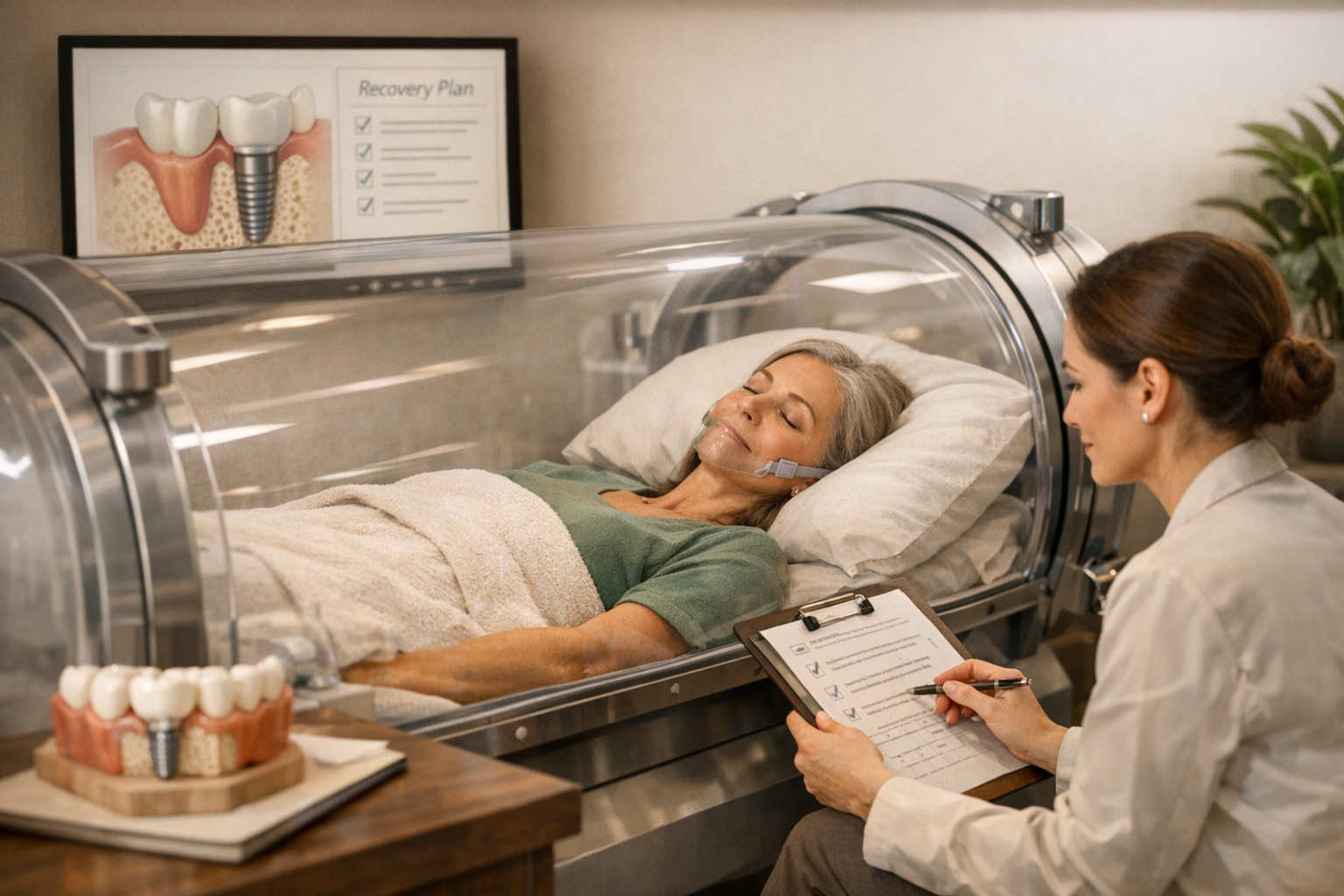
HBOT for Dental Implant Recovery: Your Practical Guide
Dental implants are one of the most reliable ways to restore a confident bite and smile—but the part most people don’t hear enough about is the recovery. Healing isn’t just “time passing”. It’s an active biological process: blood flow has to deliver oxygen and nutrients, immune cells have to keep the area clean, and bone and gum tissue have to remodel around the implant. If you’re wondering whether hyperbaric oxygen therapy (HBOT) could support that process, this guide will walk you through what we know, who it may help, and how to think about it sensibly alongside excellent dental care.
What “good healing” after implants actually involves
After an implant is placed, your body begins a sequence of overlapping stages. Understanding them makes it easier to see where HBOT might fit.
1) Early wound healing (days 1–14)
The surgical site forms a clot, inflammation rises briefly (this is normal), and the gum tissue starts sealing. Good healing here depends on:
- Stable blood supply to deliver oxygen and immune cells
- Controlled inflammation (enough to clean, not so much it damages tissue)
- Low bacterial load and good oral hygiene
2) Osseointegration (weeks to months)
Osseointegration is the process where bone cells remodel and bind around the implant surface. It is not instant. It relies on:
- Bone turnover (osteoclasts and osteoblasts doing their jobs)
- Mechanical stability (the implant staying still while bone grows)
- Oxygen and nutrients reaching the healing bone
3) Soft-tissue maturation (weeks to months)
The gum tissue strengthens and forms a protective cuff around the implant, helping reduce long-term irritation and infection risk.
HBOT explained: the simple version
Hyperbaric oxygen therapy involves breathing near-100% oxygen inside a pressurised chamber. The increased pressure helps dissolve more oxygen into the plasma (the fluid part of your blood), not just into red blood cells. That can increase oxygen delivery to tissues—particularly useful in areas where circulation is temporarily compromised.
In clinical medicine, HBOT has established uses for specific conditions (for example, certain non-healing wounds, radiation tissue injury, and some serious infections). In dentistry, it’s most commonly discussed for supporting tissues that have been affected by radiation therapy to the head and neck, and for complex bone-healing scenarios.
Why oxygen matters in dental implant recovery
Oxygen is not just “nice to have”—it is central to wound biology. Adequate tissue oxygen levels are associated with:
- Collagen formation, which supports wound strength
- Angiogenesis (new blood vessel growth)
- Immune cell function, including bacterial killing mechanisms
- Bone remodelling, which is oxygen-sensitive
So the theory is straightforward: if we can safely enhance oxygen delivery at the right time, we may support the body’s normal healing processes.
What the evidence says (and what it doesn’t)
Let’s keep this grounded. HBOT is not a magic add-on, and it is not required for the vast majority of routine implant recoveries. The strongest dental-related evidence and clinical use cases tend to cluster around higher-risk healing situations, rather than straightforward cases in healthy patients.
Where HBOT may be considered more often
- History of radiotherapy affecting the jaw (risk of compromised blood supply and bone health)
- Complex bone healing scenarios where tissue oxygenation may be limited
- Selected cases of difficult wound healing under clinician guidance
Where HBOT is usually not necessary
- Uncomplicated single-tooth implants in generally healthy individuals
- Routine recoveries where swelling and soreness settle as expected
- As a substitute for good surgical technique, hygiene, or follow-up
Importantly, outcomes in implant dentistry depend heavily on fundamentals: surgical planning, implant stability, gum health, bite forces, smoking status, diabetes control, and home care. HBOT, if used, should be seen as supportive—part of a comprehensive plan, not the centrepiece.
Who might benefit most from an “HBOT-informed” approach
If you’re considering HBOT for dental implant recovery, it’s helpful to think in terms of risk factors that reduce oxygen delivery or slow healing.
Common reasons to explore additional recovery support
- Previous radiotherapy to the jaw/face/neck
- Smoking or nicotine use (including vaping), which reduces microcirculation and impairs healing
- Diabetes or impaired glucose control (even borderline control can affect wound biology)
- History of gum disease or recurrent infections
- Multiple implants, grafting, or sinus lifts (greater surgical demand)
- Autoimmune or inflammatory conditions (case-by-case, with medical oversight)
If any of these apply, it doesn’t mean you “need HBOT”. It simply means a personalised recovery plan—sometimes including advanced therapies—may be worth discussing with your dental team and a clinician experienced in hyperbaric medicine.
HBOT timing: before vs after implant surgery
HBOT protocols vary depending on the clinical goal. In higher-risk situations, some programmes use sessions both before and after surgery to optimise tissue oxygenation ahead of the procedure and support healing afterwards.
Pre-operative sessions (when used)
The rationale is to improve local tissue oxygenation and support blood vessel health before the surgical trauma occurs. This may be particularly relevant where baseline tissue quality is compromised (for example, post-radiotherapy).
Post-operative sessions (when used)
After surgery, HBOT is sometimes considered to support normal wound processes, reduce oedema in certain contexts, and assist tissues that are struggling to oxygenate adequately.
Key point: Timing should be clinician-led. HBOT is a medical therapy with indications and contraindications, and it needs to be coordinated with your dentist or oral surgeon.
What an HBOT session is actually like
If you’ve never seen a chamber, it can sound intimidating. In reality, most people describe it as similar to flying: you may feel pressure changes in your ears during compression and need to equalise (swallowing, yawning, or gentle nose-blowing techniques).
Typical session basics
- Duration: often around 60–90 minutes (varies by protocol)
- Frequency: can range from a few sessions to a course over days/weeks, depending on the clinical plan
- During treatment: you relax, breathe oxygen, and are monitored by trained staff
Common sensations and side effects
- Ear pressure (most common; usually manageable with coaching)
- Temporary fatigue in some individuals
- Sinus pressure if you’re congested
More serious risks are uncommon when properly screened and supervised, but this is precisely why a medical assessment matters.
Who should be cautious or may not be suitable for HBOT
HBOT isn’t right for everyone. A hyperbaric clinician will screen you carefully. Common considerations include:
- Untreated pneumothorax (a key contraindication)
- Certain lung conditions that raise risk with pressure changes
- Uncontrolled seizures or specific neurological risks (case-by-case)
- Severe claustrophobia (often manageable, but important to plan for)
- Acute respiratory infections or significant sinus/ear blockage at the time of treatment
If you’re pregnant, have implanted medical devices, or take certain medications, you’ll want to disclose these during screening.
Practical recovery steps that matter (whether or not you do HBOT)
If you do nothing else, do these well. They have an outsized impact on implant outcomes.
First 72 hours: protect the clot and control swelling
- Follow your dentist’s bite and chewing guidance—micro-movement can disrupt early healing.
- Use cold packs as advised to help manage swelling.
- Prioritise sleep and consider an extra pillow for the first nights to reduce throbbing.
- Avoid vigorous rinsing early on unless instructed; you want stable early tissue conditions.
Week 1–2: keep it clean without overdoing it
- Brush gently around the area as instructed (usually with a soft brush).
- Use prescribed mouth rinses only as directed—more isn’t better.
- Don’t smoke or vape. Nicotine is one of the most consistent modifiable risks for poor healing.
Weeks to months: support bone and tissue remodelling
- Hit protein at each meal (tissue repair is protein-demanding).
- Focus on micronutrients via food: vitamin C, zinc, and vitamin D support normal tissue function. If you supplement, do so based on need and clinician advice.
- Manage blood sugar if you’re insulin resistant or diabetic—steady glucose supports healthier healing.
- Keep follow-ups even if you feel fine; early checks prevent small issues becoming bigger ones.
HBOT and dental implants: realistic expectations
A sensible way to frame HBOT is: it may help optimise the environment for healing in select situations by improving tissue oxygen availability. It does not “force” osseointegration, and it cannot compensate for issues like poor implant positioning, active infection, uncontrolled gum disease, or continued nicotine exposure.
For many people, the best recovery plan is simply meticulous dental care, excellent hygiene, good nutrition, and time. For others—particularly with compromised tissue oxygenation—HBOT may be a valuable adjunct under medical supervision.
Questions to ask your dentist or HBOT clinician
Bring these to your consultation to keep the decision evidence-led and personalised:
- Is my case considered routine or higher risk (and why)?
- Are there signs of compromised blood supply or delayed healing?
- Do I have risk factors (smoking, diabetes, prior radiotherapy) that change the plan?
- What would the HBOT goal be in my case: prevention, support, or problem-solving?
- How many sessions are typically recommended, and how will success be assessed?
- How will HBOT be coordinated with my implant timeline and follow-up imaging?
How LIVBETTER can support your recovery plan
At LIVBETTER, we’re focused on helping busy people recover well and perform at their best—without guesswork. If you’re exploring HBOT as part of dental implant recovery, we can support you with a clinician-led assessment, careful screening for suitability, and a structured plan that complements (rather than replaces) your dentist’s or oral surgeon’s guidance.
If you’re not sure whether HBOT is appropriate, that’s a perfectly good starting point. The right next step is usually a conversation that reviews your medical history, implant plan, and risk factors, and then decides whether advanced therapy adds meaningful value.
Key takeaways
- Dental implant recovery relies on healthy soft-tissue healing and longer-term bone remodelling (osseointegration).
- Oxygen plays a central role in wound biology; HBOT increases oxygen availability in the blood and tissues.
- HBOT is most often considered in higher-risk situations (for example, post-radiotherapy or complex healing challenges), not routine cases.
- Excellent fundamentals—no nicotine, good hygiene, adequate protein, stable blood sugar, and proper follow-up—remain the backbone of recovery.
- If you’re considering HBOT, do it as part of a coordinated, clinician-led plan with your dental team.
Medical note: This article is educational and not a substitute for personalised medical or dental advice. Always follow the guidance of your dentist/oral surgeon and a qualified hyperbaric clinician.
Next Steps
Want to learn more? Check out these articles:
HBOT for Wellness Recovery in Active Adults: A Practical Guide
HBOT for Recovery After Demanding Weeks: A Practical Guide
HBOT for Cellular Recovery and Wellness: A Practical Guide
Check out our Therapies to see which options fit your goals.