
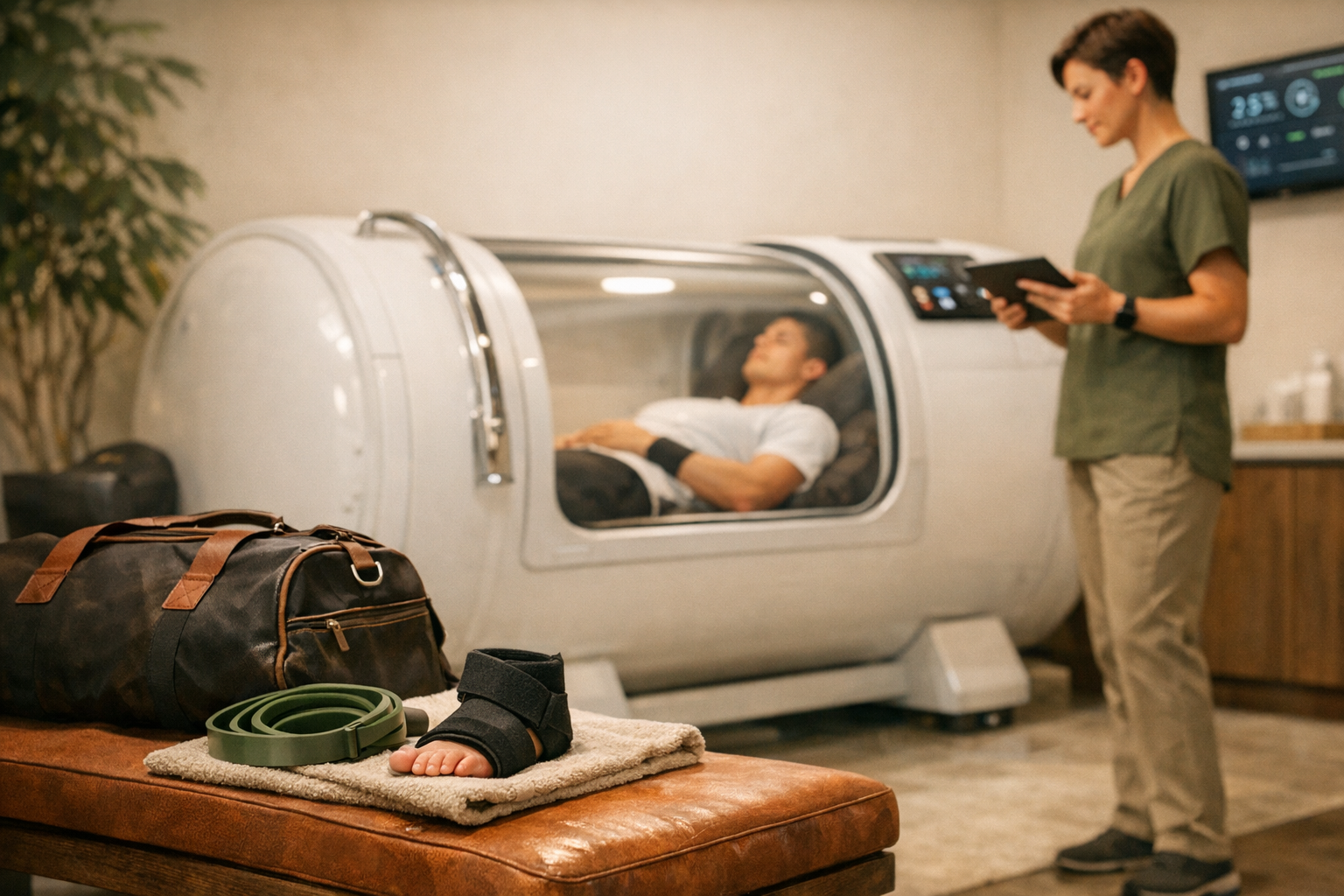
HBOT for Sports Injury Recovery: Evidence, Timing and Tips
That “why does it still hurt?” moment is familiar to almost anyone who trains. You’ve rested, you’ve iced, you’ve done the rehab exercises—and yet the ankle still feels stiff, the tendon still grumbles, or the muscle strain won’t quite settle. In those frustrating in-between phases, it’s normal to wonder whether there’s a science-backed way to support recovery without derailing your life.
Hyperbaric oxygen therapy (HBOT) is one option that’s gaining attention in performance and rehabilitation circles. It isn’t a magic fix and it isn’t a replacement for a good physiotherapy plan, appropriate loading, and adequate sleep. But, used well, HBOT may support the body’s natural healing processes—particularly when tissues are injured, inflamed, or recovering from surgery.
This guide explains what HBOT is, how it works in the context of sports injuries, what the evidence says (and what it doesn’t), how sessions typically fit into a recovery plan, and practical steps you can take alongside it to get the best outcomes.
What is HBOT (and what actually happens in a session)?
Hyperbaric oxygen therapy involves breathing oxygen in a pressurised chamber. The increased pressure allows more oxygen to dissolve into your plasma (the liquid part of blood), meaning oxygen delivery to tissues can increase beyond what is possible at normal atmospheric pressure.
In practical terms, an HBOT session typically looks like this:
- You relax in a comfortable chamber while pressure gradually increases (“compression”).
- You breathe oxygen for a set period at a prescribed pressure.
- Pressure gradually returns to normal (“decompression”).
Sessions are usually measured by:
- Pressure (often expressed in ATA—atmospheres absolute)
- Duration (commonly 60–90 minutes, depending on protocol)
- Frequency (e.g., a few times per week in a sports recovery context)
Importantly, HBOT is not the same as simply using an oxygen mask at normal pressure. The “hyperbaric” component—pressure—is what changes oxygen dynamics in the body.
Why oxygen matters in sports injury recovery
Injury recovery is, at its core, biology. Whether you’ve torn muscle fibres, irritated a tendon, or sprained a ligament, your body needs energy and resources to repair tissue and remodel it so it can tolerate load again.
Oxygen is central to several processes involved in healing and recovery, including:
- Cellular energy production (mitochondrial function depends on oxygen availability).
- Collagen synthesis (key for tendons, ligaments, fascia, and wound repair).
- Angiogenesis (formation of new blood vessels, which can improve local perfusion over time).
- Immune function (oxygen supports certain pathogen-killing mechanisms and tissue clean-up processes).
- Inflammation regulation (the inflammatory response is necessary, but it needs to resolve appropriately).
After an injury, swelling and microvascular disruption can reduce effective oxygen delivery to local tissues. HBOT may help by increasing oxygen availability in areas where circulation is temporarily compromised—supporting the environment in which repair and remodelling take place.
How HBOT may support sports injury recovery (mechanisms explained simply)
Research into HBOT spans emergency medicine, wound care, and rehabilitation. In sport, the interest is largely around supporting tissue recovery and the return-to-training process. While results vary by injury type and protocol, several mechanisms are commonly discussed.
1) Improved oxygen delivery to stressed tissues
Under pressure, more oxygen dissolves in plasma. This can increase tissue oxygen tension and may support recovery in tissues experiencing relative hypoxia (low oxygen availability), such as bruised muscle or surgically affected areas.
2) Support for collagen and connective tissue repair
Collagen is a core building block of tendons and ligaments. Oxygen is required for key steps in collagen production. HBOT may support connective tissue healing alongside progressive loading, which remains the primary driver for tendon and ligament remodelling.
3) Modulation of inflammation and swelling
Inflammation is not the enemy—it’s part of the repair signal. But prolonged or excessive inflammation can slow progress. HBOT has been associated in some contexts with reduced oedema (swelling) and modulation of inflammatory pathways. In practice, this may translate to improved comfort and movement quality in some people—without suggesting it “switches off” inflammation entirely.
4) Support for microcirculation and tissue regeneration
Some evidence suggests HBOT can stimulate factors involved in angiogenesis and tissue repair. For athletes, that is relevant because better microvascular support can contribute to long-term tissue resilience, particularly after significant injury or surgery.
5) Potential benefits for post-surgical recovery
When surgery is involved (for example, certain ligament reconstructions or fracture management), the healing environment can be more complex. HBOT has an established role in specific medical indications related to wound healing and compromised tissue. In a sports context, it may be considered as an adjunct where recovery needs additional support—always with clinical oversight and appropriate expectations.
What does the evidence say about HBOT for sports injuries?
The honest answer: HBOT is promising in certain scenarios, but it’s not universally indicated and the quality of sports-specific evidence varies.
Here’s a balanced view:
- Where HBOT tends to look most promising: injuries involving tissue hypoxia, significant bruising/contusion, swelling, complex healing demands, or post-operative recovery support.
- Where evidence is mixed: chronic tendinopathies and overuse injuries. These conditions often depend more on progressive loading, biomechanics, and time; HBOT may support symptoms or tissue environment for some people, but it isn’t a standalone solution.
- Where claims should be treated cautiously: “instant recovery”, “next-day return to sport”, or protocols presented as one-size-fits-all. Biology doesn’t work that way.
In other words, HBOT can be part of a comprehensive plan, but it’s rarely the entire plan. The best outcomes tend to occur when HBOT is integrated with evidence-based rehabilitation, nutrition, sleep, and smart return-to-training decisions.
Which sports injuries might be suitable for HBOT?
Suitability depends on diagnosis, severity, timing, and what else is happening in your recovery plan. HBOT is most often explored as an adjunct for:
- Muscle strains and contusions (particularly when bruising and swelling are prominent)
- Ligament sprains (as part of a broader programme that includes graded loading and stability work)
- Tendon pain (especially when irritability is high and you’re working on load management)
- Stress reactions and bone healing support (case-dependent; requires medical oversight)
- Post-operative recovery (when appropriate and coordinated with your surgical team)
HBOT is not a substitute for imaging when needed, or for excluding red flags such as fractures, significant tears, infection, or neurovascular issues.
Timing: when in the recovery process might HBOT help most?
Timing matters because tissues go through phases of healing (inflammatory, proliferative/repair, remodelling). HBOT protocols vary, but general considerations include:
Early phase (first days after injury)
In some cases, early HBOT may support oxygen delivery and help manage swelling. However, early decision-making should prioritise accurate diagnosis and protection of the tissue where necessary. This is also where people can overdo it—because pain temporarily improves and they return to load too soon.
Repair phase (days to weeks)
This is often where HBOT is used as an adjunct to support tissue repair while you gradually reintroduce movement, strength work, and sport-specific drills under guidance.
Remodelling phase (weeks to months)
Most long-term resilience comes from progressive loading, technique work, and building capacity. HBOT may still be used to support recovery between sessions or around higher training loads, but it shouldn’t replace the training and rehab stimuli that actually drive adaptation.
What to expect: number of sessions, frequency, and how you might feel
There isn’t a single “correct” HBOT plan for every athlete. Protocols vary depending on the condition and goals. In a performance and recovery setting, people often consider a short course (for example, several sessions over a couple of weeks) and then reassess based on objective progress.
During and after HBOT, some people report:
- A sense of relaxation or calm
- Improved sleep quality (not universal, but not uncommon)
- Reduced perception of soreness in some cases
- Transient fatigue after sessions, especially early on
It’s wise to plan your first session on a day when you’re not rushing straight into a hard training session afterwards. Your clinician can help you pair sessions with training days to complement your recovery.
HBOT safety: who should be cautious or seek medical advice first?
HBOT is generally well-tolerated when delivered by trained professionals with appropriate screening, but it isn’t for everyone.
You should disclose (and in some cases, avoid HBOT or seek specialist clearance) if you have:
- Untreated pneumothorax (collapsed lung) or certain lung conditions
- Ear or sinus issues that make pressure equalisation difficult
- Recent ear surgery or significant eardrum problems
- Uncontrolled seizures
- Certain chemotherapy agents or medical contraindications (your team will screen for this)
Common, usually minor side effects can include ear pressure discomfort (similar to flying). Good clinics will coach you through equalisation techniques and adjust compression rates as needed.
How to combine HBOT with physiotherapy and training (the high-performance approach)
HBOT works best when it supports, rather than replaces, fundamentals. If you want it to genuinely help your return to sport, integrate it into a structured plan.
A sensible integration checklist
- Confirm the diagnosis. Your rehab strategy depends on what tissue is involved and the severity.
- Set one or two measurable goals. Examples: pain-free stairs, ankle dorsiflexion range, hop test symmetry, or tolerance to specific training volume.
- Keep progressive loading at the centre. Tendons and ligaments remodel in response to load—HBOT does not replace that stimulus.
- Use HBOT to support recovery windows. Consider sessions on heavy rehab days, after flare-ups, or during post-operative recovery phases (as appropriate).
- Reassess every 2–3 weeks. If there’s no meaningful change in function, pain behaviour, or performance metrics, adjust the plan.
At LIVBETTER, we typically encourage clients to coordinate HBOT with their physiotherapist or sports clinician so the therapy supports the “big picture”: movement quality, tissue capacity, and confident return to training.
Practical recovery steps you can do alongside HBOT
Think of HBOT as one lever. Your day-to-day habits are the foundation. If you’re investing in advanced recovery, it makes sense to also nail the basics that are strongly supported by evidence.
1) Protein and overall energy intake (for repair and adaptation)
Injury recovery increases protein needs, and under-fuelling can slow repair and reduce training tolerance. A practical, non-fussy target many active adults do well with is distributing protein across the day (rather than having most of it at dinner).
- Include a quality protein source at each meal.
- Prioritise leucine-rich options (e.g., dairy, eggs, fish, lean meats, soy) if tolerated and preferred.
- If appetite is low post-injury, consider smaller, more frequent meals.
2) Sleep: your most underrated recovery tool
Deep sleep supports tissue repair, immune regulation, and pain modulation. If pain is interrupting sleep, address that with positioning, timing of rehab work, and professional advice.
- Keep a consistent sleep-wake schedule (even on weekends).
- Dim screens and bright light 60 minutes before bed when possible.
- Keep the room cool and dark; consider a wind-down routine you can repeat nightly.
3) Smart load management (avoid the boom–bust cycle)
Many “slow healers” aren’t actually slow—they’re being asked to do too much, too soon, too often. Your tissue needs a progressive plan with enough recovery to adapt.
- Track pain behaviour (during activity and the following morning).
- Increase training volume or intensity gradually.
- Use objective markers (range, strength, swelling, hop tests) rather than emotion alone.
4) Mobility and circulation without aggravation
Gentle movement can help maintain range of motion and confidence without provoking the tissue.
- Short, frequent walks (if appropriate)
- Low-load mobility drills within comfort
- Physio-prescribed isometrics for pain modulation (commonly used in tendinopathy)
Common myths about HBOT in sport (worth clearing up)
Myth 1: “HBOT will speed up any injury.”
Some injuries respond well to better oxygenation and reduced swelling; others are primarily limited by tissue remodelling timelines and load tolerance. HBOT may support recovery, but it won’t override biology.
Myth 2: “If I feel better after HBOT, I’m ready to train hard.”
Feeling better is useful information—but it’s not a green light on its own. Use function-based milestones and clinician guidance to avoid re-injury.
Myth 3: “More sessions is always better.”
More is not automatically better. The right dose depends on your condition, response, and overall plan. Reassess regularly.
How to decide if HBOT is worth considering for your recovery
HBOT may be a good fit if:
- You have a diagnosed injury with lingering swelling, bruising, or delayed recovery
- You’re post-operative and looking for supportive recovery modalities (with clinician coordination)
- You’re already doing high-quality rehab but want additional support for tissue recovery and training tolerance
- You value a structured, monitored approach rather than DIY recovery trends
You may want to prioritise other steps first if:
- You haven’t yet had a clear assessment or diagnosis
- Your rehab plan is inconsistent or not progressively loaded
- Sleep and nutrition are significantly off track (these have large, reliable effects)
What a thoughtful HBOT plan at LIVBETTER can look like
LIVBETTER’s approach is designed for busy people who still want high standards: evidence-informed protocols, careful screening, and a calm, premium experience that fits into real life. If you’re exploring HBOT for sports injury recovery, we’ll typically start by understanding:
- Your injury history and current symptoms
- Your training demands and timeline
- Any medical considerations that affect safety
- How HBOT could complement your rehab plan
From there, we can recommend a sensible course and, crucially, help you track whether it’s making a meaningful difference to function, comfort, and return-to-training confidence.
The takeaway: HBOT is an adjunct, not a shortcut
Sports injuries test patience. The most reliable route back is still the “boring brilliance” of great rehab: progressive loading, good sleep, adequate fuel, and consistency. HBOT can be a valuable add-on—especially when tissue oxygenation and swelling are part of the challenge—but it works best when it supports the fundamentals rather than replacing them.
If you’re considering HBOT for sports injury recovery, treat it like you would any performance tool: personalise it, measure progress, and use it as part of a wider plan that gets you back doing what you love—stronger, steadier, and more confident.
Next Steps
Want to learn more? Check out these articles:
HBOT for Dental Implant Recovery: Healing, Swelling and Comfort
HBOT for Energy and Recovery Optimisation [Evidence-Based Guide]
HBOT for Scar Recovery Support: A Science-Backed Guide
Check out our Therapies to see which options fit your goals.