
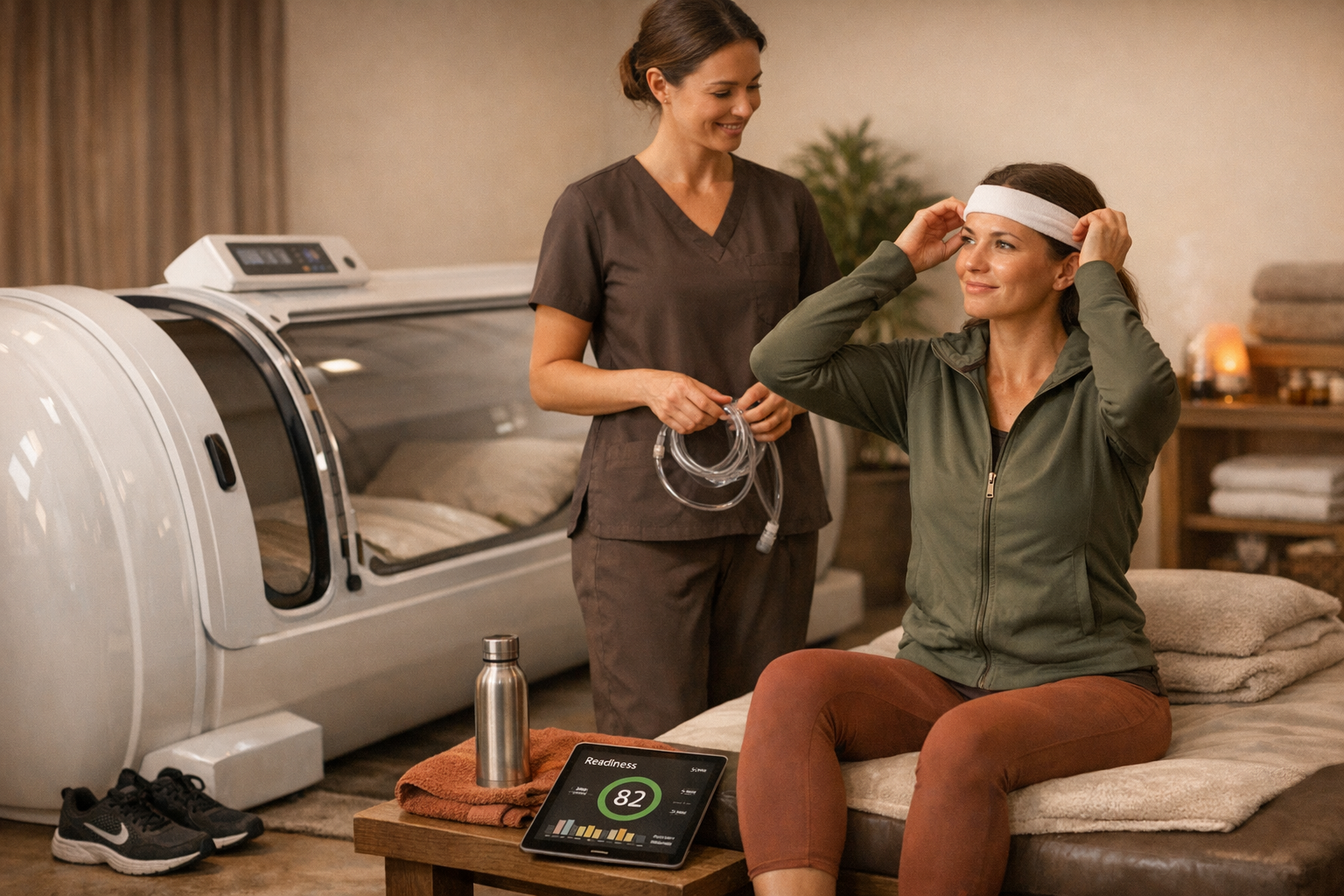
HBOT for Energy and Recovery Optimisation [Evidence-Based Guide]
Ever notice how “tired” isn’t just about sleep? You can be in bed for eight hours and still wake up feeling like your battery never properly charged. For many high-performing, busy people, the real issue is recovery: the ability to bounce back from training, travel, stress, long workdays, and the low-grade inflammation that modern life quietly accumulates. That’s where HBOT—hyperbaric oxygen therapy—has become a serious point of interest for energy and recovery optimisation.
HBOT is not a magic wand, and it isn’t a substitute for fundamentals like sleep, nutrition, and intelligent training. But used thoughtfully, it may support recovery capacity by temporarily increasing how much oxygen is dissolved in your blood plasma—helping oxygen reach tissues more efficiently, even when circulation is under strain.
In this guide, we’ll unpack what HBOT actually is, how it may support energy and recovery, who it’s best suited to (and who should be cautious), and how to combine it with the habits that make the biggest difference. Think of this as a clinician’s overview—with the practical clarity you’d want before booking a session.
What is HBOT (hyperbaric oxygen therapy), really?
HBOT involves breathing oxygen inside a pressurised chamber. The “hyperbaric” part refers to pressure that’s higher than normal atmospheric pressure at sea level. Under these conditions, more oxygen dissolves into the plasma (the liquid portion of your blood), not just the haemoglobin in red blood cells.
Why does that matter? Because dissolved oxygen can diffuse into tissues more readily. In everyday life, oxygen delivery depends heavily on blood flow and haemoglobin saturation. With HBOT, the physics shifts in your favour: oxygen availability increases, and that may help support tissues that are metabolically demanding or in a heightened recovery phase.
Key terms made simple
- Pressure: The chamber is pressurised above “normal” air pressure, which increases oxygen availability in the body.
- Oxygen delivery: More oxygen in plasma may support tissues where oxygen demand is high (for example after intense training or during periods of stress).
- Recovery optimisation: Not just “feeling better”, but supporting the biological processes that restore function—sleep quality, inflammation balance, tissue repair, and nervous system regulation.
Why oxygen matters for energy and recovery
Energy is not a single system—it’s an output of multiple systems working smoothly: mitochondrial function, nervous system balance, sleep architecture, hormonal signalling, and immune regulation. Oxygen plays a role across many of these, particularly through its relationship with cellular energy production.
Your mitochondria use oxygen to help produce ATP (adenosine triphosphate), often described as the cell’s “energy currency”. When you’re under-recovered—whether from training, stress, inadequate sleep, or frequent travel—your body may prioritise survival and repair over performance. That can show up as heavy legs, brain fog, low motivation, poor sleep, or a sense that your usual routines feel disproportionately hard.
HBOT isn’t a replacement for addressing the root causes of fatigue, but increased oxygen availability may support recovery processes that underpin better energy over time.
HBOT for energy: what people report vs what the science suggests
People often describe feeling clearer-headed or more “switched on” after sessions. Others feel pleasantly tired (similar to the post-massage effect), which can be a sign the nervous system is downshifting. It’s important to hold these experiences with healthy scepticism: subjective energy can be influenced by expectations, rest, and the simple act of taking time out.
From a scientific perspective, HBOT has established medical uses in specific contexts, and there is growing interest in its broader recovery applications. Mechanistically, researchers explore effects related to:
- Improved oxygen diffusion into tissues during periods of demand
- Modulation of inflammation (supporting a healthier inflammatory balance rather than “turning inflammation off”)
- Support for angiogenesis (the formation of new blood vessels) in certain contexts
- Cellular signalling related to oxidative stress and antioxidant systems
When it comes to energy, the most realistic expectation is this: HBOT may support the underlying recovery landscape—so you have a better chance of feeling energetic because your body is better restored. It’s less about an instant “boost” and more about building resilience.
Who might notice energy benefits?
- Busy professionals with high cognitive load and inconsistent recovery habits
- People in intense training blocks who are managing soreness, fatigue, or heavy schedules
- Frequent travellers dealing with disrupted sleep and routine changes
- Anyone using recovery strategically as part of a wider performance plan
HBOT for recovery optimisation: where it may fit
Recovery isn’t just what happens after exercise. It’s what happens after any stressor—physical, mental, emotional, or environmental. A good recovery strategy reduces the “cost” of stress so you can perform well again sooner, without edging into burnout.
HBOT may support recovery optimisation in a few practical ways:
1) Supporting tissue recovery after training
Training adaptations occur when you apply stress and then recover. The recovery phase includes tissue repair, immune activity, and remodelling. By increasing oxygen availability, HBOT may support processes involved in repair, particularly when paired with good nutrition and appropriate training load management.
2) Nervous system downshift
Many high-achievers live in a sympathetic “always on” state. Even if you’re fit, that can blunt recovery, impact sleep depth, and reduce mental clarity. The HBOT environment is quiet, contained, and still—many people find it encourages a parasympathetic shift (rest-and-digest), which is an underappreciated part of recovery.
3) Supporting sleep quality indirectly
HBOT isn’t a sleep therapy, but better recovery often expresses itself through improved sleep continuity and next-day readiness. If HBOT helps your body “catch up” on restoration, sleep can become more efficient. The key is to track your response rather than assume it will happen.
4) Strategic recovery during high-stress periods
Think of HBOT as a tool you might deploy during:
- High workload weeks
- Intense training phases
- Post-travel reset periods
- When you’re prioritising recovery to protect performance and mood
What an HBOT session feels like (and what to expect)
If you’ve never done HBOT, the concept can sound intimidating. In reality, most sessions are straightforward and relaxing.
Typical session experience
- Preparation: You’ll be guided through safety checks and what to do during pressurisation.
- Pressurisation: You may feel pressure changes in your ears (similar to flying). You’ll be coached on gentle equalisation techniques.
- Session time: You rest comfortably; many people listen to audio or simply switch off.
- Decompression: Pressure gradually returns to normal.
Afterwards, some people feel refreshed and clear; others feel relaxed or a bit sleepy. Hydration, a light meal, and a calm schedule afterwards can help you interpret your response accurately.
HBOT protocols for optimisation: consistency beats intensity
In performance and recovery work, the dose matters. HBOT is no different. While protocols vary depending on goals and individual context, two general principles are worth keeping in mind:
- Consistency tends to outperform “one-off” sessions for recovery optimisation. Many physiological adaptations are cumulative.
- More isn’t always better. Your body needs time to respond, and the right protocol should fit your training and life schedule rather than overwhelm it.
If your goal is energy and recovery optimisation, it’s usually more sensible to start with a short block and track outcomes (sleep, training readiness, soreness, focus) before committing to a long run.
A practical way to track whether HBOT is helping
Before your first session, pick 3–5 markers and rate them daily for a week, then continue during your HBOT block:
- Morning energy (0–10)
- Sleep quality (0–10)
- Training readiness or perceived exertion
- Muscle soreness (0–10)
- Focus/mental clarity (0–10)
Optional upgrades if you like data: resting heart rate, HRV, or sleep metrics from a wearable. The goal is not perfection—it’s pattern recognition.
Who HBOT may be best suited for (and who should avoid it)
HBOT can be an excellent adjunct for certain people, but it’s not suitable for everyone. A proper clinical screening is non-negotiable.
HBOT may be a good fit if you:
- Want a structured recovery tool to complement training and a demanding schedule
- Struggle with persistent fatigue that improves with rest but keeps returning under stress
- Are building a long-term plan for resilience, sleep, and performance
- Prefer interventions with a clear physiological rationale rather than trends
HBOT may not be suitable if you have:
- Certain untreated lung conditions (risk considerations should be assessed clinically)
- An inability to equalise ear pressure comfortably
- Specific contraindications that a practitioner will screen for (for example, certain medications or medical devices depending on the setting)
Always discuss your medical history with a qualified clinician. At LIVBETTER, we treat HBOT as a clinical-grade service: it should be personalised, not generic.
How to get more from HBOT: small actions that compound results
HBOT works best when it’s part of a bigger recovery ecosystem. If your schedule is packed, you don’t need a complete lifestyle overhaul—you need a few high-yield behaviours that support the same end goal: better restoration.
Before your session
- Hydrate well: oxygen delivery and circulation work better when you’re not under-hydrated.
- Keep caffeine sensible: if you’re highly stimulated, it can be harder to downshift during the session.
- Have a light, balanced meal: stable blood glucose supports calmer energy and focus.
After your session
- Choose a “recovery-friendly” window: if possible, avoid stacking an intense workout or highly stressful meeting immediately afterwards.
- Protein plus colourful plants: a straightforward meal supports repair and antioxidant systems without needing heavy supplementation.
- Prioritise sleep that night: think of HBOT as creating an opportunity; sleep is where you cash it in.
Combining HBOT with other advanced therapies (without overdoing it)
LIVBETTER’s approach is modern and technology-enabled, but always grounded in physiology. If you’re using HBOT for energy and recovery optimisation, combinations should be intentional and paced.
Combinations that can make sense
- HBOT + personalised nutrition: ensuring adequate protein, micronutrients, and meal timing can help your body use recovery opportunities more effectively.
- HBOT + stress regulation practices: breathwork, gentle mobility, or a short mindfulness practice can reinforce the parasympathetic shift.
- HBOT + smart training periodisation: aligning sessions with your highest load weeks can be a practical strategy.
A note on “stacking”
More therapies don’t automatically equal better outcomes. If you stack too many interventions, it becomes difficult to know what’s working—and you may inadvertently add stress rather than reduce it. A clinician-guided plan keeps things effective and sustainable.
Common misconceptions about HBOT for energy
“It will fix my fatigue overnight.”
If fatigue is driven by chronic stress, insufficient sleep, iron deficiency, low energy availability, or other medical causes, HBOT may not be the primary lever. It can be supportive, but it’s not a substitute for proper assessment and fundamentals.
“More oxygen is always better.”
Your body is designed to regulate oxygen and oxidative stress carefully. HBOT is useful because it’s controlled, time-limited, and clinically monitored. It’s not about chasing maximum oxygen all the time.
“If I feel tired after, it didn’t work.”
Not necessarily. A post-session dip can reflect nervous system downshifting or simply the fact you finally paused. The question is what happens to your sleep, clarity, and training readiness over the following 24–72 hours.
Realistic outcomes: what “success” can look like
For energy and recovery optimisation, success is usually subtle but meaningful. Examples include:
- Less next-day heaviness after hard training
- Improved sleep depth or fewer night awakenings
- Better afternoon focus and fewer energy crashes
- More consistent training output across the week
- A calmer baseline mood under pressure
If you’re tracking well, you should be able to say, “My recovery capacity is better,” rather than “I got an instant buzz.” That’s the difference between optimisation and stimulation.
How to decide if HBOT is worth trying
If you’re curious, use a simple decision filter:
HBOT may be a good next step if:
- You’ve already addressed the basics (sleep, hydration, protein, training balance) reasonably well.
- You have a period coming up where recovery matters (busy season, training block, travel).
- You’re willing to commit to a short, consistent trial rather than a one-off.
- You’ll track a few markers so your decision is evidence-led, not hope-led.
Consider other priorities first if:
- You’re chronically sleeping less than 6–7 hours most nights
- You’re training hard but under-fuelling
- You suspect a medical cause for fatigue (for example, persistent symptoms despite rest)
In those cases, a clinical review and foundational plan may deliver more value than any advanced therapy.
Where LIVBETTER fits in
At LIVBETTER, we position HBOT as one part of a wider recovery and performance ecosystem. The goal is to help you think better, feel better, and live better—without adding complexity or disrupting your schedule.
If you’re exploring HBOT for energy and recovery optimisation, a clinician-guided approach can help you:
- Choose an appropriate protocol
- Align sessions with your training and workload
- Track outcomes that matter to you
- Avoid overdoing it or chasing short-term stimulation
Used well, HBOT is less about “biohacking” and more about giving your body the conditions it needs to restore itself—especially when life is demanding and performance matters.
Takeaway: treat HBOT as recovery support, not a shortcut
HBOT is a credible, physiology-led tool that may support energy and recovery optimisation by improving oxygen availability and supporting recovery signalling pathways. It’s most effective when paired with the non-negotiables—sleep, nutrition, stress regulation, and intelligent training.
If you’re ready to explore it, start with a clear goal, a short trial, and a simple tracking plan. That’s how you turn an advanced therapy into real-world results: calmly, consistently, and with evidence guiding the way.
Next Steps
Want to learn more? Check out these articles:
HBOT for Scar Recovery Support: A Science-Backed Guide
HBOT and Infrared Sauna for Smarter Recovery Planning
HBOT for Travel Recovery: Jet Lag, Sleep and Wellness Reset
Check out our Therapies to see which options fit your goals.