
HBOT for Soft Tissue Recovery: A Practical, Evidence-Based Guide
Soft tissue injuries have a knack for arriving at the worst possible time: just as you’re building momentum in training, ramping up for a busy work season, or trying to stay consistent with your movement routine. A strained calf, a stubborn tendon niggle, post-surgical swelling, or a bruised muscle can feel deceptively simple—until it starts limiting sleep, focus, and the basics of daily life.
Hyperbaric oxygen therapy (HBOT) is often discussed in high-performance sport and clinical settings, but it’s increasingly being explored by everyday people who want a smarter recovery plan. The key is knowing what HBOT can realistically do, who it may help most, and how to combine it with the fundamentals that truly drive soft tissue healing.
This guide breaks down the science in plain English, outlines what a typical HBOT session looks like, and gives practical steps you can use right away—whether or not you ever step into a chamber.
What counts as “soft tissue” (and why it heals slowly)
“Soft tissue” is a broad label that includes muscles, tendons, ligaments, fascia, and the small blood vessels and connective tissue that support them. These tissues are designed to handle load, stretch, and repeated impact. When they’re overloaded—suddenly or over time—they respond with inflammation, pain, stiffness, reduced capacity, and sometimes tearing.
One reason soft tissue recovery can feel slow is blood supply. Muscle tends to be relatively well perfused (good blood flow), while tendons and certain ligaments have a more limited blood supply. Less circulation can mean less oxygen delivery, fewer building blocks for repair, and a slower “clean-up” of metabolic by-products from injured tissue.
Common soft tissue recovery scenarios
- Acute strains and sprains (for example, hamstring strains or ankle sprains)
- Overuse tendon pain (Achilles, patellar tendon, tennis elbow)
- Post-operative recovery where soft tissue healing and swelling management are priorities
- Bruising/contusions after impact, especially with swelling and stiffness
- Persistent tightness and reduced range of movement after an injury has “settled” but not fully resolved
Soft tissue healing is not just “time passing”. It is an active biological process requiring oxygen, nutrients, appropriate loading, and a regulated inflammatory response. That’s where HBOT is theorised to offer support.
HBOT explained: what it is (and what it isn’t)
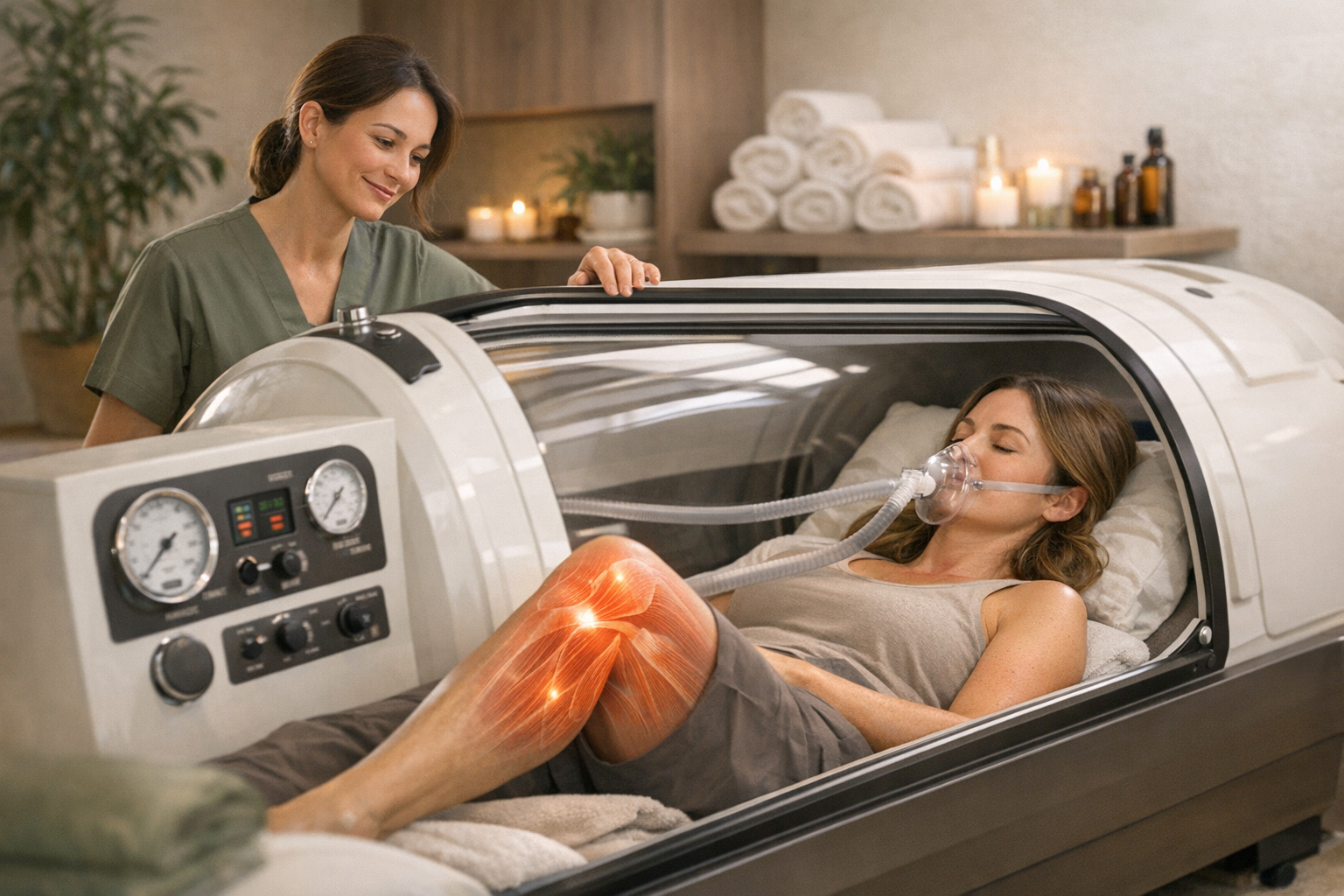
Hyperbaric oxygen therapy involves breathing oxygen in a pressurised chamber. Increasing the surrounding pressure allows more oxygen to dissolve into the plasma (the liquid portion of your blood), which can increase oxygen availability to tissues—particularly in areas where circulation may be compromised.
It’s important to separate two concepts that are sometimes blurred online:
- Clinical HBOT: delivered under medical supervision at higher pressures and specific protocols for certain medical indications.
- Lower-pressure oxygen sessions: sometimes used in wellness/performance contexts; these may feel similar but are not identical in dose or medical indication.
At LIVBETTER, our focus is always on evidence-based, responsible use—positioning HBOT as a recovery support tool, not a replacement for diagnosis, rehabilitation, or medical care.
What you might feel during HBOT
Most people describe HBOT as calm and comfortable. The main sensation is pressure change in the ears—similar to take-off and landing on a flight. You’ll typically relax, breathe normally, and let the session do its work.
How HBOT may support soft tissue recovery (the science, simply)
Soft tissue healing involves a sequence of overlapping phases: inflammation, proliferation (repair), and remodelling (returning strength and structure). Oxygen is relevant at each stage. HBOT is studied for its ability to increase tissue oxygenation and influence several processes that matter in recovery.
1) Supporting oxygen delivery to stressed or injured tissue
After injury, local swelling and microvascular disruption can reduce efficient oxygen delivery. By increasing the amount of dissolved oxygen in blood plasma, HBOT may improve oxygen availability in tissues where red blood cell delivery is less effective. This can be particularly relevant in areas with compromised microcirculation.
2) Modulating inflammation (not “turning it off”)
Inflammation is not the enemy—it’s part of repair. The goal is appropriate, well-regulated inflammation rather than a prolonged, excessive response. Research suggests HBOT can influence inflammatory signalling and oxidative stress pathways, potentially helping the body move through the healing stages more efficiently. This is nuanced: it’s not about eliminating inflammation, but about supporting a balanced response.
3) Angiogenesis: helping the body build better blood supply
Healing tissue often benefits from improved microcirculation. HBOT has been associated in studies with signalling that supports angiogenesis (formation of new small blood vessels). Better capillary networks can mean improved oxygen and nutrient delivery over time—useful in recovery and tissue remodelling.
4) Collagen synthesis and tissue remodelling support
Collagen is a key structural protein in tendons, ligaments, fascia, and scar tissue. Oxygen is required for certain steps in collagen formation and cross-linking. HBOT may support this environment, which could be relevant during rehabilitation when the goal is stronger, more resilient tissue—alongside proper progressive loading.
5) Swelling and bruising management
Some people explore HBOT to support swelling and bruising recovery, particularly post-injury or post-procedure. While individual responses vary, improved oxygenation and potential effects on inflammation may be part of why it’s considered in these contexts.
One point to keep grounded: HBOT is rarely the single deciding factor in recovery. It can be a useful adjunct—especially when paired with excellent rehab, sleep, nutrition, and load management.
What does the evidence say about HBOT for soft tissue recovery?
HBOT has strong clinical evidence and established use for certain medical conditions (for example, specific types of non-healing wounds and radiation tissue injury). For soft tissue injuries in healthy, active individuals, the evidence base is more mixed and still evolving.
What we can say responsibly is:
- There is plausible physiology for why increasing tissue oxygenation may support aspects of healing.
- Some studies suggest benefits in recovery-related outcomes in certain contexts, but protocols, pressures, and patient groups vary widely.
- HBOT should be seen as part of a comprehensive recovery plan, not a standalone cure.
If you’re considering HBOT, it’s worth discussing your specific injury history, timeframe, and rehab plan with a qualified clinician so the approach matches your goals and stage of healing.
Who may consider HBOT for soft tissue recovery?
HBOT may be worth exploring if you:
- Have a soft tissue injury where recovery is limited by swelling, pain, or a slow return of function (after appropriate medical assessment).
- Are recovering post-procedure and looking for supportive strategies to optimise tissue conditions (within your surgeon’s guidance).
- Train regularly and want to support recovery capacity during high workload periods (while maintaining sensible programming).
- Have had repeated flare-ups and you’re now taking a more structured, whole-system approach (rehab + recovery + lifestyle).
When to be cautious or seek medical clearance
HBOT isn’t suitable for everyone. You should seek medical advice before HBOT if you have certain lung conditions, uncontrolled respiratory issues, recent ear or sinus surgery, severe claustrophobia, or if you are pregnant (depending on context). Ear pressure equalisation issues are common and manageable for many people, but they must be taken seriously.
At LIVBETTER, we prioritise appropriate screening and a medically respectful approach, with clear guidance on comfort and safety.
What a typical HBOT plan can look like
Protocols vary depending on the goal, the type of chamber, and the context (clinical vs wellness/performance). For soft tissue recovery support, people often choose a course of sessions over days or weeks rather than a one-off.
What to expect in a session
- Pre-session check-in: brief screening and guidance, especially around ear equalisation.
- Pressurisation: gradual increase in pressure; you’ll equalise ears as needed.
- Time at pressure: you relax and breathe; many people read, listen to audio, or rest.
- Depressurisation: slow return to normal pressure.
How quickly might you notice anything?
Some people report feeling subtle changes after a few sessions—often related to overall recovery, sleep quality, or how “heavy” an injured area feels. Others notice little subjectively but still value HBOT as part of a structured plan. The honest answer is: responses vary, and the goal is steady progress over time rather than a dramatic overnight shift.
How to combine HBOT with the fundamentals of tissue healing
If you want the best return on any advanced therapy, the basics must be in place. Think of HBOT as a potential “multiplier” on good habits—not a substitute for them.
1) Use the right loading at the right time
Soft tissue typically recovers best with progressive, graded loading—enough stimulus to remodel and regain capacity, without repeatedly provoking flare-ups.
- Early phase: protect the area, reduce aggravating load, maintain pain-free movement.
- Mid phase: reintroduce strength work (often isometrics progressing to isotonic loading).
- Late phase: build sport- or life-specific capacity (plyometrics, change of direction, higher intensity as tolerated).
If you’re unsure where you are on that spectrum, a physiotherapist-guided plan is one of the highest-value investments you can make.
2) Prioritise protein and overall energy intake
Tissue repair is metabolically demanding. Consistent protein intake supports muscle protein synthesis and connective tissue repair, and adequate overall energy intake matters for healing capacity. You don’t need a supplement cupboard—just a consistent, high-quality food routine.
Practical targets (general guidance):
- Protein: include a high-quality serving at each meal (for example, eggs, yoghurt, fish, lean meat, tofu/tempeh, legumes plus grains).
- Colour and fibre: a variety of fruit and vegetables to support micronutrients involved in tissue health.
- Hydration: especially if swelling management and circulation are priorities.
3) Take sleep seriously (it’s where repair happens)
Sleep is when growth hormone pulses, tissue repair processes are upregulated, and pain sensitivity often improves. If your injury is disrupting sleep, address that early with positioning, temperature, wind-down routines, and medical support if needed.
4) Manage stress load, not just training load
Your body doesn’t separate “work stress” from “training stress” very well. High stress can influence inflammation, pain perception, and recovery behaviours. Even simple daily practices—10 minutes of downregulation breathing, a consistent bedtime, and short outdoor walks—can shift recovery in the right direction.
Practical action steps you can start today
If you’re dealing with a soft tissue issue right now, use this simple plan as a starting point.
A 7-day recovery reset (safe, realistic, effective)
- Book the right assessment: if pain is sharp, worsening, associated with significant swelling/bruising, or limiting function, get evaluated by a clinician.
- Track aggravators: write down the top 2–3 movements or activities that consistently flare symptoms, then reduce or modify them for one week.
- Keep gentle movement daily: aim for pain-free range of motion work and light activity to support circulation.
- Strengthen within tolerance: add a simple, low-irritation strength exercise 3–4 times/week (your physio can guide the best choice).
- Protein at each meal: consistency beats perfection.
- Protect sleep: set a fixed wake time, reduce late caffeine, and keep the bedroom cool and dark.
- Consider an adjunct: if appropriate, explore recovery modalities such as HBOT as part of your wider plan.
HBOT at LIVBETTER: how we approach it
LIVBETTER is built for people who want high-end, technology-enabled health support without losing the plot on what actually works. If you’re considering HBOT for soft tissue recovery, our goal is to make the process clear, comfortable, and aligned with your broader recovery strategy.
That means:
- Thoughtful screening to ensure HBOT is appropriate for you.
- Clear expectations about what HBOT can and cannot do.
- Integration with the fundamentals: movement, sleep, nutrition, and stress management.
If you’re already working with a physiotherapist, coach, or clinician, HBOT can also be coordinated as an adjunct to your plan—so you’re not guessing.
Frequently asked questions
Is HBOT just for elite athletes?
No. While it’s popular in sport, the core idea—supporting tissue oxygenation—can be relevant to anyone recovering from a soft tissue issue. The key is matching the approach to your context and ensuring you’re doing the rehab basics well.
Can HBOT replace physiotherapy?
HBOT doesn’t replace progressive loading, movement retraining, and capacity building. If anything, it works best when you’re already doing a sensible rehab plan.
Is it safe?
For many people, HBOT is well tolerated when properly screened and supervised. The most common issues relate to ear pressure equalisation. A proper intake and safety-first protocols matter.
How many sessions do I need?
There isn’t a one-size-fits-all answer. Some people trial a small block of sessions and assess response alongside objective recovery markers (pain with activity, range of motion, strength tolerance, swelling). A clinician-led plan can help you decide what’s reasonable.
The bottom line
Soft tissue recovery is rarely glamorous, but it can be intelligent. HBOT may support recovery by improving oxygen availability and influencing processes involved in inflammation regulation, circulation, and tissue remodelling. The best outcomes tend to come when HBOT is used as an adjunct—paired with targeted rehab, quality sleep, steady nutrition, and stress management.
If you’d like help deciding whether HBOT fits your recovery plan, LIVBETTER can guide you through a safe, evidence-informed approach—so you can get back to moving well, thinking clearly, and feeling like yourself again.
Next Steps
Want to learn more? Check out these articles:
HBOT for Sports Injury Recovery: Evidence, Timing and Tips
HBOT for Dental Implant Recovery: Healing, Swelling and Comfort
HBOT for Energy and Recovery Optimisation [Evidence-Based Guide]
Check out our Therapies to see which options fit your goals.