
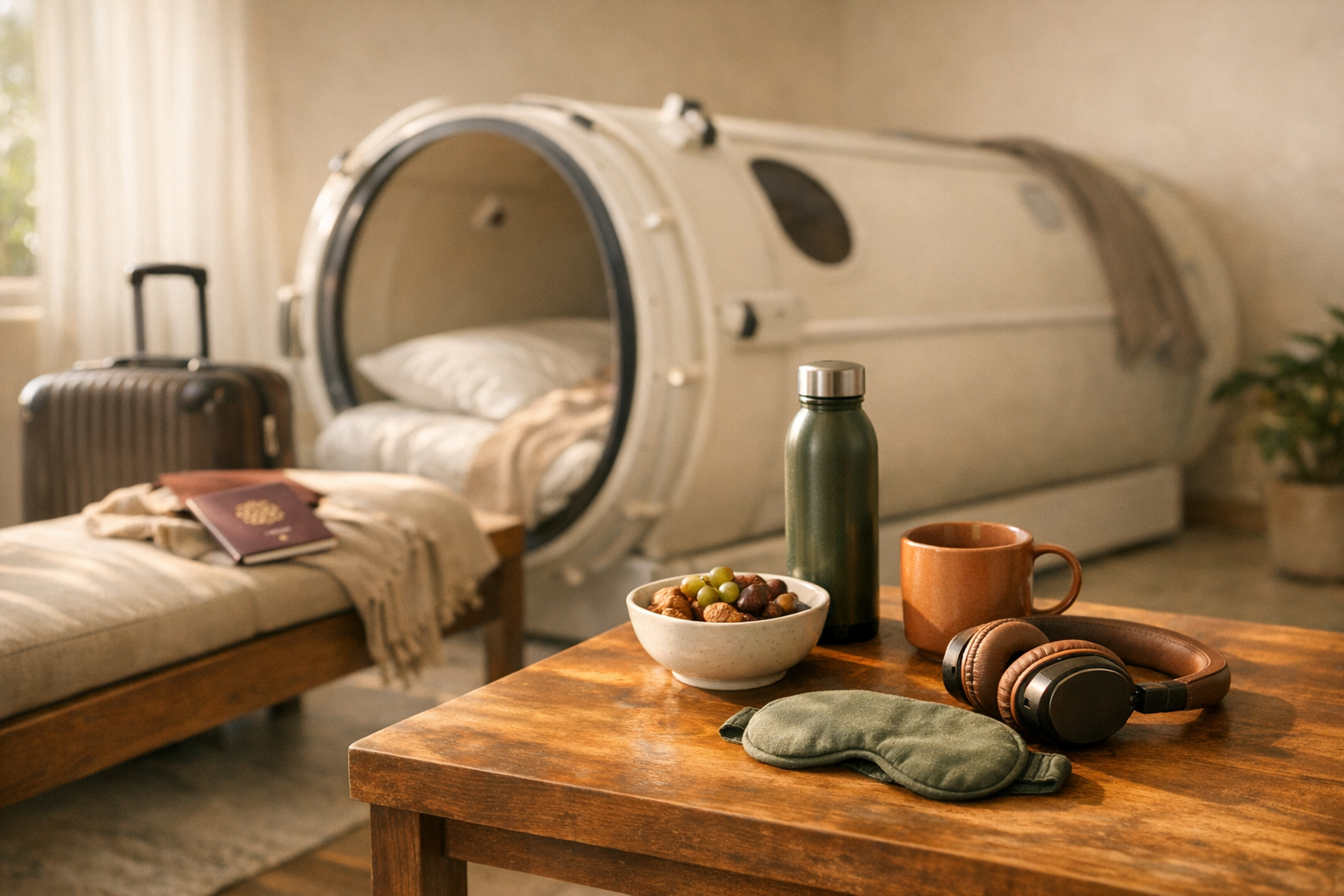
HBOT for Post-Travel Recovery: Reset Jet Lag and Energy
Ever landed from a flight feeling like your brain has been left somewhere over the Atlantic? You’re not imagining it. Long-haul travel can disrupt sleep timing, dry you out, irritate your airways and leave your muscles feeling oddly heavy—even if you barely moved. Add busy work schedules, airport food, and a sudden time-zone shift, and it’s no wonder many people need a proper “reset” after travelling.
Hyperbaric Oxygen Therapy (HBOT) is gaining attention as a science-led way to support recovery after travel. It’s not a magic button—and it won’t replace sleep—but by increasing oxygen delivery under controlled pressure, HBOT may help your body move from “survival mode” back towards steadier energy, clearer thinking, and better recovery. In this guide, we’ll break down what post-travel fatigue really is, how HBOT works, who it may suit, and practical steps you can take alongside it for a smoother return to normal.
Why travel can leave you feeling drained
Post-travel recovery is more than just “being tired”. Multiple stressors stack up at once, and your body has to adapt quickly.
1) Circadian disruption (jet lag)
Your circadian rhythm is your internal 24-hour clock. It coordinates sleep-wake timing, body temperature, hormones, digestion, and even aspects of immune function. Crossing time zones means your external cues (light, meals, social timing) suddenly mismatch your internal clock.
Common signs include:
- Difficulty falling asleep or waking too early
- Daytime sleepiness and “brain fog”
- Reduced exercise performance and slower recovery
- Mood changes and irritability
2) Travel dehydration and dry cabin air
Aircraft cabin air is typically dry. Many people also drink less water (to avoid frequent bathroom trips) and more caffeine or alcohol. Dehydration can contribute to headaches, constipation, fatigue and a general “flat” feeling.
3) Inflammation and immune strain
Travel is a physiological stress test: altered sleep, long periods of sitting, unfamiliar pathogens, and sometimes intense schedules. While “inflammation” is a broad term, it’s fair to say your body may temporarily shift towards a more stressed state—especially if you travel frequently for work.
4) Reduced movement and circulation
Sitting for long periods can leave you feeling stiff and swollen, particularly in the legs and lower back. For most people this is simply uncomfortable, but it’s also a reminder that blood flow and lymphatic circulation respond strongly to movement.
5) Cognitive load and sensory overload
Airports, crowds, navigation, deadlines, and constant screen time all raise cognitive demand. Even if your body feels “fine”, your nervous system may be running hot—making restful sleep harder once you arrive home.
What is HBOT (and how is it different from “oxygen therapy”)?
Hyperbaric Oxygen Therapy (HBOT) involves breathing oxygen in a pressurised chamber. The key is the combination of increased pressure and oxygen exposure. Under these conditions, more oxygen dissolves into the blood plasma (not just carried by haemoglobin). That increased oxygen availability is one of the reasons HBOT is used in certain medical contexts—and why it’s being explored in performance and recovery settings.
It’s worth separating HBOT from casual “oxygen bars” or breathing oxygen through a mask at normal atmospheric pressure. Those experiences may feel refreshing, but they don’t create the same physiological effect as oxygen delivered under pressure.
How HBOT may support post-travel recovery
Post-travel fatigue is multi-factorial, and HBOT is not a stand-alone “jet lag cure”. That said, there are several plausible, evidence-informed ways it may support recovery as part of a broader plan:
- Improved oxygen delivery: Increased dissolved oxygen in plasma may support tissue oxygenation, particularly when you’re run down or recovering from heavy training layered on top of travel.
- Support for recovery processes: HBOT has been studied for its effects on inflammation modulation and tissue repair signalling in certain settings. For travellers, the practical aim is often feeling less “heavy” and more back to baseline.
- Potential cognitive support: Some people report clearer thinking after sessions. While individual responses vary, improved oxygen availability and the structured rest time in the chamber may both play a role.
- Nervous system downshift: The session itself is a forced pause—quiet, still, and screen-free. Many high performers underestimate how restorative a true break can be.
In short: HBOT may help you recover better, not by “fixing travel”, but by supporting physiology that travel tends to strain.
Who may benefit most from HBOT after travelling?
HBOT can be a helpful option for people who travel often and need to return to a high level of performance quickly, while still respecting the basics (sleep, hydration, movement).
You may be a good candidate if you:
- Travel frequently for work and feel cumulative fatigue building
- Experience stubborn “brain fog” after long-haul flights
- Train or compete and notice reduced recovery after travel
- Have demanding cognitive workloads and need sharper focus post-trip
- Simply want a structured, technology-enabled recovery session that fits a busy diary
HBOT is also sometimes considered after high-stress trips where sleep was short and nutrition was inconsistent—when you want a cleaner reset and a return to routine.
Who should be cautious (or avoid HBOT)?
HBOT is generally well-tolerated when appropriately screened, but it isn’t for everyone. You should seek clinical advice and a proper assessment, particularly if you have:
- Untreated pneumothorax (collapsed lung) or certain lung conditions
- Current significant ear or sinus infection, or difficulty equalising ear pressure
- Recent ear surgery (unless cleared by your clinician)
- Severe claustrophobia (some people do fine; others find it challenging)
- Pregnancy (requires individualised clinical guidance)
If you’re unsure, the safest approach is a pre-session screening with a qualified provider. At LIVBETTER, we treat HBOT as a performance and recovery tool that should be used responsibly—like any advanced therapy.
What a post-travel HBOT session typically feels like
If you’re new to HBOT, the process is usually straightforward. You’ll lie comfortably in a pressurised chamber and breathe oxygen for a set period. The main sensation is pressure change in the ears—similar to take-off and landing—so you’ll be guided on equalisation techniques (swallowing, yawning, gentle Valsalva manoeuvre where appropriate).
Many people use the session to rest, listen to an audio track, or simply switch off. Afterward, experiences vary: some people feel noticeably more alert; others feel calm and ready for an early night. Both can be useful post-travel.
How soon after travel should you do HBOT?
There’s no single rule. Practically:
- Same day or next day: Useful if you need to function quickly and want to support a return to routine.
- Within 48–72 hours: Often a sweet spot if the first night’s sleep was poor and you’re still feeling “off”.
- As a short series: Frequent flyers sometimes benefit from a small run of sessions after intense travel blocks, especially when layered with training or high workload.
Your ideal timing depends on your symptoms, schedule, sleep, and overall load. A good provider will tailor recommendations rather than pushing a one-size plan.
HBOT for jet lag: what it can and can’t do
Jet lag is fundamentally a circadian timing problem. The most powerful lever is light exposure at the right time. HBOT doesn’t “shift your clock” in the way light does, but it may help you feel better while your circadian rhythm catches up—supporting recovery, energy, and mental clarity during that transition.
Think of it like this:
- Light sets the clock.
- Sleep consolidates the change.
- Hydration, nutrition, movement, and recovery tools (like HBOT) support your physiology while you adapt.
If you’re expecting HBOT to eliminate jet lag on its own, you’ll likely be disappointed. If you use it as part of a complete recovery plan, the experience is often much more rewarding.
Your practical post-travel recovery protocol (with HBOT as an option)
If you want to feel normal faster after travel, focus on the fundamentals first. Then layer advanced therapies to enhance—not replace—those basics.
Step 1: Rehydrate intelligently (first 6–12 hours)
- Drink water regularly rather than chugging large amounts at once.
- Add electrolytes if you’ve been sweating, drinking alcohol, or flying long-haul (especially if you’re prone to headaches).
- Prioritise high-water foods: fruit, soups, yoghurt, vegetables.
Practical check: Aim for pale straw-coloured urine most of the day. Very dark urine usually means you’re behind.
Step 2: Use light to shift your clock (same day)
- If you need to adjust to a new time zone, get outside light early in the day (or later, depending on direction of travel).
- Dim lights and reduce screen brightness in the hour before your target bedtime.
Tip: Even 15–20 minutes outdoors can be meaningful. The intensity of natural daylight is far higher than indoor lighting.
Step 3: Move your body—gently, then progressively (day 1–2)
- Start with a 20–30 minute walk to restore circulation and reduce stiffness.
- If you train: consider a low-intensity session first (Zone 2 cardio or mobility) before returning to high intensity.
Why: Movement supports circulation, mood, and sleep pressure—three things travel often disrupts.
Step 4: Eat to stabilise energy (day 1–3)
- Build meals around protein, colourful plants, and fibre.
- Keep ultra-processed “airport-style” snacking to a minimum for a day or two.
- If your digestion is off: choose easier foods (soups, rice, eggs, yoghurt) and eat at consistent times.
Simple target: Three steady meals aligned to local time beats grazing all day when you’re jet-lagged.
Step 5: Consider HBOT to support recovery (day 1–3)
Once you’ve hydrated, moved, and anchored your day with light exposure, HBOT can be a high-quality add-on—especially if you’re feeling flat, foggy, or depleted.
- If you’re cognitively drained: HBOT may support clearer thinking and a calmer reset.
- If you’re physically run down: HBOT may complement a broader recovery strategy (sleep, nutrition, light training).
- If you’re “wired but tired”: The structured rest of the session can help you downshift.
At LIVBETTER, we often position HBOT as part of a modern recovery toolkit—alongside nutrition support and other advanced therapies—so your return from travel feels more controlled and less like a crash landing.
How to combine HBOT with other recovery tools (sensibly)
Many people who seek HBOT are already using other evidence-informed tools. The key is to combine therapies in a way that supports adaptation rather than overstimulating your system.
HBOT + sleep optimisation
- Schedule HBOT earlier in the day if you’re sensitive and worry it might make you too alert at night.
- If HBOT makes you feel calm or sleepy, it may work well in the late afternoon—followed by an early, consistent bedtime.
HBOT + gentle exercise
- Try a light walk before your session and a mobility routine afterwards.
- Avoid stacking intense training + travel + multiple advanced therapies on day one if you’re already depleted.
HBOT + nutrition support
Rather than chasing a supplement stack, prioritise:
- Protein at each meal to support recovery and stable energy
- Omega-3-rich foods (e.g., oily fish) a few times per week
- Polyphenol-rich plants (berries, leafy greens, olive oil) for general recovery support
If you do use supplements, keep it simple and evidence-based, and consider discussing it with a clinician—especially if you take medications.
Frequently asked questions about HBOT for post-travel recovery
Is HBOT safe after flying?
For most healthy people, HBOT can be safe when delivered by a reputable provider with appropriate screening. The main practical consideration is ear and sinus pressure equalisation—similar to flying, but sometimes more noticeable. If you’re congested, it may be better to wait.
Will HBOT cure jet lag?
HBOT isn’t a direct circadian “reset”. Light timing, sleep, and meal timing are the primary drivers of circadian adjustment. HBOT may support how you feel while your body adapts.
How many sessions do I need after travel?
It depends on how you respond and how intense the travel period was. Some people feel a benefit after one session; others prefer a short series, especially after repeated long-haul trips. A tailored plan is best.
What should I do before my session?
- Arrive hydrated and avoid heavy alcohol beforehand.
- Eat a light, balanced meal so you’re comfortable.
- If you’re prone to ear pressure issues, mention it in advance so you can be supported with safe strategies.
A realistic way to think about “recovery” after travel
The goal isn’t to pretend travel has no effect. It’s to reduce the drag it creates—so you can return to feeling like yourself faster, with fewer days lost to fog and fatigue.
Start with the basics (light, sleep, hydration, movement), then consider advanced support like HBOT when you need an extra edge. Done well, it’s a modern, clinically grounded approach: not a shortcut, but a smart assist.
How LIVBETTER can support your post-travel reset
If you’re curious about HBOT for post-travel recovery, LIVBETTER offers a premium, technology-enabled experience with appropriate screening and guidance. We’ll help you decide whether HBOT fits your needs, timing, and overall wellness plan—so it complements your routine rather than complicating it.
If you’d like to build a broader post-travel protocol, we can also support with evidence-led nutrition and lifestyle strategies designed for busy people who still want high performance, clear thinking, and sustainable energy.
Next Steps
Want to learn more? Check out these articles:
HBOT for Soft Tissue Recovery: A Practical, Evidence-Based Guide
HBOT for Sports Injury Recovery: Evidence, Timing and Tips
HBOT for Dental Implant Recovery: Healing, Swelling and Comfort
Check out our Therapies to see which options fit your goals.