
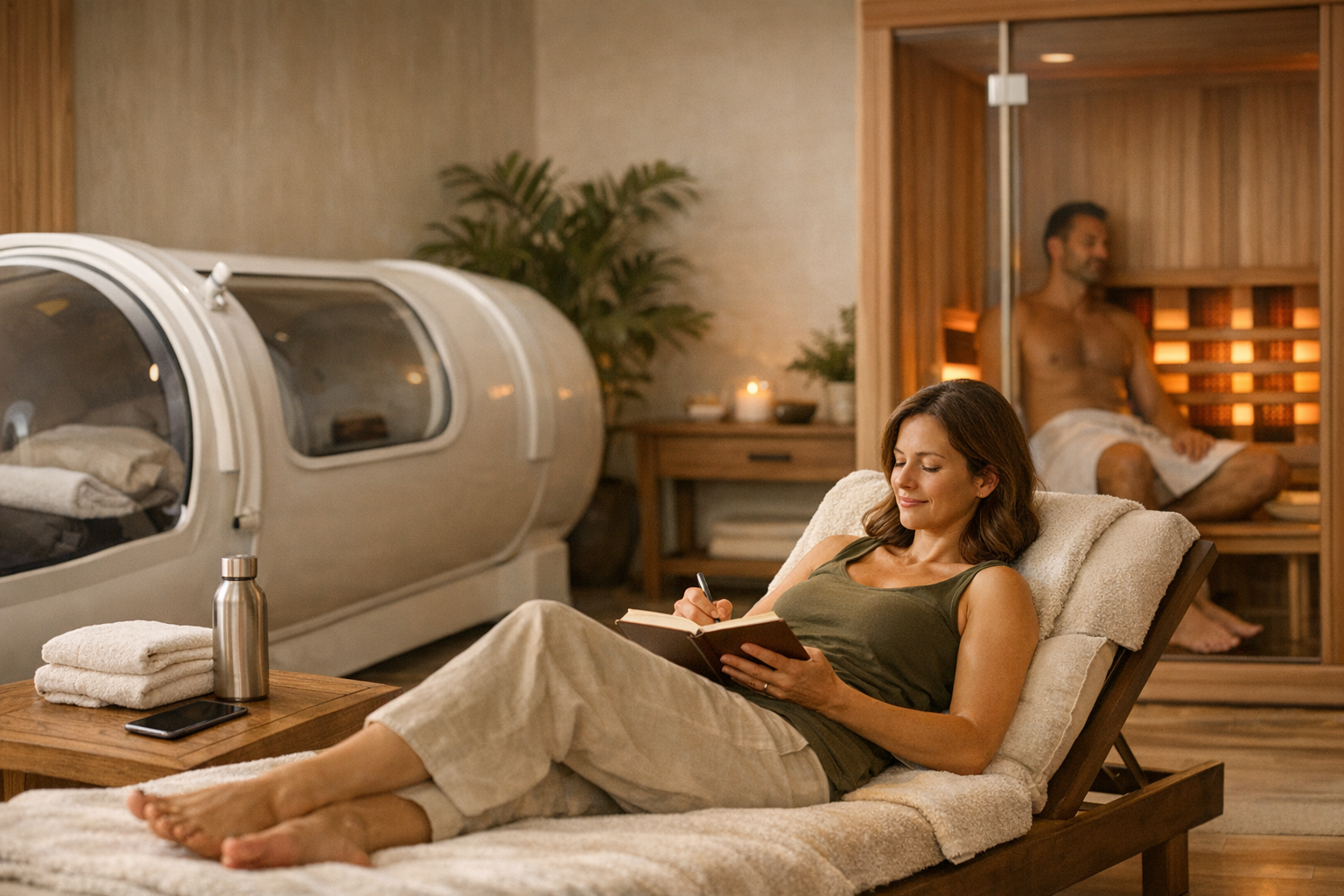
HBOT and Infrared Sauna for Smarter Recovery Planning
Recovery has become a buzzword, but here’s the honest truth: most people don’t need more motivation—they need a plan. The kind that fits around real life, respects your workload, and supports your body’s ability to bounce back after training, travel, long desk days, or high stress.
Two tools you’ll often see in high-performance circles are hyperbaric oxygen therapy (HBOT) and infrared sauna. Both have plausible physiological mechanisms and a growing evidence base, but they’re also easy to misunderstand. Are they interchangeable? Should you do them on the same day? Which one suits sore muscles versus mental fatigue?
In this guide, we’ll break down how HBOT and infrared sauna may support recovery planning, who they’re best for, how to combine them sensibly, and what to do outside the clinic to get more from both. Think of it as a practical, science-informed map—not a miracle promise.
What “recovery” actually means (and why planning matters)
Recovery isn’t just “rest”. It’s a set of biological processes that restore performance capacity and resilience after stress.
Your recovery needs change depending on the stressor:
- Training stress: micro-damage to muscle fibres, connective tissue loading, glycogen depletion, nervous system fatigue
- Work and life stress: sympathetic (“fight or flight”) activation, poorer sleep, reduced HRV, increased muscle tone and headaches
- Travel and time zones: circadian disruption, dehydration, reduced movement, immune strain
- Injury or post-procedure healing: tissue repair demands, swelling, pain modulation, sleep disruption
Good recovery planning is about matching the tool to the bottleneck. If your main issue is inflammation and soreness, you’ll plan differently than if your main issue is poor sleep and stress reactivity.
A simple way to frame it is:
- Reduce the load (sleep, nutrition, movement, stress boundaries)
- Support repair (circulation, oxygenation, protein synthesis, connective tissue care)
- Regulate the nervous system (parasympathetic activation, heat therapy, breathwork)
- Repeat consistently (small inputs, often, beat occasional extremes)
HBOT and infrared sauna can sit nicely in steps 2 and 3—when used appropriately.
HBOT in plain English: what it is and how it may help recovery
Hyperbaric oxygen therapy involves breathing oxygen in a pressurised chamber. The increased pressure allows more oxygen to dissolve into plasma (the liquid part of blood), increasing oxygen availability to tissues.
How HBOT may support recovery
HBOT is most often discussed in the context of tissue oxygenation and cellular repair. Depending on the protocol and the individual, research suggests it may support:
- Tissue oxygen delivery where demand is high (think repair processes)
- Reduced swelling through effects on circulation and inflammatory signalling
- Wound and tissue healing support in specific clinical contexts
- Recovery from heavy training blocks by helping the body meet repair demands
Mechanistically, oxygen plays a role in collagen formation, immune cell function, and cellular energy production. More available oxygen doesn’t automatically equal “better”—but in certain recovery windows, it may be a useful lever.
Who tends to benefit most from HBOT in recovery planning
HBOT may be a sensible option if you:
- Are in a high training load phase and want to support recovery capacity
- Have a history of slow recovery from hard sessions (without another obvious cause)
- Are managing nagging soft-tissue stress and are working alongside a clinician
- Want a recovery tool that is low-effort and passive, but still targeted
Practical expectations: what HBOT can and can’t do
HBOT isn’t a replacement for sleep, good nutrition, intelligent training, or rehab. It may support the biology of recovery, but it won’t “override” poor programming or chronic under-recovery.
Also, not all “oxygen therapies” are HBOT. The pressurised environment is a key variable, and protocols matter.
Infrared sauna: what it is and why people feel so good afterwards
Infrared sauna uses infrared light to heat the body more directly than traditional saunas, often at a lower ambient temperature. Many people find it more tolerable while still getting that deep warmth.
How infrared sauna may support recovery
Heat exposure can be a powerful recovery input when used at the right time and dose. Infrared sauna may support:
- Muscle relaxation and reduced perceived tightness
- Circulation and blood flow, which may help recovery sensations
- Nervous system downshift, supporting relaxation and sleep readiness
- Heat acclimation (useful if you train in warm conditions)
Heat also increases heart rate and can act as a mild cardiovascular stimulus. That’s not the goal for everyone, but it’s part of why a sauna session can feel like a “reset”.
Who tends to benefit most from infrared sauna
Infrared sauna often suits people who:
- Feel wired-but-tired, stressed, or struggle to switch off
- Carry tension in neck/shoulders/hips from desk work or training
- Want a sleep-supportive evening routine (timed correctly)
- Need a recovery tool that doubles as stress management
Practical expectations: what sauna can and can’t do
A sauna can help you feel better in your body—and that matters. But it’s not a shortcut for fitness, and it isn’t always ideal immediately after certain training sessions (more on that below). Hydration and electrolyte balance matter, too.
HBOT vs infrared sauna: choose based on your recovery “bottleneck”
If you’re deciding between the two, start with the outcome you’re aiming for.
When HBOT may be the better pick
HBOT may be a stronger fit when your recovery plan is focused on:
- Tissue repair support during heavy training or rehab phases
- Post-travel fatigue where oxygenation and restorative downtime help
- A structured protocol that is consistent and measurable
When infrared sauna may be the better pick
Infrared sauna may be the better option when your recovery plan is focused on:
- Relaxation and stress reduction
- Muscle stiffness and general body “heaviness”
- Sleep quality support through nervous system regulation
When you might use both
Many people use both because they address different recovery layers:
- HBOT for the “repair biology” angle
- Infrared sauna for the “regulate and unwind” angle
The key is sequencing and timing.
The timing question: should you do HBOT and sauna on the same day?
You can, but you don’t always need to—and you shouldn’t treat it like a competition.
A sensible approach to combining HBOT and infrared sauna
If you want to combine them, keep these principles in mind:
- Avoid stacking stressors. Sauna is a heat stress. It’s beneficial in the right dose, but still a stressor.
- Hydration first. Heat exposure without hydration can backfire.
- Prioritise your primary goal. Do the modality most relevant to your bottleneck when you’re freshest.
A common structure:
- HBOT earlier in the day (calmer, less dehydrating)
- Infrared sauna later as a downshift and sleep cue
If you only have time for one on a given day, choose based on what you need most that day.
Recovery planning templates (real-world examples)
Below are practical frameworks you can adapt. These aren’t medical prescriptions—think of them as starting points.
Template 1: Heavy training week (strength or hybrid)
Goal: support tissue repair and reduce accumulated fatigue.
2–3× per week:
- HBOT sessions spaced across the training week
1–2× per week:
- Infrared sauna on lower-intensity training days or rest days
Daily basics:
- Protein evenly distributed across meals
- Light zone 2 walking or mobility work
- Sleep routine with consistent wake time
Template 2: Desk-stress and poor sleep
Goal: downshift the nervous system and reduce tension.
2–4× per week:
- Infrared sauna in late afternoon/early evening (not right before bed for everyone)
1–2× per week (optional):
- HBOT for restorative downtime and cognitive “reset”
Daily basics:
- Morning outdoor light exposure
- Caffeine cut-off 8–10 hours before bed (individual tolerance varies)
- Two short breaks of movement during workday
Template 3: Travel recovery (jet lag + aches)
Goal: restore rhythm, reduce stiffness, support recovery bandwidth.
After arrival (day 1–3):
- HBOT to support restoration while you re-anchor sleep and hydration
- Infrared sauna once you’re well-hydrated and sleeping is stabilising
Daily basics:
- Prioritise local-time meals
- Gentle movement and daylight exposure
- Keep training light until sleep improves
Sauna and training: one nuance most people miss
Heat exposure can be helpful, but timing matters depending on your training goal.
If your session was focused on building strength or muscle adaptation, very aggressive recovery immediately afterwards (including extremes of cold, and sometimes heat) may theoretically blunt certain adaptation signals. The real-world impact varies, and most non-elite exercisers will still benefit overall from better sleep and lower stress.
A pragmatic approach:
- For hard strength sessions: consider sauna later in the day, not immediately post-lift
- For light cardio or mobility days: sauna timing is more flexible
Safety and suitability: who should be cautious
Both modalities are generally well tolerated when supervised, but they’re not for everyone.
HBOT precautions
HBOT may not be suitable if you have certain ear/sinus issues, uncontrolled respiratory conditions, or other contraindications. Equalising ear pressure is a real consideration.
Infrared sauna precautions
Use caution if you:
- Are prone to fainting or have very low blood pressure
- Are dehydrated, hungover, or under-fuelled
- Are pregnant (seek medical guidance)
- Have cardiovascular concerns—heat changes heart rate and blood pressure
If in doubt, ask a clinician who understands both performance and safety.
How to get more from HBOT and infrared sauna (without doing more)
The best recovery plans aren’t packed—they’re aligned.
Try these practical steps:
1) Treat hydration like a recovery tool
Especially if you use sauna.
- Start the day hydrated
- Replace fluids after sauna
- Consider electrolytes if you sweat heavily (particularly after training)
2) Pair your session with a “downshift” cue
After HBOT or sauna, give your nervous system a clear signal:
- 5 minutes of nasal breathing
- A short walk
- A protein-rich meal
- A phone-free 20 minutes
3) Track one simple marker
You don’t need a spreadsheet. Choose one:
- Sleep quality (1–10)
- Morning resting heart rate
- Training readiness score
- Perceived muscle soreness
If your marker improves with a modality, it’s probably earning its place in your plan.
4) Keep the dose sensible
More is not always better.
- Sauna: start with shorter sessions and build gradually
- HBOT: consistency tends to beat sporadic “binge” sessions
What a LIVBETTER-style recovery plan can look like
At LIVBETTER, recovery is built around three principles: measurable inputs, clinician-informed protocols, and routines that fit real lives.
If you’re exploring HBOT and infrared sauna for recovery planning, the most useful next step is usually a brief review of:
- Your training week (volume, intensity, timing)
- Sleep and stress profile
- Travel load and work demands
- Any injuries or recurring pain patterns
From there, you can choose a simple starting protocol, run it for a few weeks, and adjust based on how you respond.
Key takeaways
If you remember nothing else, remember this:
- HBOT may support the biology of repair by increasing oxygen availability under pressure.
- Infrared sauna may support relaxation, circulation, and sleep readiness through heat exposure.
- The best choice depends on your recovery bottleneck: repair capacity vs nervous system downshift.
- You can combine them, but timing, hydration, and sensible dosing matter.
- No modality replaces sleep, nutrition, smart training, and daily movement—but the right tools can make those basics easier to maintain.
If you’d like, share your typical week (training days, stress level, sleep, travel), and we can outline a simple recovery plan that integrates HBOT and/or infrared sauna without overcomplicating it.
Next Steps
Want to learn more? Check out these articles:
HBOT for Travel Recovery: Jet Lag, Sleep and Wellness Reset
HBOT for Recovery Between Demanding Work Weeks [Guide]
HBOT and Sleep Quality During Recovery: What Science Suggests
Check out our Therapies to see which options fit your goals.