
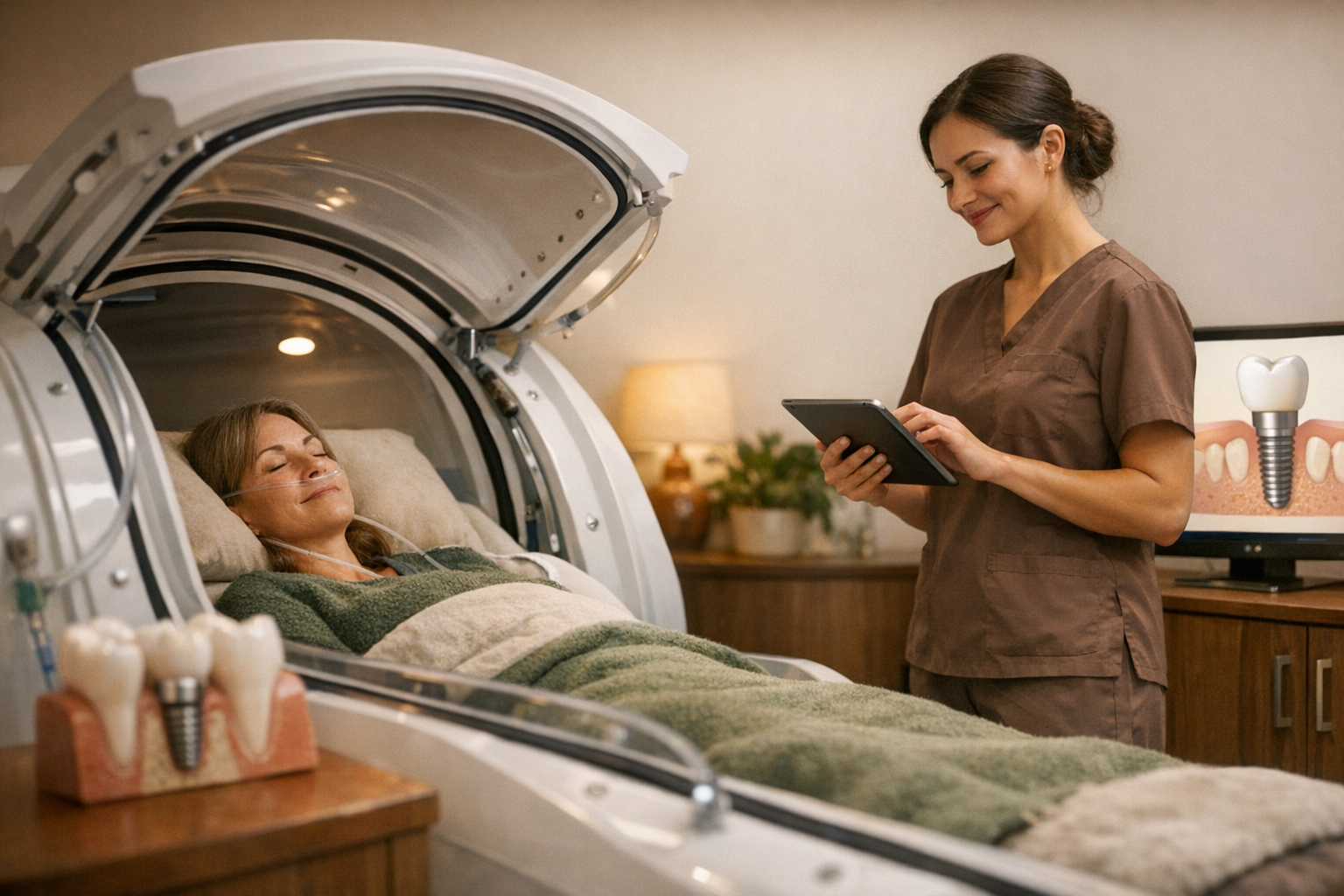
HBOT for Dental Implant Recovery: Your Complete Guide
Dental implants are one of the most predictable ways to replace missing teeth—but the recovery period still matters. Whether you’ve had a single implant placed or a more complex full-arch case, healing is where comfort, confidence, and long-term stability are built. So it’s no surprise that more people are asking a very modern question: can hyperbaric oxygen therapy (HBOT) support dental implant recovery?
This guide explains what HBOT is, how it works (in plain English first, then a little deeper), what the research suggests, who it may be useful for, and how to combine it with the fundamentals that genuinely move the needle—great surgical aftercare, nutrition, sleep, and smart stress management. Consider it your calm, evidence-led companion through the post-implant phase.
What “recovery” really means after dental implants
Dental implant recovery isn’t just about the gum looking better. Several tissues are healing at once, each on its own timetable:
- Soft tissue healing (gum): tends to settle in days to a couple of weeks, depending on the procedure.
- Bone healing and remodelling: continues for weeks to months as the implant integrates with the surrounding bone.
- Inflammation control: early inflammation is normal and useful; prolonged or excessive inflammation can slow recovery.
- Microcirculation: tiny blood vessels deliver oxygen and nutrients to the surgical site—critical for repair.
Most people do very well with standard post-op instructions. But there are situations where the body benefits from extra support—particularly when oxygen delivery, circulation, or tissue resilience are less than ideal.
What is HBOT and why is oxygen a big deal?
Hyperbaric oxygen therapy (HBOT) involves breathing near-100% oxygen in a pressurised chamber. The higher pressure allows more oxygen to dissolve into your blood plasma (not just attach to haemoglobin), which can increase oxygen delivery to tissues—especially those that are injured, inflamed, or have compromised circulation.
In practical terms: HBOT aims to create a temporary “oxygen-rich” environment that may support the body’s repair processes.
A simple way to think about it
Healing is resource-intensive. Oxygen is one of the key resources. If tissues aren’t receiving enough oxygen—because of swelling, reduced blood flow, or previous radiation exposure—healing can slow down. HBOT is designed to increase oxygen availability and may support recovery under the right circumstances.
A slightly more scientific explanation
Under hyperbaric conditions, increased oxygen tension in tissues is associated with processes relevant to surgical repair, including:
- Angiogenesis (new blood vessel formation) and improved microcirculation
- Fibroblast activity and collagen production (important for soft tissue integrity)
- Support for bone remodelling pathways involved in repair
- Modulation of inflammation (helping the inflammatory response resolve appropriately)
- Enhanced antimicrobial activity of certain immune cells in low-oxygen environments
That said, HBOT is not a “shortcut” and it doesn’t replace excellent dental care. It’s best viewed as an adjunct in a comprehensive recovery plan.
HBOT for dental implant recovery: what the evidence suggests
Research into HBOT in dentistry is most established in specific higher-risk contexts—particularly where blood supply to the jawbone is compromised. The strongest clinical use case historically relates to radiation-associated jawbone injury and complex oral surgery in irradiated tissues. For routine implant placement in healthy individuals, evidence is more limited and mixed.
Here’s the balanced view:
Where HBOT may be most relevant
- History of head and neck radiotherapy: radiation can reduce vascularity and tissue oxygenation, which may increase the risk of delayed healing. HBOT has been used as part of peri-operative management in selected cases under specialist guidance.
- Compromised circulation or healing capacity: certain medical profiles can affect microcirculation and tissue repair. HBOT may be considered on an individual basis.
- More complex surgical work: extensive grafting, sinus lifts, or multiple implants may involve a greater healing demand—though this doesn’t automatically mean HBOT is required.
Where expectations should be realistic
- Standard cases: for many healthy patients, great outcomes are achieved without HBOT. If used, it’s typically to support comfort and recovery rather than to “guarantee” faster integration.
- Not a substitute for oral hygiene and follow-up: plaque control, bite management, and clinician reviews remain the foundation of implant success.
If you’re considering HBOT, the right question isn’t “Does it work?” but “Is there a reason it’s likely to help me in my recovery context?”
Who might consider HBOT after dental implant surgery?
HBOT may be worth discussing with a clinician if you recognise yourself in any of the scenarios below. This is not a diagnosis list—just a guide for informed conversations.
You may be a candidate to explore HBOT if:
- You’ve had radiotherapy to the head/neck and are undergoing dental surgery or implants (specialist coordination is essential).
- You’ve been advised you have higher risk of delayed wound healing.
- You’re having complex implant surgery involving grafting or multiple sites and want to build a more robust recovery plan.
- You’ve had previous issues with slow healing after procedures and want to be proactive (while keeping expectations realistic).
When HBOT may not be appropriate
HBOT isn’t for everyone. Suitability depends on medical history and safety screening. Contraindications and precautions can include certain lung conditions, uncontrolled seizure disorders, some ear/sinus issues, and specific medications. A proper assessment matters.
At LIVBETTER, we treat HBOT like any serious therapy: personalised, clinically guided, and only used when the benefit-to-risk profile makes sense.
Timing: when to use HBOT around implant surgery
Protocols vary depending on why HBOT is being used. In specialist settings (for example, irradiated tissue), HBOT may be used pre- and post-operatively to support tissue readiness and healing. For lower-risk situations, some people consider a short series post-procedure to support recovery.
What matters most is coordination with your dentist/oral surgeon so that HBOT is integrated thoughtfully with:
- your surgical plan
- your medication plan (including antibiotics/pain relief if prescribed)
- your follow-up appointments
If you’re unsure, bring the conversation to your implant clinician first. A collaborative plan is always safer than trying to “add on” therapies without oversight.
What an HBOT session is like (so you can feel prepared)
Many people imagine HBOT feels intense. In reality, it’s usually calm and surprisingly straightforward.
What you can expect
- Duration: commonly 60–90 minutes per session (varies by protocol).
- Sensation: you’ll notice pressure changes similar to flying; you may need to equalise your ears.
- Comfort: you’ll be lying or seated, breathing oxygen in a controlled environment.
- Afterwards: most people return to normal activities; some feel relaxed or lightly fatigued.
Practical tips for a smoother experience
- Arrive well-hydrated and avoid rushing—stress can make ear equalisation harder.
- If you’re congested, let the team know; it may be better to reschedule than force it.
- Wear comfortable clothing and remove anything not permitted by the clinic’s safety policy.
The recovery basics that make HBOT work better (or make it unnecessary)
Even the most advanced therapies can’t outpace poor fundamentals. If you want the best chance of an uncomplicated recovery, focus here first.
1) Follow your dentist’s aftercare instructions precisely
This sounds obvious, but it’s the highest-yield step. Common themes include:
- protect the surgical site
- avoid disturbing the clot in the early phase
- use mouth rinses as directed
- attend follow-ups even if you feel “fine”
2) Manage swelling intelligently
Swelling peaks around 48–72 hours for many procedures. Helpful, generally safe strategies (unless your clinician advises otherwise) include:
- Cold compress in the first 24–48 hours: short intervals to reduce excessive swelling.
- Head elevation when resting: supports fluid drainage.
- Gentle movement: light walking can support circulation without stressing the surgical area.
3) Prioritise protein and micronutrients (food first)
Tissue repair requires building blocks. Aim for:
- Protein with each meal (e.g., yoghurt, eggs, fish, tofu, lentils—choose softer options early on).
- Vitamin C–rich foods (berries, citrus, peppers) to support collagen formation.
- Zinc-containing foods (seafood, beans, nuts if tolerated) which play a role in wound healing.
If chewing is difficult, think in terms of smoothies, soups, omelettes, and mashed or slow-cooked meals—nutrient-dense but gentle.
4) Sleep like it’s a treatment (because it is)
Sleep supports immune function and tissue repair. For the first week after surgery:
- aim for a consistent bedtime
- keep the room cool and dark
- avoid alcohol (it can impair sleep quality and increase inflammation)
5) Avoid nicotine and be cautious with alcohol
Nicotine is associated with reduced blood flow and impaired healing in oral tissues. If you needed a compelling reason to pause, implant recovery is it. Alcohol can also interfere with sleep and inflammation control and may interact with medications.
HBOT and dental implants: common questions we hear
Is HBOT proven to make implants integrate faster?
For routine implant cases, we can’t responsibly promise faster osseointegration. HBOT may support the healing environment—particularly where oxygen delivery is a limiting factor—but implant stability depends on many variables (surgical technique, bone quality, occlusion, hygiene, and more).
Can HBOT reduce pain and swelling?
Some people report improved comfort, and HBOT’s effects on inflammation and tissue oxygenation are biologically plausible. However, experiences vary and it’s not a replacement for appropriate pain relief prescribed by your clinician.
What about infection risk?
HBOT can support immune function in low-oxygen tissues, but it is not a stand-alone infection prevention strategy. Good oral hygiene, careful aftercare, and taking prescribed antibiotics (if given) remain primary.
How many sessions would I need?
It depends on your goal and clinical context. Some protocols involve a short course; specialist indications may involve more structured series. The right plan should be tailored after screening and, ideally, coordinated with your dental team.
A practical, step-by-step recovery plan (with optional HBOT)
Use this as a guide to structure your first 2–3 weeks. Always follow your implant clinician’s instructions if they differ.
Days 0–3: protect and calm
- Rest, hydrate, and eat soft, protein-forward meals.
- Use cold compresses as advised.
- Keep oral hygiene gentle and follow rinse instructions.
- Prioritise sleep and keep stress low (short walks, breathing exercises).
HBOT (optional): if you and your clinicians decide it’s appropriate, this is often when people consider early sessions to support tissue oxygenation during peak swelling.
Days 4–10: rebuild and stabilise
- Continue nutrient-dense foods; gradually increase texture as comfortable.
- Resume light exercise (avoid heavy lifting if advised).
- Keep follow-up appointments and report unusual pain, odour, fever, or swelling.
HBOT (optional): sessions during this window may support recovery momentum, especially after more complex procedures.
Weeks 2–3: consolidate healthy habits
- Maintain excellent plaque control per your dental guidance.
- Stay consistent with sleep and protein intake.
- Avoid returning too quickly to habits that impair healing (especially nicotine).
HBOT (optional): some individuals may use later sessions if they’re managing a higher-risk tissue environment or slower-than-expected healing (only after clinical review).
When to contact your dentist urgently
Most post-op symptoms are manageable, but certain signs need prompt review. Contact your dental team if you experience:
- worsening swelling after the first few days
- significant bleeding that doesn’t settle
- fever or feeling systemically unwell
- persistent bad taste/odour with increasing pain
- new numbness, severe throbbing, or concerns about the implant site
Advanced therapies work best when the basics are stable and complications are ruled out early.
How LIVBETTER can support your recovery journey
At LIVBETTER, we focus on modern, evidence-informed therapies that fit real lives—busy schedules, high stress, and a desire to recover well without making wellness a second job.
If you’re exploring HBOT for dental implant recovery, we can:
- screen you for suitability and safety
- coordinate timing considerations so sessions fit around your procedure and follow-ups
- help you build a broader recovery plan around sleep, stress physiology, and nutrition fundamentals
Most importantly, we’ll be honest about what HBOT can and can’t do, and whether it makes sense for your specific situation.
The bottom line
HBOT is a clinically grounded therapy with clear mechanisms that may support healing, particularly when tissue oxygenation or circulation is compromised. In dental implant recovery, it may be most relevant for higher-risk cases (such as irradiated tissues or complex surgical work), while routine implant recoveries often do very well with excellent standard aftercare alone.
If you’re considering HBOT, treat it as a thoughtful addition—not a guarantee. Pair it with the unglamorous but powerful basics: meticulous oral aftercare, protein-forward nutrition, high-quality sleep, and avoiding nicotine. That combination is where the best recoveries tend to happen.
Next Steps
Want to learn more? Check out these articles:
HBOT for Wellness Recovery in Active Adults: A Practical Guide
HBOT for Recovery After Demanding Weeks: A Practical Guide
HBOT for Cellular Recovery and Wellness: An Evidence Guide
Check out our Therapies to see which options fit your goals.