
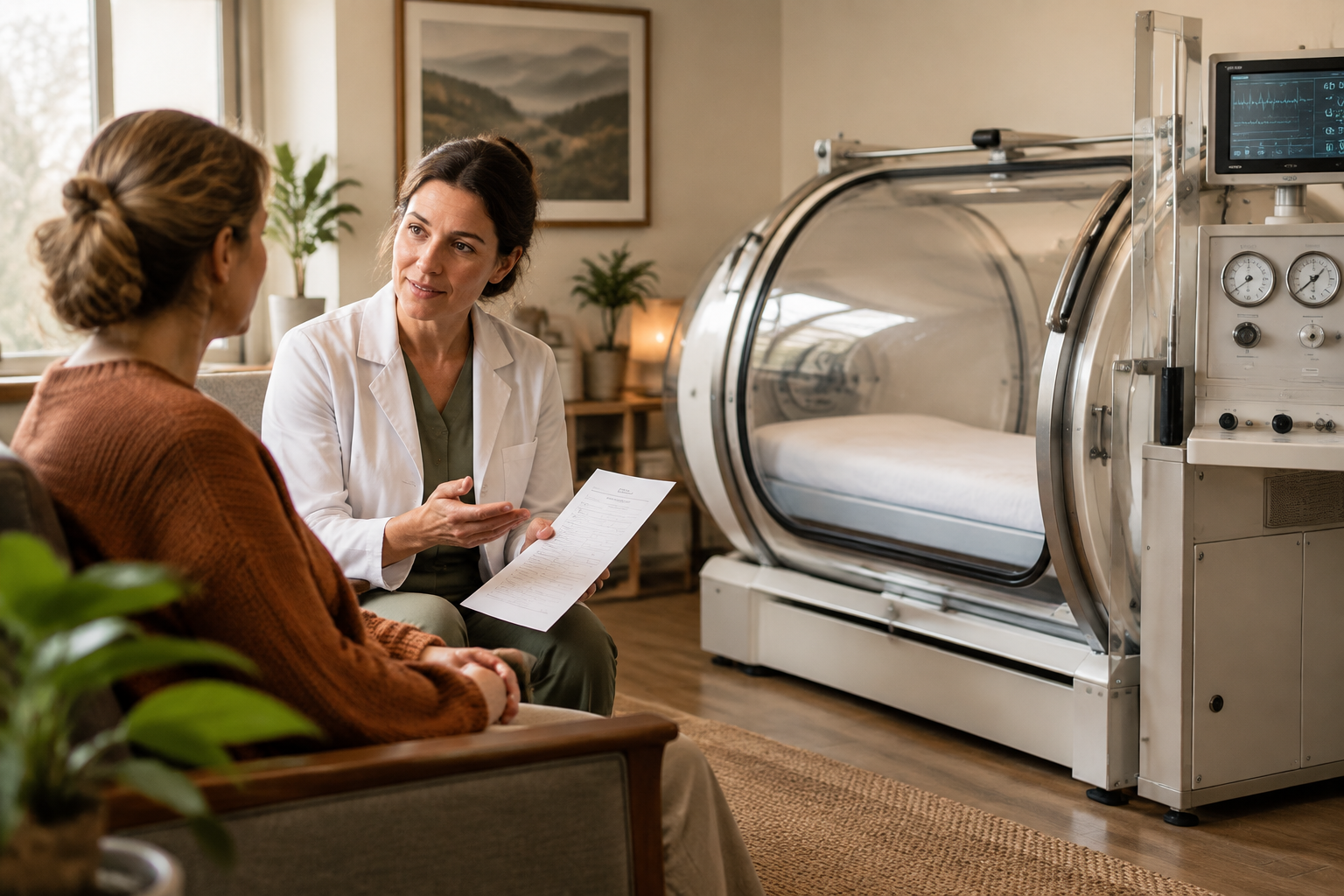
HBOT After a Demanding Week: A Guide to Rest and Reset
A demanding week has a way of following you into the weekend. Your laptop is closed, but your mind is still answering emails. Your legs feel heavy, your sleep has slipped, and another coffee seems more realistic than a proper reset.
Hyperbaric oxygen therapy, or HBOT, sometimes appears on the recovery shortlist. But can spending time in a pressurised chamber help after a week of work, training and too little downtime?
This guide separates the science from the assumptions. We will explain what HBOT does, where the evidence is limited, what a session involves and how to build a four-step recovery plan. The starting point: HBOT is not a proven shortcut for everyday exhaustion, and it cannot replace sleep, food or time to recover.
What is HBOT, and how does it work?
HBOT involves breathing oxygen inside a chamber where the pressure is higher than normal atmospheric pressure. In clinical HBOT, people usually breathe 100% oxygen under a carefully prescribed pressure and duration.
Why pressure changes oxygen delivery
Most oxygen in your blood travels attached to haemoglobin, the protein inside red blood cells. A smaller amount dissolves directly into plasma, the liquid component of blood.
Increasing pressure while breathing concentrated oxygen allows more oxygen to dissolve into plasma. This changes how oxygen reaches tissues during treatment and is part of the rationale for HBOT in specific medical settings.
However, more oxygen does not automatically mean more energy, better concentration or faster recovery in an otherwise healthy person. Normal tiredness is not usually caused by a lack of oxygen in the blood.
Not all chambers provide the same treatment
Clinical HBOT is commonly delivered at pressures around 2–3 atmospheres absolute, depending on the indication and protocol. Some services marketed as mild hyperbaric therapy use lower pressures and may involve different oxygen concentrations.
These differences matter. A study using one pressure, oxygen dose and schedule cannot establish that another setup produces the same results. Ask what the chamber actually delivers rather than relying on labels such as ‘advanced recovery’.
What does the evidence say about recovery?
The word recovery covers several different things: healing an injury, adapting to exercise, catching up on sleep or feeling mentally rested. Evidence for one does not necessarily apply to another.
Established medical use is not proof of a wellness benefit
HBOT has recognised uses in specialist medicine. Those uses involve defined clinical problems, careful patient selection and specific treatment protocols.
They do not demonstrate that HBOT reliably improves general wellbeing after a stressful working week. For everyday fatigue, digital overload and routine post-exercise soreness, research is not strong enough to promise a meaningful benefit.
Exercise findings need careful interpretation
Research exploring HBOT and exercise recovery is varied. Studies differ in participant fitness, timing, pressure, session frequency and the outcomes measured. Small studies and inconsistent methods make firm conclusions difficult.
A Cochrane review of HBOT for delayed-onset muscle soreness and closed soft-tissue injuries did not establish a convincing recovery benefit. That review is older, so it does not settle every current question, but it is a reason to be cautious about confident marketing claims.
A change in a laboratory marker is also not necessarily a change you would notice. More useful questions include whether people returned to normal activity sooner, experienced less soreness or performed better, compared with an appropriate control group.
Feeling refreshed is not the same as a proven effect
Some people describe feeling rested after a session. That experience may be genuine, but it does not identify the cause. Quiet time, expectations, changes in routine and natural recovery can all influence how someone feels.
A sensible expectation is therefore modest: HBOT may be something to discuss with a qualified clinician, but its additional value for recovering from a demanding week remains uncertain. It should not become permission to keep pushing through inadequate rest.
A four-step guide to recovering after a demanding week
Before considering a technology-led option, identify what your body has actually been missing. Recovery works best when the plan matches the strain.
1. Identify your main recovery gap
Spend five minutes reviewing the previous seven days. Were you short on sleep, eating irregularly, sitting for long stretches or training harder than usual? Mental overload and physical fatigue can overlap, but they may need different responses.
Write down your main concern in practical terms. ‘I want to feel better’ is understandable; ‘I want to stop feeling sleepy during afternoon meetings’ gives you something clearer to assess.
Choose one or two simple measures:
- How refreshed you feel on waking.
- Whether soreness is interfering with normal movement.
- How easily you can concentrate on a routine task.
- Whether your usual activity feels unusually demanding.
Avoid turning recovery into another performance dashboard. A brief daily note is often enough to spot a pattern without adding pressure.
2. Restore the foundations first
Protect your next few nights of sleep. Most adults need around seven to nine hours, although individual needs vary. Keep your wake-up time reasonably consistent and make room for a quieter transition before bed.
Eat regular meals with protein, carbohydrate, vegetables or fruit, and some healthy fats. Carbohydrate helps replenish fuel used during exercise, while protein supports muscle repair and adaptation. You do not need a complicated supplement routine to cover these basics.
Drink regularly and account for extra fluid lost through sweating. More is not always better: forcing large volumes of water is unnecessary and can be harmful.
Try these practical adjustments:
- Swap a hard workout for an easy walk or gentle mobility session if you feel under-recovered.
- Get outside for daylight, particularly earlier in the day, to support your sleep–wake rhythm.
- Bring caffeine earlier if afternoon coffee is affecting your sleep.
- Reduce alcohol, which can disrupt sleep even when it initially makes you feel drowsy.
These measures are less novel than a chamber session, but they address common reasons people feel depleted.
3. Check whether HBOT is appropriate for you
If you remain interested, arrange a proper clinical assessment rather than choosing a session from a menu alone. Explain your symptoms, goals, medical history, medications and previous experience with pressure changes.
Ask the clinician to distinguish established benefits from experimental or uncertain uses. For general recovery, a good discussion should include the possibility that HBOT offers no noticeable additional benefit.
Useful questions include:
- What evidence applies to someone with my goals and health background?
- What pressure, oxygen concentration and session duration would be used?
- Who assesses suitability and supervises treatment?
- What are the risks, alternatives and reasons not to proceed?
- How would we decide whether further sessions are justified?
There is no universally established HBOT schedule for a demanding week. A fixed package is not a substitute for an individual clinical rationale.
4. Review the whole plan, not just the session
If you proceed after assessment, keep your sleep, meals and activity reasonably consistent while reviewing how you feel. Otherwise, it becomes difficult to tell what may be helping.
Look for practical changes rather than dramatic sensations. Are you functioning better, moving more comfortably or sleeping more consistently? A brief lift immediately afterwards does not establish a lasting benefit.
Agree a review point before committing to repeated sessions. If there is no meaningful improvement, or treatment adds cost, stress or scheduling pressure, reconsider it. Recovery should make your week more manageable, not become another demanding obligation.
Safety: what to know before booking
HBOT is an active medical intervention, not simply a relaxation space. Appropriate screening, trained supervision and strict equipment and fire-safety procedures are essential.
Possible side effects and complications
Pressure changes can cause ear or sinus discomfort and, sometimes, pressure-related injury. Some people experience claustrophobia. Temporary changes in vision can occur, particularly during a course of treatments.
Less common but serious risks include oxygen-toxicity seizures and lung injury. Oxygen-enriched environments also increase fire risk, which is why chamber-compatible clothing and restrictions on personal items matter.
An untreated pneumothorax, or collapsed lung, is a contraindication to HBOT. Certain lung conditions, difficulty equalising ear pressure, recent ear procedures, seizure history and some medications require particular consideration. Pregnancy also needs specialist discussion.
Tell the team if you have a cold, congestion, fever or a new health problem before attending. If you have diabetes or take glucose-lowering medication, ask about blood glucose monitoring and meal planning around treatment.
Signs of a responsible provider
Look for a service that explains uncertainty as clearly as potential benefits. You should know who is clinically accountable and what happens if you become uncomfortable or unwell.
A responsible provider should offer:
- A documented health assessment and informed consent.
- Clear details about the chamber and treatment protocol.
- Trained staff, appropriate monitoring and emergency procedures.
- Specific preparation and fire-safety instructions.
- Freedom to decline treatment without pressure to buy a course.
Be cautious about promises to ‘detox’, reverse burnout or guarantee a rapid energy boost. Those claims go beyond what can responsibly be said about routine recovery.
What might an HBOT session involve?
Your experience depends on the chamber and protocol. A single-person chamber accommodates one person; a multi-person chamber may deliver oxygen through a mask or hood. Total appointment time includes preparation, pressurisation and depressurisation, not just time at treatment pressure.
Before and during treatment
Follow the provider’s instructions about meals, clothing, skin products and personal belongings. Do not assume electronics, cosmetics or synthetic fabrics are permitted. Check before bringing anything into the chamber.
As pressure rises, your ears may feel similar to how they do during an aircraft descent. Staff should explain safe equalisation techniques and how to communicate discomfort. Do not push through ear pain; tell the operator promptly.
Clinical sessions often last around 90–120 minutes, although timing varies. Ask for the total visit duration so the appointment does not create more pressure in an already crowded day.
After treatment
Follow any individual advice and report unusual symptoms. New chest pain, breathing difficulty or neurological symptoms need urgent medical assessment. Persistent ear pain or hearing changes should also be reported promptly.
Avoid treating the session as a recovery credit that allows you to skip sleep or double your training. Even if you feel refreshed, your usual recovery needs still apply.
When tiredness needs more than a recovery plan
A busy week can explain temporary fatigue, but it should not become the explanation for every symptom. Arrange a GP review if tiredness persists for several weeks, worsens or interferes with everyday life.
Mention associated symptoms such as loud snoring, waking unrefreshed, palpitations, persistent low mood or unexplained breathlessness. Sleep disorders, medication effects and other health problems can contribute to fatigue and need appropriate assessment rather than a wellness workaround.
Seek urgent help for chest pain, severe breathlessness, fainting or sudden neurological symptoms. Do not book a recovery treatment to see whether these improve.
Common questions about HBOT after a busy week
Can HBOT make up for lost sleep?
No. There is no good evidence that it replaces sleep or reverses the effects of ongoing sleep restriction. Protecting adequate sleep remains the priority, even when your schedule makes that inconvenient.
Will one session noticeably improve my energy?
It might not. Individual experiences vary, and a reliable energy boost after one session has not been established for otherwise healthy, tired adults. Avoid planning important work or athletic performance around an expected effect.
Is it better than massage, a walk or a rest day?
There is no strong basis for ranking HBOT above these options for general recovery. They serve different purposes. Choose according to your needs, preferences, clinical advice and budget, while keeping sleep, nutrition and workload management central.
The LIVBETTER approach: foundations before add-ons
At LIVBETTER, technology-enabled wellbeing belongs alongside real nutrition and sustainable daily habits. The useful question is not ‘What is the most advanced option?’ but ‘What is appropriate for me, and what evidence supports it?’
HBOT deserves the same balanced scrutiny as any other intervention. Understand the protocol, take safety seriously and keep expectations realistic. For your next demanding week, start with one protected bedtime, one balanced meal and a little more breathing room in your schedule. Discuss additional support when it genuinely fits your needs.
Further reading
- US Food and Drug Administration: Hyperbaric Oxygen Therapy: Get the Facts — an overview of evidence, unproven claims and safety considerations.
- Cochrane: Hyperbaric oxygen therapy for delayed onset muscle soreness and closed soft tissue injury — a systematic review relevant to exercise-recovery claims.
Next Steps
Want to learn more? Check out these articles:
HBOT for Cellular Recovery: What to Know and How to Plan
HBOT for Training Recovery: A Guide for Busy Professionals
HBOT After Travel: Your Guide to Recovery in 4 Steps
Check out our Therapies to see which options fit your goals.