
HBOT After Travel: Your Guide to Recovery in 4 Steps
Your suitcase is unpacked, but your brain still seems to be somewhere over the Atlantic. After a long journey, feeling tired, stiff or mentally foggy is common — even when the trip itself went smoothly.
Hyperbaric oxygen therapy, or HBOT, sometimes appears on post-travel wellness menus. The idea sounds appealing: spend time in a pressurised chamber and emerge ready for your next meeting, workout or adventure. The reality deserves a more careful explanation.
HBOT has established medical applications, but good-quality research has not established it as a treatment for jet lag or routine travel fatigue. This HBOT for post-travel recovery guide explains what the therapy does, where the evidence stops, and how to build a practical four-step recovery plan around the habits most likely to help.
Why travel can leave you feeling depleted
Travel fatigue is not one single problem. Several overlapping factors can affect how you feel after arriving, and they do not all need the same solution.
Jet lag and travel fatigue are different
Jet lag happens when your internal body clock becomes misaligned with local time after crossing time zones. Sleep, alertness, appetite and digestion can all feel out of step.
Travel fatigue can happen without crossing a single time zone. Early departures, interrupted sleep, prolonged sitting, stressful connections and irregular meals can leave you drained after a domestic journey too.
This distinction matters. A therapy that changes oxygen delivery does not automatically reset your body clock or replace missed sleep.
Dry air, stillness and disrupted routines
Aircraft cabins have lower humidity and lower air pressure than conditions at sea level. In healthy travellers, the modest reduction in oxygen availability is generally well tolerated; it does not mean everyone lands with an oxygen deficit requiring treatment.
Meanwhile, long periods of sitting can cause stiffness, and dry air can make your eyes, nose and mouth feel uncomfortable. Alcohol, limited fluid intake and broken sleep may add to the picture.
The useful question is not simply, ‘How do I recover faster?’ It is, ‘Which parts of this journey have disrupted my usual functioning?’
What is HBOT, and what happens inside the chamber?
Medical HBOT involves breathing near-100% oxygen inside a chamber pressurised above normal atmospheric pressure. Increasing pressure allows more oxygen to dissolve in the liquid component of blood, known as plasma. This can increase oxygen delivery to tissues under specific clinical conditions.
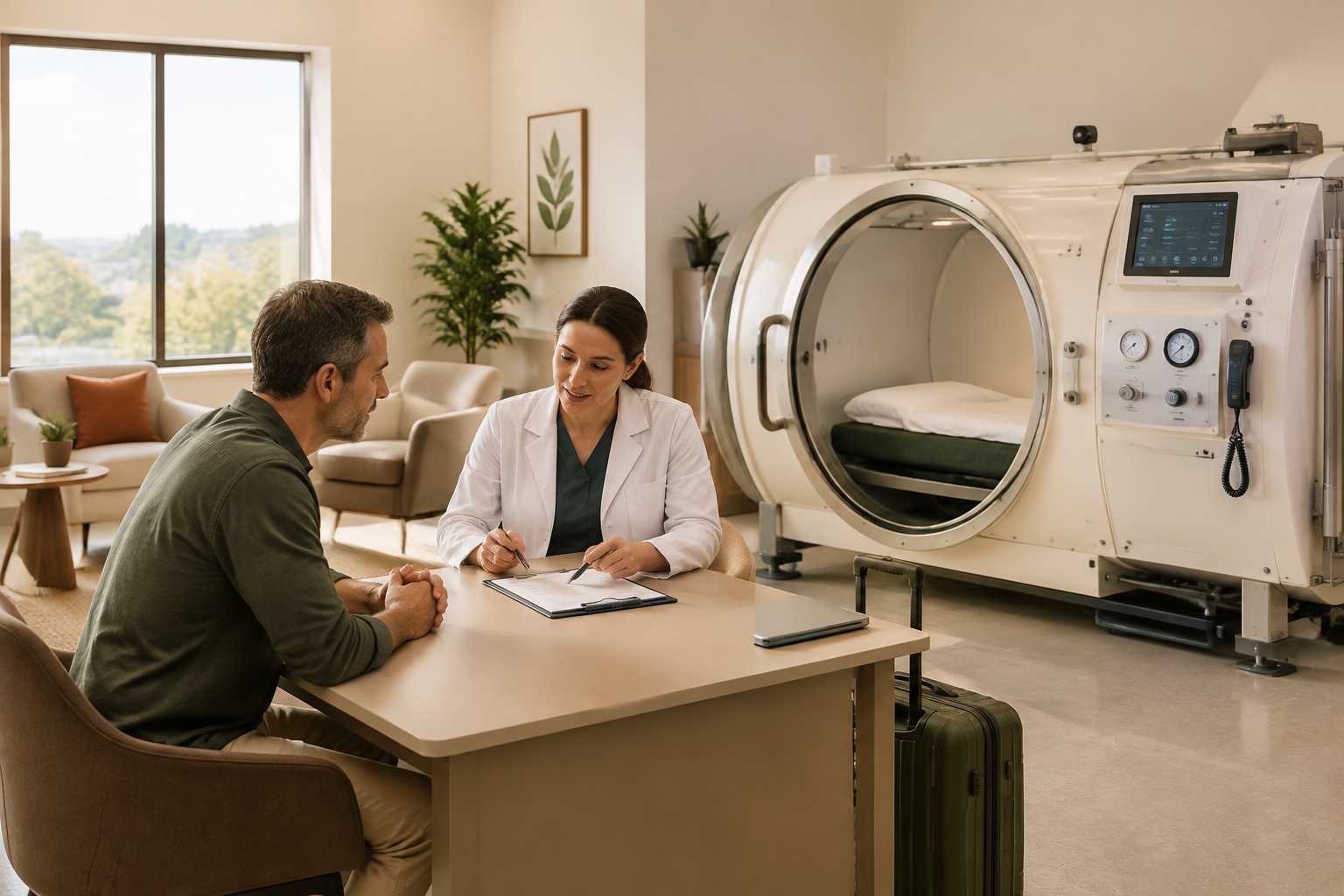
Treatments take place in either an individual chamber or a larger chamber accommodating several people, depending on the facility. In some chambers, oxygen is delivered through a mask or hood.
Why the treatment details matter
Not every service marketed as ‘hyperbaric’ provides the same exposure. Some lower-pressure or soft-sided chambers use compressed air rather than the oxygen concentrations and pressures used in medical HBOT.
Evidence from one protocol cannot automatically be applied to another. Ask about:
- The chamber type and operating pressure.
- The concentration of oxygen you will breathe.
- The clinical qualifications of the supervising team.
- The reason for the proposed session length and number of sessions.
- The screening process, emergency procedures and equipment maintenance.
These are sensible questions, not signs that you are being difficult. A responsible provider should explain the treatment clearly, including what remains uncertain.
What does the evidence say about HBOT after travel?
HBOT is used in recognised medical settings for selected indications. However, evidence supporting those uses does not establish a benefit for otherwise healthy people recovering from flights.
Direct, high-quality evidence that HBOT improves jet lag, shortens routine post-travel fatigue or restores everyday concentration after flying remains limited. There is also no established post-travel protocol that tells us who should receive it, when they should start or how many sessions they need.
Biological plausibility is not the same as a proven benefit
Researchers investigate how hyperbaric oxygen affects processes such as tissue oxygenation and cellular signalling. These mechanisms can be scientifically interesting without proving a meaningful improvement in a traveller’s next day.
Similarly, findings from people with a particular medical condition cannot simply be transferred to healthy travellers. Study population, treatment pressure, session frequency and the outcomes measured all matter.
Feeling refreshed after a session is also not enough to show that oxygen caused the improvement. Quiet rest, expectations and natural recovery may contribute.
Set expectations before spending time or money
If your main goal is adjusting to local time, correctly timed light exposure and sleep scheduling have a stronger practical basis than HBOT.
If you are considering HBOT anyway, discuss the uncertain benefit alongside the risks, cost and time commitment. It should not displace sleep or medical assessment, and there is no evidence-based reason to purchase a routine post-flight course for everyone.
Your four-step post-travel recovery plan
Start with the changes that address the likely causes of your symptoms. This plan works whether or not you discuss HBOT with a clinician.
Reconnect with the local day-night cycle
Aim to organise meals, activity and sleep around your destination’s time zone. Daylight is one of the strongest signals your body clock receives, but its timing matters.
After eastward travel, appropriately timed morning light often helps shift the body clock earlier. After westward travel, evening light often helps shift it later. However, large time-zone changes can make this more complicated: light at the wrong biological time can delay adjustment.
For a major shift, ask a travel-health professional about a personalised light and sleep schedule rather than following a rigid universal rule.
Keep evenings calmer and dimmer as bedtime approaches. If you need a nap, make it brief and avoid taking it late in the day. You do not have to force yourself through severe sleepiness to ‘win’ against jet lag.
Restore regular fluids and meals
Drink water regularly and use thirst as a practical guide unless you have been advised to restrict fluids. There is no need to force large quantities or assume that every flight requires electrolyte products.
Re-establish familiar, balanced meals. Include a source of protein, vegetables or fruit, and carbohydrate-containing foods that suit your appetite and activity. For example, eggs with wholegrain toast and tomatoes, or tofu with rice and vegetables, can provide a straightforward return to routine.
Keep alcohol limited, especially when you are trying to restore sleep. Caffeine may improve alertness temporarily, but avoid it in the hours before your intended bedtime. More coffee is not a substitute for recovery.
Move gently before returning to full intensity
A short walk, comfortable mobility exercises or an easy cycle can help you feel less stiff and bring structure back to the day. Combine movement with suitable daylight exposure when possible.
Let your first workout reflect how well you have slept, not how much you think you need to compensate for sitting still. If you are exhausted, unusually breathless or unwell, postpone strenuous exercise.
On future long journeys, regular walking and ankle movements can help reduce prolonged immobility. People with additional blood-clot risk factors should seek individual advice before travel; HBOT is not a substitute for established prevention measures.
Review what remains before adding a treatment
After you have had an opportunity to sleep, eat and move normally, check what is still bothering you. Is it sleepiness at the wrong time, muscular discomfort, persistent fatigue or something new?
This helps guide the next step. A disrupted sleep schedule needs a different approach from ear pain, an infection or unexplained breathlessness.
If you still want to explore HBOT, bring a specific goal to a qualified clinician and ask whether the likely value justifies the uncertainty.
At LIVBETTER, advanced therapies are best considered within this wider picture: nutrition, sleep, movement and individual suitability remain central. Technology should complement good foundations, not distract from them.
What to expect if you book an HBOT consultation
A consultation should come before a session. The clinician should review your symptoms, medical history, medicines, recent travel and any difficulties with pressure changes during the flight.
Mention ear or sinus pain, respiratory symptoms, previous lung problems, recent surgery, implanted devices and any possibility of pregnancy. Bring a current medication list rather than trying to decide yourself which medicines might matter.
During a session
As chamber pressure rises, you may feel fullness in your ears, similar to aircraft descent. Staff should explain how to equalise pressure and tell you what to do if discomfort develops.
You should be able to communicate with the supervising team throughout. Never push through significant ear pain or assume it means the treatment is working.
Appointment length varies by protocol and includes compression and decompression time. Follow the facility’s preparation instructions carefully, including restrictions on clothing, personal products and electronic devices. Oxygen-rich environments require strict fire-safety procedures, even when the setting feels comfortable and relaxed.
Safety considerations you should not skip
HBOT is a medical intervention, not simply an upgraded relaxation session. Ear and sinus pressure injuries are recognised risks. Temporary changes in vision can occur, particularly with repeated treatments.
Less common but potentially serious complications include oxygen toxicity and lung pressure injury. Claustrophobia can also make treatment difficult.
An untreated pneumothorax — air trapped around a lung — is an absolute contraindication to HBOT. Other conditions require individual assessment rather than a blanket yes or no.
Post-flight ear and sinus symptoms deserve attention
If you have landed with blocked ears, significant earache or sinus congestion, speak to a clinician before entering another pressurised environment. A cold or difficulty equalising pressure can increase the risk of injury.
People using insulin or certain glucose-lowering medicines may need additional blood-glucose monitoring. Some medicines and medical devices also need specific checks. Suitability depends on the individual and the treatment system.
When to seek medical help instead
Do not label every symptom ‘just jet lag’. Seek urgent medical help for chest pain, sudden breathlessness, coughing up blood or new one-sided leg swelling or pain, particularly after prolonged travel.
Severe confusion, fainting or new neurological symptoms also need urgent assessment. Persistent, worsening or unusually severe fatigue warrants clinical review rather than repeated wellness treatments.
Common questions about HBOT for post-travel recovery
Can HBOT reset my body clock?
There is no established evidence that HBOT reliably resets the circadian clock after travel. Light exposure, sleep timing and, in selected cases, clinician-guided melatonin use are more directly relevant. Melatonin is not suitable for everyone, and timing matters, so seek appropriate advice rather than taking it casually.
Should I book a session immediately after landing?
There is no proven ideal timing for post-travel HBOT. An immediate appointment may simply take time away from rest or appropriate daylight exposure. If you have ear pain or congestion, assessment is especially important before considering treatment.
How many sessions would I need?
No validated number of sessions exists for routine travel recovery. Be cautious about fixed packages presented as necessary for every traveller. Ask what evidence supports the recommendation and how the provider would judge whether it is helping.
How could I tell whether I feel better?
Track a few simple measures: sleep timing, daytime alertness and ability to complete normal activities. Note other changes, including naps, caffeine and exercise. Improvement over several days may reflect natural adjustment rather than a treatment effect. This is useful context, not a substitute for clinical evidence.
A practical checklist for your first day home
Keep recovery manageable rather than turning it into another demanding itinerary:
- Set your watch and meal schedule to local time.
- Plan daylight exposure around the direction and size of your time-zone shift.
- Drink regularly and eat a balanced meal.
- Take an easy walk or move gently if you feel well enough.
- Protect your next sleep opportunity and avoid late caffeine.
- Seek advice for concerning symptoms before booking a wellness treatment.
If possible, leave some space between arrival and your most demanding commitments. A gentler first day is often more useful than trying to override fatigue with additional appointments.
The bottom line: recover with a plan, not a promise
HBOT increases oxygen availability under pressure, but that mechanism should not be mistaken for proof of better post-travel recovery. Its benefits for routine jet lag and travel fatigue remain unestablished.
Start with well-timed light, sleep, regular meals, fluids and comfortable movement. If you are interested in HBOT, make it an informed clinical conversation rather than an automatic addition to your itinerary.
The LIVBETTER approach is to make advanced health options understandable while keeping realistic expectations firmly in view. Feeling better starts with choosing the right support for the problem you actually have.
Further reading
- NHS: Jet lag — practical guidance on symptoms and adjustment.
- CDC Yellow Book: Jet Lag Disorder — clinical guidance on circadian timing and travel.
- US Food and Drug Administration: Hyperbaric Oxygen Therapy: Get the Facts — an overview of recognised uses and safety considerations.
Next Steps
Want to learn more? Check out these articles:
HBOT for Soft Tissue Recovery: What You Need to Know
HBOT for Scar Recovery: What to Know and How to Plan
HBOT for Sports Injury Recovery: 4 Things You Should Know
Check out our Therapies to see which options fit your goals.