
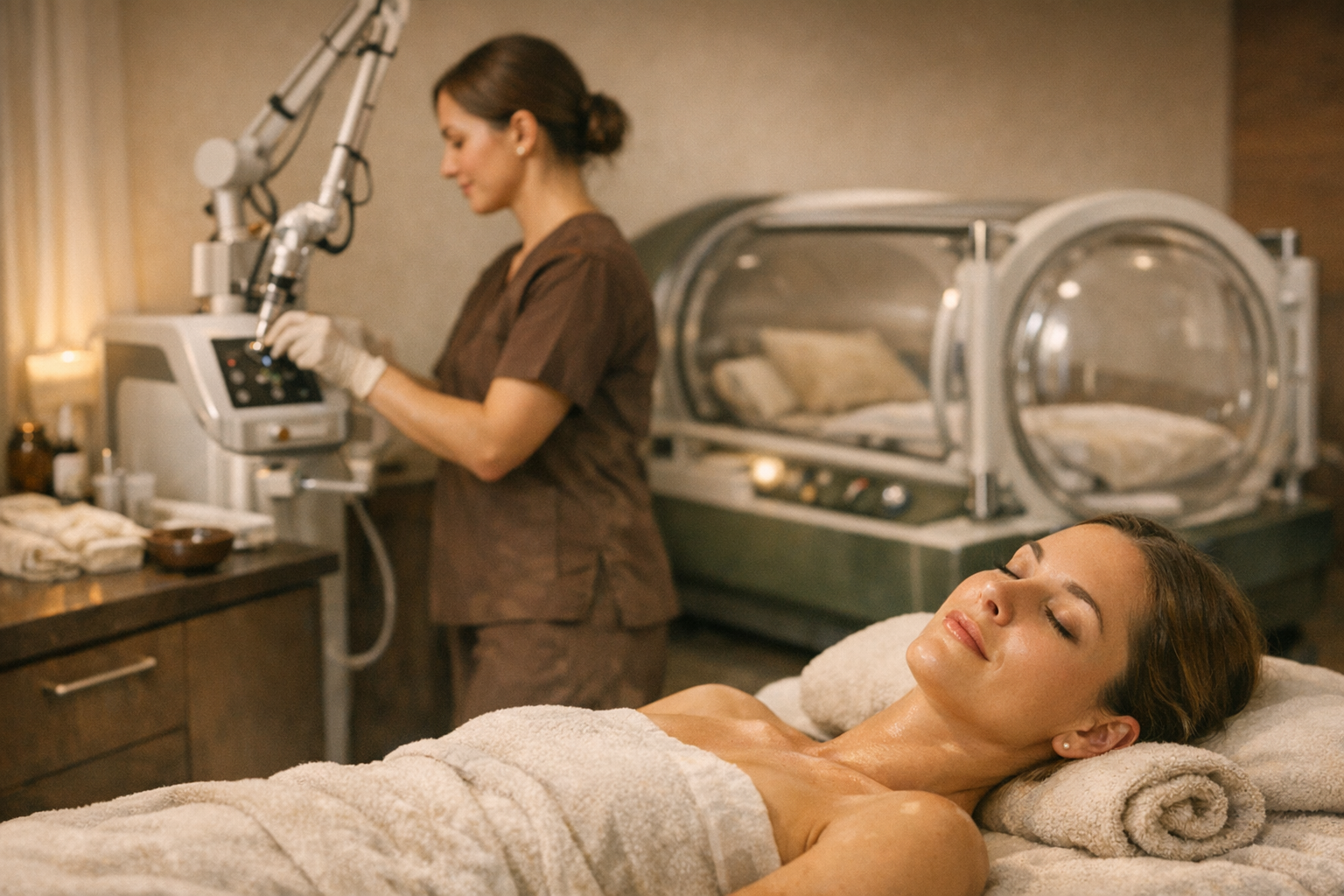
CO2 Laser and HBOT: A Science-Backed Recovery Pairing
Ever noticed how two people can have the same treatment yet heal at different speeds? A big part of that story is biology: blood flow, inflammation, oxygen delivery, and how efficiently your tissues rebuild. That’s why there’s growing interest in pairing treatments that work on different parts of the recovery puzzle.
Two therapies that often come up in performance-led wellness clinics are CO2 laser (a targeted, controlled skin-resurfacing treatment) and hyperbaric oxygen therapy (HBOT) (a systemic approach that increases oxygen delivery under pressure). Used thoughtfully, they may complement each other: one creates a precise stimulus for regeneration at the skin level, the other may support the internal conditions needed for repair.
In this guide, we’ll break down how CO2 laser and HBOT work, why some people combine them, what the science suggests (and what it doesn’t), and how to approach timing, safety, and realistic expectations—especially if you want results without derailing a busy schedule.
What is CO2 laser treatment?
CO2 laser is a form of ablative laser resurfacing. In simple terms, it uses a specific wavelength of light (carbon dioxide laser) to remove very thin layers of skin in a controlled way. That “micro-injury” is deliberate: it prompts the body’s normal wound-healing response, which includes collagen remodelling and skin renewal.
Many modern devices use fractional CO2 technology. “Fractional” means the laser treats tiny columns of skin while leaving surrounding areas intact. This can support faster recovery compared to fully ablative resurfacing, while still encouraging meaningful skin remodelling.
Common goals for CO2 laser
- Texture and tone: smoothing roughness and improving overall clarity
- Fine lines: especially where skin quality is a main driver
- Sun damage: targeting uneven pigmentation and photodamage (where appropriate)
- Scarring support: including certain acne scars or textural scars, depending on type and depth
It’s important to keep expectations grounded: CO2 laser can be an excellent tool, but it’s not a single-session “reset”. Results tend to build over time as collagen remodels, and your clinician’s settings, your skin type, and your aftercare all matter.
What is HBOT (hyperbaric oxygen therapy)?
HBOT involves breathing oxygen in a pressurised chamber, typically at greater-than-atmospheric pressure. Under these conditions, more oxygen dissolves into the plasma (the fluid component of blood), which can increase oxygen delivery to tissues.
Clinically, hyperbaric oxygen has established uses in specific medical contexts (for example, certain non-healing wounds, radiation tissue injury, and decompression illness). In wellness and performance settings, people also explore HBOT for recovery support—often with the aim of improving overall tissue oxygenation, supporting training recovery, or promoting resilience during high-stress periods.
What HBOT may support (general, non-disease claims)
- Tissue oxygenation: temporarily increasing oxygen availability
- Recovery environment: supporting the physiological conditions where repair happens
- Inflammation management: some evidence suggests hyperbaric oxygen can influence inflammatory pathways, though responses vary
- Fatigue and performance support: some people report improved recovery and clarity, but results can be individual
HBOT isn’t a magic switch—and it’s not appropriate for everyone. But when used with good screening and a sensible plan, it can be a valuable adjunct to recovery-focused care.
Why people pair CO2 laser and HBOT
CO2 laser is local and targeted: it creates a controlled injury to stimulate regeneration. HBOT is systemic: it affects oxygen availability throughout the body. The rationale for combining them is straightforward: skin remodelling is energy- and oxygen-dependent, and recovery relies on effective circulation, immune function, and collagen synthesis.
While direct research on “CO2 laser + HBOT” as a packaged protocol is still emerging, the broader science gives a credible framework for why the pairing may make sense for some individuals.
The potential synergy in plain English
- CO2 laser creates the “signal” for your skin to rebuild.
- HBOT may support the “supply chain” (oxygen delivery and recovery conditions) that helps rebuilding happen efficiently.
A closer look at the science: oxygen, collagen, and healing
After CO2 laser, the skin goes through well-described healing phases: inflammation, proliferation (new tissue building), and remodelling. Oxygen plays a role throughout—particularly in collagen synthesis and the activity of cells involved in repair.
Hyperbaric oxygen increases the amount of dissolved oxygen in plasma, which can enhance oxygen diffusion into tissues. In medical wound care settings, improved oxygenation is one reason HBOT may support healing in specific indications. Translating that into cosmetic and aesthetic recovery is plausible—but it’s not identical. Most people having CO2 laser are otherwise healthy and already capable of healing well. The question becomes: can HBOT optimise the process—reducing downtime or supporting better quality recovery—especially for individuals who are under-slept, stressed, or training hard?
What we can say responsibly:
- Oxygen is important for normal healing and collagen formation.
- HBOT increases oxygen delivery temporarily during/after sessions.
- Whether that translates to visibly faster or better cosmetic outcomes after CO2 laser will depend on individual factors and protocol design, and should be discussed with a clinician.
What results can you realistically expect?
Let’s keep this practical. If you’re considering this combination, you’re likely hoping for one (or more) of the following:
- Smoother recovery: feeling less “dragged out” during healing
- Less downtime: getting back to meetings, social plans, or training sooner
- Better skin quality: improved texture, firmness, and glow over time
CO2 laser is the primary driver of skin change. HBOT, if used, is best thought of as a recovery optimiser—something that may support your body’s capacity to repair. Some people notice they feel better during recovery; others notice little difference. The most honest approach is to plan for the standard healing window of your laser protocol, and treat any additional benefit as a bonus rather than a guarantee.
Who might consider CO2 laser + HBOT?
This pairing may be worth discussing with a qualified clinic team if you:
- Have a busy schedule and want to support recovery within realistic bounds
- Are investing in a deeper resurfacing treatment and want to optimise your healing environment
- Tend to experience prolonged redness or post-procedure fatigue (while still having normal healing)
- Are approaching skin rejuvenation as part of a wider performance-led plan (sleep, nutrition, stress management, training)
It may be less appropriate if you’re looking for an instant transformation, or if you’re not willing to follow meticulous aftercare (which is non-negotiable for CO2 laser outcomes).
Timing: when to do HBOT around a CO2 laser session
There isn’t a one-size-fits-all schedule, and protocols should be individualised. That said, clinics that combine recovery therapies often consider HBOT in two windows: pre-conditioning and post-procedure support.
Option 1: HBOT before CO2 laser (pre-conditioning)
The idea here is to go into your procedure with good recovery capacity: well-rested, well-oxygenated tissues, and minimal systemic stress.
- Typical approach: 1–3 HBOT sessions in the 1–2 weeks before laser
- Why it may help: supporting general recovery readiness (not a guarantee)
Option 2: HBOT after CO2 laser (recovery support)
This is the most common reason people consider HBOT alongside resurfacing. The aim is to support tissue oxygenation during the early healing window.
- Typical approach: a session within a few days after treatment, then additional sessions over 1–2 weeks depending on intensity of the laser and how you’re healing
- Why it may help: supporting the physiological conditions for repair and helping some people feel better during downtime
A sensible, clinician-guided plan matters
If your CO2 laser is more intensive, you’ll need to balance any added appointments with rest, hydration, and strict skin barrier care. If the laser is lighter, you may not need much additional recovery support.
Safety and suitability: important considerations
CO2 laser and HBOT are both medical-grade therapies that should be delivered with proper screening, protocols, and aftercare. Combining them should never override safety.
CO2 laser safety basics
- Skin typing and settings: darker skin tones and pigmentation-prone skin require careful parameter selection and pre/post plans
- Infection prevention: your clinician may advise antiviral cover if you’re prone to cold sores, and strict hygiene is essential
- Sun avoidance: UV exposure during healing can worsen pigmentation risk
- Barrier repair: the right ointments and gentle cleansing are key
HBOT safety basics
- Ear/sinus pressure: equalisation issues are common and should be screened for
- Lung health considerations: some respiratory conditions may be a contraindication
- Claustrophobia: manageable for many, but worth flagging early
- Medication and medical history: always disclose fully for safe clearance
If you’re pregnant, have uncontrolled asthma, certain ear conditions, or specific medical contraindications, HBOT may not be appropriate. A reputable provider will assess this carefully before any sessions.
Aftercare that makes (or breaks) your CO2 laser results
If you do nothing else, do this part well. The best “stack” in the world won’t outperform poor aftercare.
First 7–10 days: the non-negotiables
- Keep it clean and gentle: cleanse exactly as advised; no harsh actives
- Support the barrier: use the prescribed occlusive or healing balm to prevent excessive water loss
- Do not pick: flaking is part of the process; picking raises scarring and pigmentation risk
- Avoid heat stress: hot yoga, saunas, steam rooms, and intense cardio can worsen redness and swelling early on
- Strict UV protection: hats, shade, and high-quality SPF once cleared to use it
Weeks 2–6: consolidate gains
- Reintroduce actives slowly: only when your clinician approves (often starting with gentle antioxidants or retinoid alternatives)
- Prioritise sleep: collagen remodelling and immune balance depend on it
- Protein and micronutrients: aim for consistent, balanced meals to support repair
At LIVBETTER, we typically frame advanced aesthetic treatments as part of a wider plan—because skin is an organ that responds to your lifestyle. Your laser outcome is influenced by how you sleep, manage stress, train, and nourish yourself during the remodelling phase.
Practical action steps you can start this week
If you’re exploring CO2 laser and HBOT, these evidence-aligned basics improve the odds you’ll heal well—whether or not you choose to combine therapies.
1) Run a “recovery audit”
- Are you consistently sleeping 7–9 hours?
- Is your calendar packed with late nights or travel right after your procedure?
- Do you have a stress-management routine that actually fits your life?
If the answer is “not really”, plan your laser for a week where you can genuinely recover.
2) Build a simple, skin-friendly routine
- AM: gentle cleanse (or rinse), moisturiser, SPF (once approved post-laser)
- PM: gentle cleanse, moisturiser/barrier support
Complicated routines tend to backfire during healing. Consistency wins.
3) Consider a “supportive stack” (non-supplement)
- Hydration: steady fluid intake, especially around HBOT sessions
- Nutrition: protein at each meal; colourful plants for polyphenols
- Movement: light walking to support circulation (avoid overheating early post-laser)
4) Ask your clinician these questions
- What laser settings are being used, and what downtime should I plan for?
- What is my risk of post-inflammatory pigmentation, and how do we reduce it?
- Do you recommend HBOT for my specific situation—or is standard aftercare enough?
- If HBOT is advised, how many sessions, at what pressure, and in what time window?
CO2 laser vs other resurfacing options (and where HBOT fits)
Not everyone needs CO2 laser. Depending on your goals and schedule, alternatives may be more appropriate:
- Non-ablative lasers: often less downtime, subtler changes per session
- RF microneedling: can improve texture and firmness with a different downtime profile
- Chemical peels: useful for tone and superficial texture in selected cases
HBOT is generally positioned as a recovery-support option rather than a substitute for choosing the right primary treatment. If the procedure isn’t right for your skin type or goal, no amount of recovery optimisation will make it the best choice.
What a balanced treatment plan can look like at LIVBETTER
At LIVBETTER, we’re interested in outcomes you can actually live with: effective treatments, sensible recovery, and an approach that respects your time and physiology. If you’re considering CO2 laser, we’d typically start with a detailed consultation to assess:
- Your skin goals (texture, tone, lines, scarring support)
- Skin type and pigmentation risk
- Timeline, downtime tolerance, and work/social commitments
- Your recovery capacity (sleep, stress load, training demands)
- Whether adjunctive therapies like HBOT make sense for you
If HBOT is a fit, it’s planned as a supportive layer—never as a promise of specific healing speed, and always alongside meticulous laser aftercare.
Key takeaways
- CO2 laser is a powerful, controlled resurfacing tool that stimulates skin renewal through a precise healing response.
- HBOT increases oxygen availability under pressure and may support recovery conditions, though individual responses vary.
- Combining them is a plausible, performance-led pairing: local stimulus (laser) plus systemic support (HBOT).
- Aftercare, sun protection, and smart scheduling are just as important as the treatment itself.
- The best plan is personalised—based on your skin, lifestyle, and tolerance for downtime.
If you’re curious about whether CO2 laser and HBOT could complement your goals, a structured consultation is the next sensible step. Done properly, advanced therapies should feel less like a gamble and more like a well-designed plan.
Next Steps
Want to learn more? Check out these articles:
Plastic Surgery and HBOT: A Smarter Recovery Plan Guide
Hair Transplant and HBOT: Healing, Growth, and Better Results
Infrared Sauna for Muscle Recovery: A Science-Backed Guide
Check out our Therapies to see which options fit your goals.