
Plastic Surgery and HBOT: A Smarter Recovery Plan Guide
Why people are pairing plastic surgery with HBOT
Plastic surgery has become more refined, more personalised, and—importantly—more focused on recovery. Whether you’re planning a facelift, rhinoplasty, tummy tuck, breast surgery, or a smaller procedure like blepharoplasty, the success of your outcome isn’t just about the skill of the surgeon. It’s also about how your body heals afterwards.
That’s where HBOT—Hyperbaric Oxygen Therapy—often enters the conversation. You may have heard it mentioned in elite sports, wound-care medicine, or longevity circles. Increasingly, patients are asking a sensible question: can HBOT support recovery after plastic surgery?
In many cases, it may help as part of a comprehensive plan—particularly when the goal is to support tissue oxygenation, swelling management, and overall healing capacity. But it’s not a magic wand, and it’s not right for everyone.
In this guide, we’ll walk through what HBOT is, why oxygen matters after surgery, what the evidence suggests, and how to think about timing, safety, and realistic expectations—so you can make a calm, informed decision.
What is HBOT (Hyperbaric Oxygen Therapy)?
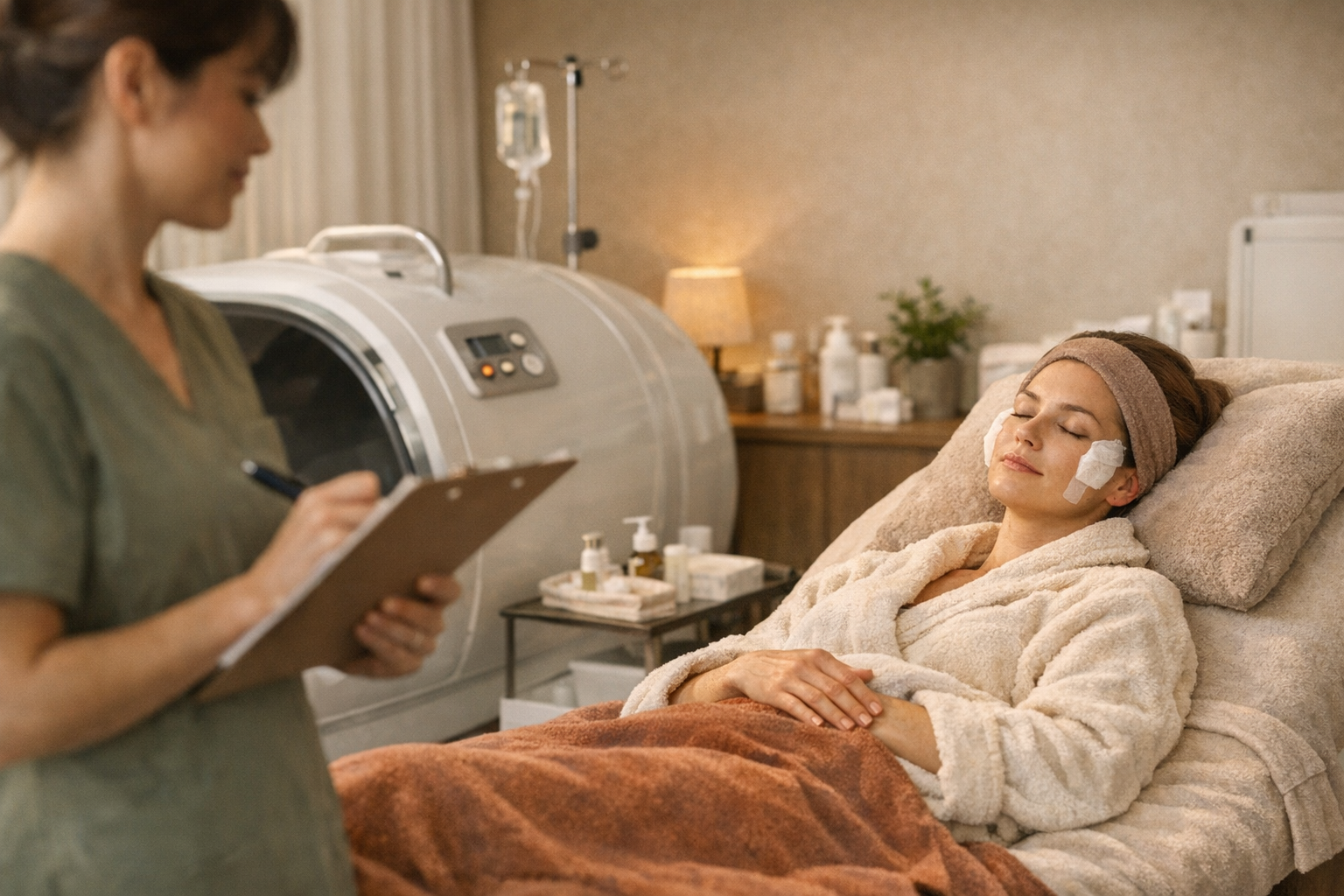
HBOT involves breathing oxygen in a pressurised chamber. The increased pressure allows more oxygen to dissolve into the plasma (the liquid part of your blood), helping deliver oxygen more efficiently to tissues—including areas where circulation may be temporarily compromised after surgery.
Why pressure changes the oxygen equation
Under normal conditions, most oxygen is carried by haemoglobin in red blood cells. In a hyperbaric environment, oxygen dissolves into plasma at higher levels, which can enhance diffusion into tissues.
This matters after plastic surgery because healing tissues often have:
- increased oxygen demand
- swelling that can compress microcirculation
- bruising and local inflammation
- temporary disruption of small blood vessels
What HBOT sessions typically look like
Although protocols vary, a typical session involves:
- changing into suitable clothing (no oils or flammable products)
- resting in the chamber while pressure gradually increases
- breathing oxygen for a set period (often with scheduled breaks)
- gradual decompression at the end
Many people describe the feeling as similar to being on an aeroplane—some ear pressure, usually manageable with simple techniques.
Why oxygen matters for surgical healing
Wound healing is an energy-intensive process. Oxygen supports multiple stages of tissue repair, including collagen formation, angiogenesis (new blood vessel growth), and immune defence.
Key healing processes that rely on oxygen
Your body uses oxygen to support:
- fibroblast activity (cells that help build connective tissue)
- collagen synthesis (important for wound strength)
- angiogenesis (improving blood supply to healing tissue)
- oxidative killing by immune cells (helping defend against infection)
When oxygen delivery is limited—due to swelling, bruising, vascular spasm, or pre-existing circulation issues—healing can be slower and more uncomfortable.
The plastic surgery context: why oxygen delivery can be challenged
Even in uncomplicated surgery, tissues may be affected by:
- surgical manipulation and cautery
- temporary disruption of microvessels
- dressings or compression garments
- post-operative oedema (fluid build-up)
HBOT is sometimes considered because it may support tissue oxygen availability during this high-demand period.
What does the evidence say about HBOT after plastic surgery?
Let’s be clear and clinically grounded: the strongest evidence for HBOT is in specific medical indications such as radiation tissue injury, certain difficult-to-heal wounds, and some types of compromised grafts and flaps. In plastic surgery recovery for otherwise healthy individuals, the evidence base is emerging and mixed.
That said, there are scenarios in reconstructive and cosmetic contexts where HBOT has been used because it may support:
- oxygen delivery to compromised tissue
- reduction of certain types of swelling
- recovery of threatened flaps or grafts
- overall tissue resilience during healing
Where HBOT is most commonly discussed in plastic surgery
HBOT tends to be most clinically discussed around:
- skin flaps and grafts (especially if there are early signs of compromised blood supply)
- revision surgeries or complex reconstructions
- post-surgical wound healing challenges
- high-risk patients (for example, smokers or people with vascular risk factors—though smoking itself is a major factor to address directly)
What HBOT can and cannot realistically do
HBOT may support the healing environment; it does not:
- replace surgical technique
- prevent all bruising or swelling
- guarantee scar outcomes
- “speed heal” beyond biological limits
Think of HBOT like improving the conditions for recovery—similar in concept to excellent sleep, adequate protein intake, and carefully managed movement. Helpful for many, essential for some, optional for others.
Who might consider HBOT alongside plastic surgery?
The best starting point is always your surgeon’s advice. In general, HBOT may be considered when there’s a reason to believe tissue oxygenation could be a limiting factor.
People who may benefit most (in appropriate cases)
Your clinician may discuss HBOT if you have:
- a history of slow wound healing
- previous surgical complications related to tissue viability
- a complex flap or graft procedure
- signs of compromised tissue perfusion post-operatively (this is a medical scenario and needs urgent surgical oversight)
- a recovery timeline where optimising tissue support is a priority
Situations where HBOT is often unnecessary
Many healthy people having straightforward cosmetic procedures heal very well with:
- good surgical technique
- appropriate wound care
- nutrition and hydration
- sleep and stress management
- staged return to movement
HBOT may still be used as a supportive add-on, but it should be framed as optional optimisation—not a requirement.
Timing: when should HBOT be done relative to surgery?
There isn’t a single protocol that fits everyone. Timing depends on the procedure, your health status, your surgeon’s preferences, and why HBOT is being used.
Pre-operative HBOT (sometimes discussed)
Some people choose sessions before surgery as part of an optimisation plan—aiming to support overall tissue oxygenation and recovery capacity. Evidence here is less established in cosmetic surgery, but some clinicians consider it reasonable in select cases.
Post-operative HBOT (more common)
When HBOT is used for recovery support, it’s commonly started in the early post-operative period—once your surgeon is comfortable and you’re medically stable.
A practical, surgeon-aligned approach often includes:
- confirming there are no contraindications
- ensuring dressings and wound plans are compatible
- starting with a short series and reassessing response
How many sessions are typical?
For general recovery optimisation, some people do a small course (for example, 5–10 sessions). For medically indicated tissue compromise, protocols can be more intensive and are usually directed by a medical team.
The key is personalisation: more is not always better, and the goal is a sensible plan that complements surgical aftercare.
Safety first: who should avoid HBOT?
HBOT is generally well tolerated when properly supervised, but it is not suitable for everyone.
Common contraindications and precautions
You should always disclose your medical history. HBOT may be unsuitable or require specialist clearance if you have:
- untreated pneumothorax (collapsed lung)
- certain lung conditions that increase barotrauma risk
- uncontrolled seizure disorders
- some ear or sinus conditions that prevent pressure equalisation
- certain chemotherapy agents (timing matters)
- claustrophobia (often manageable, but needs planning)
You’ll typically be screened carefully, and reputable providers will not rush this step.
Common side effects people notice
Some people experience:
- ear pressure or temporary ear discomfort
- sinus pressure
- fatigue after a session
- temporary changes in vision with intensive protocols
These are usually manageable, but they’re important to discuss upfront.
HBOT and common post-op concerns: swelling, bruising, scarring
Patients often ask about three practical outcomes: swelling, bruising, and scars.
Swelling and bruising
After surgery, swelling is partly inflammatory and partly mechanical (fluid shifts and tissue trauma). By improving tissue oxygen availability, HBOT may support the recovery environment and comfort in some people. However, results vary.
What still matters most:
- surgeon-directed compression and dressings
- appropriate movement (not too much, not too little)
- hydration and electrolyte balance
- limiting alcohol and avoiding nicotine
Scarring
Scar quality depends on genetics, incision placement, wound tension, infection risk, sun exposure, and aftercare. Oxygen plays a role in collagen synthesis, so in theory a well-oxygenated healing environment is supportive.
But it’s important to avoid overpromising: HBOT is not a scar “eraser”. If scarring is a major concern, a more complete plan may include:
- silicone gel or sheets (evidence-supported for many scars)
- sun protection (essential)
- clinician-led scar massage guidance
- timely review if hypertrophic scarring develops
Pain and discomfort
HBOT is not primarily a pain treatment, but some people report improved comfort as swelling settles. Pain management should follow your surgeon’s plan, and any increasing pain should be assessed promptly.
A practical recovery plan to pair with (or without) HBOT
If you’re investing in a procedure, the unglamorous basics are what often protect your results.
1) Prioritise protein and micronutrients
Healing requires raw materials. Focus on:
- protein at each meal (eggs, fish, yoghurt, legumes, lean meats)
- vitamin C sources (berries, citrus, peppers)
- zinc-containing foods (seafood, meat, beans, nuts)
If you’re considering supplements, keep it simple and discuss with your clinician—especially if you’re on blood thinners or have surgery scheduled.
2) Sleep like it’s a prescription
Aim for a consistent sleep window. Sleep supports immune function, inflammation regulation, and tissue repair. Small upgrades help:
- cool, dark room
- screens off 60 minutes before bed
- caffeine earlier in the day
3) Avoid nicotine (this is non-negotiable)
Nicotine is strongly associated with impaired wound healing and increased complication risk in many procedures because it reduces blood flow and oxygen delivery.
If stopping is difficult, ask for structured support. This single step often matters more than any advanced therapy.
4) Follow movement guidance precisely
Too much rest can increase stiffness and clot risk; too much activity can stress incisions and increase swelling.
A safe middle ground often includes:
- gentle walking as advised
- avoiding strain, heavy lifting, and high heart-rate exercise until cleared
- listening to “pulling” sensations around incisions as a cue to ease back
5) Keep hydration steady, not excessive
Dehydration can worsen fatigue and constipation (especially if you’re using post-op pain relief). Aim for steady fluids and include fibre-rich foods unless your surgeon advises otherwise.
How LIVBETTER approaches HBOT for recovery support
At LIVBETTER, we view HBOT as one tool within a wider recovery framework—alongside evidence-based nutrition, stress reduction, and smart use of advanced therapies.
If you’re considering HBOT around plastic surgery, we typically recommend:
- aligning timing with your surgeon’s instructions
- completing a thorough screening for safety and suitability
- setting realistic goals (comfort, tissue support, recovery optimisation)
- reassessing after a small number of sessions rather than committing blindly
This approach keeps things clinical, personal, and focused on what actually moves the needle.
Questions to ask your surgeon and HBOT provider
Use these to make an informed, low-stress decision.
Questions for your surgeon
- Do you see any risk factors in my case that could affect healing?
- Would HBOT be helpful for my specific procedure and tissue type?
- When would you want HBOT to start, if at all?
- Are there any dressings, drains, or wound considerations that affect HBOT use?
Questions for your HBOT provider
- What chamber type do you use, and what protocol do you recommend?
- How do you screen for contraindications like ear issues or lung risk?
- What side effects should I watch for, and how do you manage them?
- How will we track whether HBOT is helping in my case?
Realistic expectations: what “good” looks like
A good recovery plan is rarely dramatic. It’s usually calm, steady progress:
- swelling gradually trending down
- bruising changing colour and fading
- incisions staying clean and well-approximated
- energy returning week by week
HBOT, when appropriate, may support that trajectory. But the foundation remains: excellent surgical care, meticulous aftercare, and a lifestyle that doesn’t fight your biology.
The takeaway
Plastic surgery and HBOT can be a sensible pairing for some people—particularly when tissue oxygenation and healing support are priority considerations. The best outcomes come from individual assessment, good timing, and realistic goals.
If you’re exploring HBOT as part of your surgical recovery plan, think of it as supportive infrastructure: a way to help your body do what it already knows how to do, just under better conditions.
If you’d like guidance on whether HBOT could fit into your recovery, LIVBETTER can help you navigate the options, coordinate with your surgeon, and build a plan that’s grounded, safe, and aligned with your schedule.
Next Steps
Want to learn more? Check out these articles:
Hair Transplant and HBOT: Healing, Growth, and Better Results
Infrared Sauna for Muscle Recovery: A Science-Backed Guide
HBOT Before and After Elective Surgery: A Practical Guide
Check out our Therapies to see which options fit your goals.