
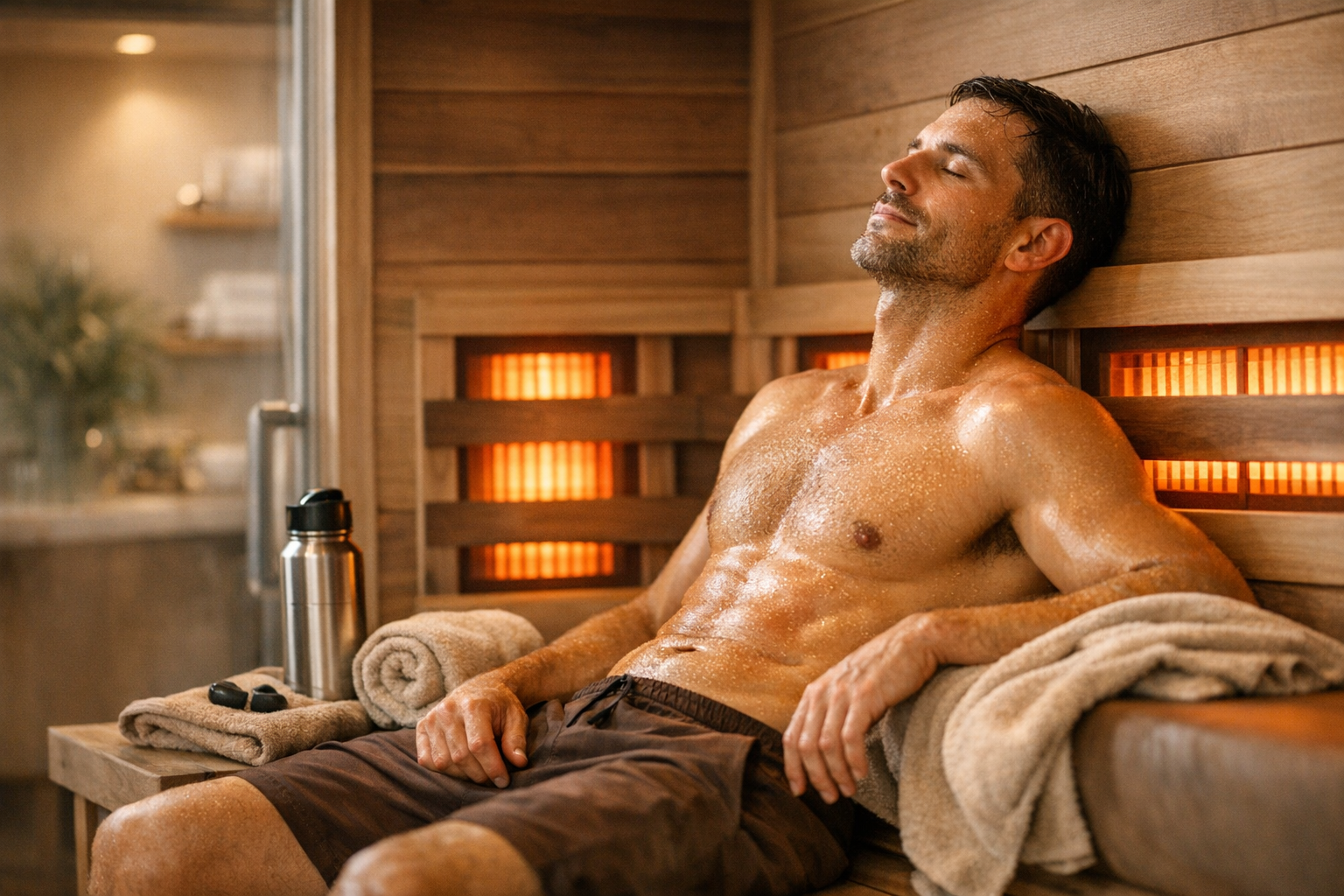
Infrared Sauna for Muscle Recovery: A Science-Backed Guide
There’s a familiar post-training paradox: you did the “healthy” thing, and now your legs feel like you’re walking through wet cement. Muscle soreness is normal—often a sign you challenged tissue in a useful way—but recovery is where results actually consolidate. The question is how to recover well without turning your life into a full-time rehab project.
Infrared sauna therapy has moved from niche wellness circles to performance routines for busy professionals, gym-goers, and athletes. It’s warm, time-efficient, and—when used correctly—may support the recovery processes your body is already trying to run: circulation, relaxation, sleep readiness, and the perception of soreness.
This guide breaks down what an infrared sauna is, how it differs from traditional saunas, what the research suggests for muscle recovery, and how to use it safely and effectively. You’ll also find practical protocols you can try, plus realistic expectations (because the best results come from stacking smart basics, not chasing miracles).
What muscle recovery really needs (beyond “rest”)
Recovery isn’t just “doing nothing”. It’s an active biological process where your body repairs micro-damage, restores fuel, and rebalances your nervous system. A solid recovery plan usually supports four pillars:
- Circulation and nutrient delivery to working tissues
- Inflammation regulation (not eliminating it—just keeping it appropriate)
- Nervous system downshift from high alert (sympathetic) to calm-and-repair (parasympathetic)
- Sleep quality, where a lot of tissue repair and adaptation happens
Delayed onset muscle soreness (DOMS) typically peaks 24–72 hours after a new or intense session, especially heavy eccentric work (think lowering phases of squats, running downhill, or tempo strength training). DOMS is not purely “lactic acid” (that’s cleared relatively quickly). It’s more linked to micro-trauma, local inflammation, and sensitisation of pain receptors.
This is where heat-based strategies, including infrared sauna, may be helpful: not by “erasing” soreness, but by supporting the conditions that make recovery smoother—better blood flow, relaxation, and less perceived stiffness.
Infrared sauna vs traditional sauna: what’s the difference?
Traditional saunas heat the air around you (typically 70–100°C). Infrared saunas use infrared light waves to warm tissues more directly, often at lower air temperatures (commonly 40–60°C). Many people find infrared easier to tolerate, especially if they dislike the intense, breath-catching heat of a Finnish-style sauna.
Why the mechanism matters
Infrared energy can penetrate the skin to a modest depth (exact depth varies by wavelength and individual factors). The practical takeaway is that infrared can create a strong warming effect at lower ambient temperatures—still enough to raise skin temperature, promote sweating, and encourage vasodilation (widening of blood vessels).
From a recovery perspective, lower air temperature can be a win: you may be able to stay in long enough to get a meaningful physiological response without feeling overwhelmed.
How infrared sauna may support muscle recovery
Let’s keep this grounded: an infrared sauna is not a substitute for training consistency, smart programming, protein intake, or sleep. But it can be a useful addition to a comprehensive plan.
1) Improved circulation and tissue warming
Heat exposure typically increases heart rate and peripheral blood flow. More circulation may support the delivery of oxygen and nutrients to tissues and the clearance of metabolic by-products. While your body is perfectly capable of recovery without sauna therapy, improved circulation can be one reason people report reduced stiffness and a “looser” feeling afterwards.
2) Reduced perception of soreness and stiffness
Heat can influence pain perception via changes in nerve conduction and by relaxing muscle tone. Many people find they move more freely after a sauna session—particularly helpful if DOMS makes you feel rigid.
Importantly, reduced soreness doesn’t always equal full recovery. You can feel better and still be biologically under-recovered. Use improved comfort as a tool, not a green light to smash every session at 100%.
3) Nervous system downshift (stress and recovery are connected)
Training is a stressor (a good one). Work deadlines, digital overload, and poor sleep are also stressors (less helpful). When stress load is high, recovery can suffer.
A sauna session—especially when paired with calm breathing—may help shift your nervous system towards a more parasympathetic state. Many people describe a “post-sauna exhale” that makes it easier to unwind later in the day.
4) Sleep readiness through body temperature dynamics
Good sleep is one of the most reliable recovery tools we have. Heat exposure raises your core temperature during the session, and the subsequent cool-down can help facilitate the natural temperature drop that supports sleep onset.
Timing matters here: for many, sauna in the late afternoon or early evening works well. Too close to bedtime can be stimulating for some people, especially if the session is intense or hydration is off.
5) Heat acclimation and training tolerance (a secondary benefit)
If you train in warmer environments or travel frequently, controlled heat exposure may support heat tolerance. This is more performance-adjacent than recovery-specific, but it can indirectly help you feel more comfortable during training blocks.
What does the research say (and what it doesn’t)
Sauna research includes a mix of traditional and infrared protocols, with outcomes ranging from cardiovascular markers to perceived soreness. For muscle recovery specifically, evidence tends to be stronger for subjective benefits (how sore or stiff you feel) than for dramatic changes in objective measures like strength restoration after heavy damage—though some studies suggest potential benefits when heat is used consistently.
Here’s the most practical, honest summary:
- Well-supported: heat can increase circulation, promote relaxation, and improve perceived muscle stiffness in many people.
- Promising but variable: improvements in DOMS, functional performance recovery, and inflammation markers depend on protocol, training load, and individual response.
- Not supported: claims that sauna “flushes toxins” or guarantees rapid muscle repair. Your liver and kidneys do the detox heavy lifting; sweating is mainly for thermoregulation.
If you try infrared sauna and notice you sleep better, feel less stiff, and maintain training consistency more easily, that’s meaningful. Recovery is partly physiology and partly behaviour: anything that helps you stay consistent (safely) has value.
Infrared sauna protocols for muscle recovery (practical and realistic)
Your ideal protocol depends on your training intensity, heat tolerance, schedule, and hydration habits. Below are evidence-informed starting points that work well for many active people.
Protocol A: General post-training recovery (most people)
- Timing: 2–6 hours after training (or later the same day)
- Temperature: 45–55°C
- Duration: 15–25 minutes
- Frequency: 2–4 sessions per week
- Goal: relaxation, circulation, and stiffness reduction without over-stressing your system
Why it works: it’s long enough for meaningful warming and a parasympathetic shift, but not so aggressive that you feel wiped out.
Protocol B: DOMS-heavy week (new programme, high eccentrics)
- Timing: day after the toughest session
- Temperature: 40–50°C (slightly lower for comfort)
- Duration: 20–30 minutes, or two shorter blocks (e.g., 2 × 12 minutes)
- Frequency: 3–5 sessions that week, as tolerated
- Goal: improve mobility comfort and perceived soreness so you can move well
Pair this with gentle movement (a walk, light cycle, mobility work). Heat plus motion is often more useful than heat alone.
Protocol C: Sleep-supporting evening session (busy professionals)
- Timing: 60–120 minutes before bed
- Temperature: 45–55°C
- Duration: 10–20 minutes
- Frequency: 1–3 times per week
- Goal: downshift your nervous system and support sleep onset
If you find evening sauna energising, move it earlier (late afternoon) and keep it shorter.
How to progress safely
Think of sauna like training: start where you are, then build.
- Week 1: 10–15 minutes, moderate temperature
- Week 2: add 5 minutes per session
- Week 3+: increase frequency before increasing temperature
The best protocol is the one you can repeat consistently without feeling drained.
Hydration, electrolytes, and what to do before/after
Most sauna problems come down to avoidable basics: dehydration, low electrolytes, and pushing too hard.
Before your session
- Drink water in the hour beforehand (especially if you trained that day).
- If you’re prone to cramp or heavy sweating, include electrolytes with sodium (particularly after intense exercise).
- Avoid alcohol beforehand. It increases dehydration risk and can blunt recovery.
After your session
- Rehydrate gradually. A simple rule: drink until your urine returns to a pale straw colour.
- Have a balanced meal or snack with protein and carbohydrates if it fits your training plan. This supports muscle repair and glycogen restoration.
- Give yourself a 5–10 minute cool-down before rushing back into emails or the school run. Your nervous system will thank you.
Infrared sauna vs other recovery tools (what to combine it with)
Infrared sauna works best as part of a stack. Here’s how it compares with common recovery strategies:
Sauna vs cold exposure
Cold water immersion can reduce soreness perception, but frequent cold immediately after strength training may blunt some adaptation signals. If your main goal is strength and hypertrophy, heat and active recovery are often a better default, reserving cold for competition phases, acute soreness, or when you need to feel fresher for a specific event.
Sauna vs massage
Massage can help with soreness and relaxation, but it’s time- and cost-intensive. Sauna is more accessible for frequent use, and many people find it delivers a similar “reset” effect for the nervous system. They can also complement each other.
Sauna vs compression and mobility
Compression garments and mobility work can reduce perceived heaviness and improve range of motion. A practical combo is: sauna → gentle mobility (your tissues are warm and more pliable).
Best-in-class recovery basics (still the foundation)
- Sleep: protect a consistent window, aim for a wind-down routine.
- Protein: distribute across the day (roughly 25–40 g per meal for many adults, adjusted to your needs).
- Carbohydrates: especially around hard training days to restore glycogen.
- Training load management: progress volume and intensity gradually.
- Easy movement: walking is underrated for recovery.
Who should be cautious with infrared sauna?
Infrared sauna is generally well tolerated, but it isn’t for everyone in every circumstance. Be cautious and seek medical advice if you:
- are pregnant
- have uncontrolled high or low blood pressure
- have significant cardiovascular disease or a history of fainting
- have a fever or acute infection
- are taking medications that affect thermoregulation or hydration (e.g., certain diuretics)
Also avoid sauna if you feel unwell, overly fatigued, or severely dehydrated. And if you ever feel dizzy, nauseous, develop a headache, or notice palpitations: end the session, cool down, and rehydrate.
Signs you’re overdoing it
- you feel wiped out for hours afterwards rather than refreshed
- your sleep gets worse (restlessness, night waking)
- you’re more irritable or your resting heart rate is elevated the next day
- you get frequent headaches post-session
In that case: reduce time, reduce temperature, increase hydration, and consider moving sessions away from very hard training days.
Frequently asked questions
Is infrared sauna better than a traditional sauna for muscle recovery?
Not universally “better”—just different. Infrared is often easier to tolerate due to lower air temperatures, which can make consistent use simpler. Traditional saunas may reach higher heat loads. The best choice is the one you can use safely and regularly.
Should I use infrared sauna immediately after lifting?
It can be fine, but many people do better waiting a couple of hours, especially after very intense sessions. If you do it straight after, prioritise hydration and keep the session moderate. If your goal is maximising strength/hypertrophy adaptation, don’t use sauna as a way to push training harder than your recovery allows.
How often should I use it for recovery?
For most active people: 2–4 times per week is a good starting point. Daily use can work for some, but only if hydration, sleep, and overall stress are well managed.
Can it replace stretching or mobility work?
No—but it can make mobility work feel better. Warm tissues generally tolerate gentle range-of-motion work more comfortably.
A simple “LIVBETTER” recovery routine you can try this week
If you want something straightforward that fits a busy schedule, try this for seven days:
- Pick two training days where you typically feel the most DOMS.
- Do 15–20 minutes of infrared sauna later that day (45–55°C).
- Add a 10-minute walk after dinner on those same days.
- Do 5 minutes of mobility post-sauna (hips, ankles, thoracic spine).
- Hydrate intentionally: water + electrolytes if you sweat heavily.
- Keep bedtime consistent within a 60-minute window.
Track two things: (1) how stiff you feel on waking, and (2) how ready you feel for your next session. The goal is not to eliminate soreness; it’s to improve training consistency and day-to-day comfort.
How LIVBETTER can support your recovery
At LIVBETTER, we’re big on recovery that’s efficient, evidence-informed, and fits real life. If you’re exploring infrared sauna for muscle recovery, our technology-enabled approach helps you use heat therapy in a structured way—integrated with smart lifestyle guidance around hydration, sleep, and training load.
If you’re not sure where to start, a simple consultation can help you choose session length and frequency appropriate to your goals, training schedule, and health profile.
The bottom line
Infrared sauna can be a valuable recovery tool—particularly for reducing perceived muscle stiffness, supporting relaxation, and improving sleep readiness. It’s not a magic fix, but when used consistently and safely, it can help you feel better between sessions and stay on track with your training.
Think of it as part of a performance lifestyle: train with intent, recover with the same care, and build routines you can actually sustain. That’s how you keep progressing—without burning out.
Check out our Therapies to see which options fit your goals.