
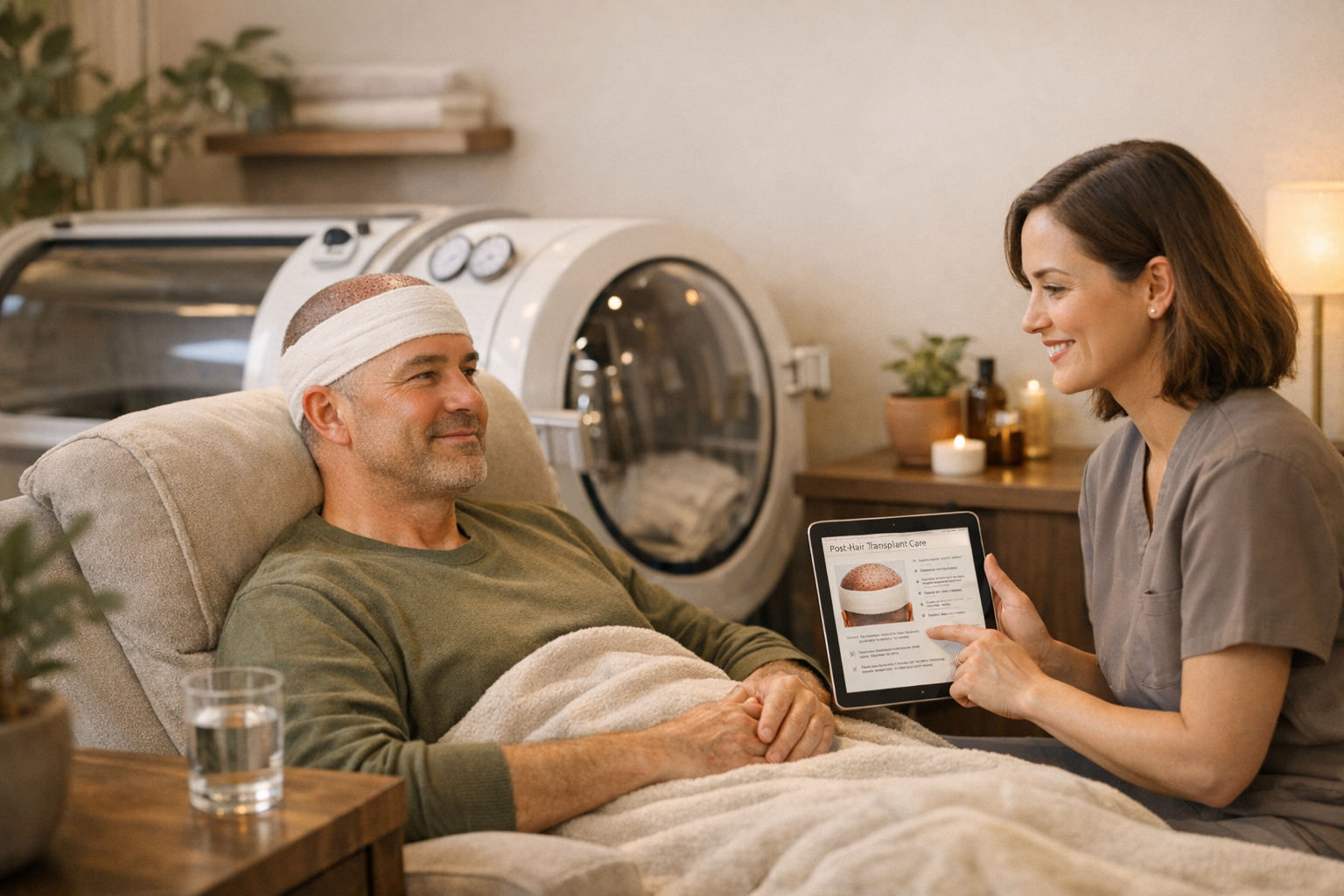
Hair Transplant and HBOT: Healing, Growth, and Better Results
Introduction
A hair transplant is one of those rare aesthetic procedures where the “after” can look wonderfully natural—yet the process behind the scenes is undeniably biological and time-dependent. Those tiny grafts have to survive transfer, settle into their new home, and then start producing hair again. So it’s no surprise that people ask a practical question: can anything support healing and graft survival after a hair transplant?
Hyperbaric oxygen therapy (HBOT) is one option that’s increasingly discussed. HBOT has a long clinical history in wound care and tissue recovery, and while it’s not a magic add-on (and not appropriate for everyone), it may be a helpful part of a comprehensive post-transplant plan—particularly when swelling, inflammation, or slower healing are concerns.
In this guide, we’ll walk through how hair transplants heal, what HBOT actually does in the body, what the evidence suggests, and how to think about timing, safety, and realistic expectations.
Hair transplant healing: what’s happening under the surface
Most modern hair transplants fall into two categories:
- FUE (Follicular Unit Extraction): individual follicular units are harvested and implanted.
- FUT (Follicular Unit Transplantation/strip method): a strip is taken from the donor area and dissected into grafts.
Regardless of technique, the early days after surgery are about graft protection and tissue recovery.
The first 72 hours: grafts are “settling in”
Newly implanted grafts initially rely on diffusion—oxygen and nutrients pass from surrounding tissue fluid into the follicle unit. Very quickly, the scalp begins re-establishing microcirculation around the grafts.
In practical terms, the priorities are:
- Minimising trauma (no rubbing, scratching, helmet friction)
- Controlling swelling
- Keeping the scalp clean to reduce infection risk
- Following your surgeon’s aftercare precisely
Days 3–10: scabs, inflammation, and early blood vessel regrowth
This is the stage where crusting/scabbing is common and usually expected. Inflammatory signalling helps coordinate healing, but excessive inflammation can make the recovery feel more uncomfortable.
Weeks 2–8: “shock loss” and the normal reset
Many people are surprised when transplanted hairs shed. This is often part of the normal cycle: follicles can enter a resting phase (telogen) before later producing a new hair shaft.
Months 3–12: gradual regrowth and maturation
Hair growth is slow biology. Thickness, curl, and density can continue to improve over many months.
What is HBOT (hyperbaric oxygen therapy)?
HBOT involves breathing oxygen in a pressurised chamber (typically at pressures greater than sea level). Under these conditions, more oxygen dissolves into plasma (the liquid portion of blood), increasing oxygen availability to tissues.
HBOT has established use in specific clinical settings (such as certain problem wounds), and its physiological effects are relevant to recovery processes that depend on oxygen delivery.
Key mechanisms: how HBOT may support healing
HBOT may support post-procedure recovery through several pathways:
- Improved tissue oxygenation: oxygen is a fundamental substrate for wound repair.
- Support for angiogenesis: oxygen availability can influence signalling that promotes new microvessel formation.
- Modulation of inflammation: not “switching it off”, but potentially helping regulate excessive inflammatory responses.
- Immune support: oxygen-rich environments can support certain immune cell functions involved in wound defence.
For hair transplant patients, the key question is whether these effects translate into meaningful clinical benefits—such as reduced swelling, faster visible healing, and improved graft “take” in higher-risk situations.
HBOT and hair transplants: what does the evidence say?
The research specifically on HBOT after hair transplantation is still emerging, and it’s important to be transparent about that. We do not have large, definitive trials showing that HBOT guarantees better transplant outcomes for everyone.
That said, the rationale comes from two areas:
- Wound healing and tissue survival literature: HBOT has been studied for skin grafts, flaps, and compromised wound healing, where oxygen delivery can be a limiting factor.
- Smaller studies and clinical experience in hair restoration contexts: some reports suggest HBOT may be beneficial for graft survival and recovery, particularly when circulation is compromised or healing is slower.
Where HBOT may be most relevant
HBOT may be considered as a supportive option when:
- There is significant swelling or bruising and you want a strategy to support recovery
- You have a history of slow wound healing (always discuss with your surgeon)
- The procedure was large-session with high graft numbers
- There are concerns about compromised scalp circulation
- You are seeking to optimise recovery as part of a broader, evidence-informed plan (sleep, nutrition, stress management, gentle movement)
Where HBOT may have limited additional value
HBOT may be less impactful when:
- Healing is progressing normally and quickly
- Aftercare compliance is poor (HBOT can’t compensate for scratching, smoking, or incorrect washing)
- Expectations are unrealistic (HBOT won’t “force” hair to grow faster than biology allows)
The biology link: oxygen, microcirculation, and graft survival
Hair follicles are metabolically active structures. After transplantation, each graft transitions from a period of relative vulnerability (relying on diffusion) to improved resilience as it reconnects to a blood supply.
Oxygen availability matters because it supports:
- Collagen formation and tissue repair around the implant sites
- Cellular energy production (ATP) for repair processes
- Angiogenic signalling to re-establish local microcirculation
If oxygen delivery is impaired (for example, by swelling-related pressure or individual vascular factors), theoretical risk to graft survival increases. HBOT’s main appeal is improving oxygen delivery beyond what haemoglobin alone can carry.
Timing and protocol: when might HBOT be used after a hair transplant?
There is no universal protocol for hair transplant + HBOT. If you’re considering it, coordinate between your hair transplant surgeon and the HBOT provider.
Common timing strategies (general guidance)
- Early post-op window (first week): often discussed because this is when grafts are most vulnerable and swelling/inflammation are prominent.
- Extended support (weeks 1–3): sometimes used to support ongoing tissue recovery.
A realistic, patient-centred way to plan
Rather than chasing an arbitrary number of sessions, it can be helpful to set goals such as:
- Reduce swelling and discomfort
- Support clean healing of donor and recipient areas
- Optimise recovery while maintaining a busy schedule
At LIVBETTER, when HBOT is used to support recovery, we typically focus on a personalised plan based on procedure timing, your current health, and recovery markers—always with surgeon alignment.
Safety first: who should be cautious with HBOT?
HBOT is generally well tolerated when appropriately screened and delivered by trained professionals, but it is not suitable for everyone.
Potential risks and side effects
These can include:
- Ear or sinus barotrauma (pressure-related discomfort)
- Temporary changes in vision in some cases
- Claustrophobia (depending on chamber type)
- Fatigue after sessions (some people feel energised; others feel tired)
Contraindications and medical considerations
You should disclose (and discuss) if you have:
- Certain untreated lung conditions (e.g., risk of trapped air)
- Recent ear surgery or uncontrolled sinus issues
- Uncontrolled fever or acute infection
- Pregnancy (case-by-case; medical oversight required)
Your HBOT provider should complete a proper medical screening before any sessions.
What HBOT can and cannot do for transplant results
Let’s keep expectations both optimistic and grounded.
HBOT may support:
- Comfort during recovery (less swelling for some people)
- Tissue oxygenation and the biological conditions for healing
- A smoother recovery experience as part of a broader plan
HBOT cannot:
- Replace meticulous surgical technique
- Override poor aftercare habits
- Guarantee graft survival or a specific density outcome
- Eliminate the normal “shedding then regrowth” timeline
The best outcomes usually come from stacking sensible advantages: a skilled surgeon, excellent aftercare, good sleep, nutrition, stress management, and supportive therapies where appropriate.
Practical recovery steps you can start today (with surgeon approval)
HBOT is one tool. These fundamentals are the foundation.
1) Protect the grafts like they’re precious (because they are)
- Avoid touching or rubbing the recipient area
- Follow washing instructions exactly (timing matters)
- Avoid tight hats/helmets until cleared
2) Optimise sleep and swelling control
- Sleep with your head elevated for the period your surgeon recommends
- Keep hydration steady through the day
- Avoid alcohol in the early recovery window if advised
3) Don’t sabotage microcirculation
- Avoid smoking and nicotine (a major risk factor for impaired healing)
- Keep caffeine sensible if you’re prone to anxiety or poor sleep
- Gentle walking can support circulation without stressing the scalp
4) Eat for wound healing (simple, not extreme)
Prioritise:
- Protein at each meal (tissue repair depends on amino acids)
- Vitamin C-rich foods (peppers, berries, citrus) to support collagen pathways
- Zinc and iron adequacy (through a balanced diet; supplement only if indicated)
5) Keep stress in check (because physiology listens)
Stress doesn’t “ruin” a transplant, but high stress can disrupt sleep and recovery behaviours.
Try:
- 10 minutes of down-regulation breathing daily
- A short outdoor walk after meals
- A screen-free wind-down routine
HBOT at LIVBETTER: what a session is like
If HBOT is appropriate for you, the experience is typically calm and structured.
What to expect:
- A medical screening and intake
- Clear guidance on clothing and prohibited items (for safety)
- A pressurisation period (you may feel ear pressure like on a plane)
- A set session length where you relax, breathe normally, and let the process do its work
If you’re planning HBOT around a hair transplant, we’ll encourage you to:
- Share your surgery date and aftercare instructions
- Confirm with your surgeon that HBOT is appropriate for your situation
- Build a schedule that supports recovery without adding stress
Common questions: hair transplant and HBOT
Will HBOT make my hair grow faster?
Hair growth follows biological cycles. HBOT may support the healing environment, but it won’t shortcut the normal regrowth timeline.
Can I do HBOT before the transplant?
Some people explore pre-procedure optimisation to support general recovery capacity (sleep, nutrition, stress reduction). Whether HBOT fits pre-op is individual—coordinate with your surgical team.
Is HBOT only for “problem” healing?
Not necessarily. Some people use it proactively, but it’s most compelling when there’s a clear rationale: large sessions, slower healing history, or recovery optimisation goals.
How soon after surgery can I start?
This depends on surgeon preference, your health, and your immediate post-op status. Early use is sometimes discussed, but timing should be clinician-led.
Putting it together: a balanced, performance-minded approach
A hair transplant is a precision procedure followed by months of patient biology. HBOT is not a requirement for great results, but it may be a supportive option—especially for those who want to optimise healing conditions and recovery comfort within an evidence-informed framework.
If you’re considering HBOT around a hair transplant, the most sensible next step is coordination: speak to your hair transplant surgeon, share your goals and concerns, and work with a qualified HBOT provider who can screen you properly and tailor a plan.
At LIVBETTER, we’re here to help you recover intelligently—using modern therapies, clear guidance, and realistic expectations—so you can get back to life feeling well and performing at your best.
Next Steps
Want to learn more? Check out these articles:
HBOT Before and After Elective Surgery: A Practical Guide
Infrared Sauna for Muscle Recovery: A Science-Backed Guide
Check out our Therapies to see which options fit your goals.