
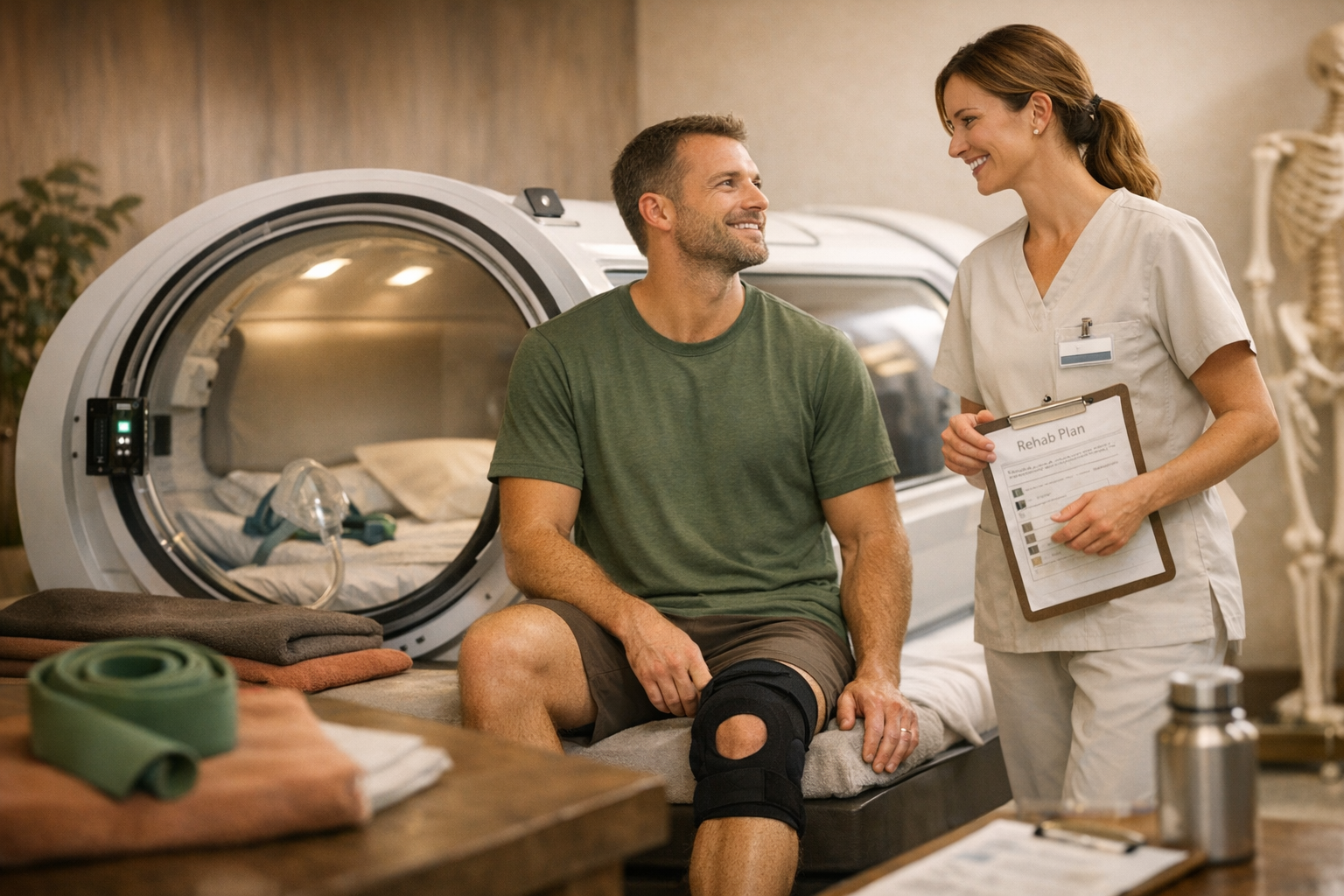
HBOT for Soft Tissue Recovery: A Practical Guide 2
Soft tissue injuries have a knack for being “small but stubborn”. A calf strain that keeps whispering when you run. A post-op scar that feels tight for months. A shoulder that technically works, but never quite feels like it did. If you’ve ever wondered why recovery can feel slow even when you’re doing all the right things, the answer is often simple: healing is an oxygen-hungry process.
Hyperbaric Oxygen Therapy (HBOT) is one of the more interesting tools in modern recovery because it addresses a fundamental bottleneck—oxygen delivery—while working alongside physiotherapy, strength work, sleep, and nutrition. This guide walks you through what HBOT is, how it may support soft tissue recovery, who it’s most suited to, what a sensible protocol can look like, and how to get the most from sessions without unrealistic expectations.
What counts as “soft tissue” (and why it heals slowly)
Soft tissue generally refers to muscles, tendons, ligaments, fascia, and skin. These tissues are designed for movement and load, but they vary hugely in blood supply. That matters because blood flow is how oxygen and key nutrients arrive, and how waste products are cleared.
In broad terms:
- Muscle is relatively well vascularised, so mild strains can recover well with good loading and rest.
- Tendons and ligaments have a lower blood supply, which can mean slower remodelling and longer timelines.
- Fascia and scar tissue can become stiff or sensitive, especially if swelling and immobility linger.
Soft tissue recovery tends to stall when there’s a mismatch between tissue demand and tissue supply. You can have excellent rehab exercises, but if the local environment remains inflamed, swollen, or poorly oxygenated, progress may feel frustratingly incremental.
What is HBOT, in plain English?
HBOT involves breathing oxygen in a pressurised chamber. The increased pressure allows more oxygen to dissolve into your plasma (the liquid part of your blood). That means oxygen can reach areas that may not be getting optimal delivery through red blood cells alone—particularly relevant in tissues affected by swelling, microvascular disruption, or compromised circulation.
Think of it as improving the “oxygen carrying capacity” of your bloodstream for a period of time. HBOT is not a replacement for rehab; it’s a support that may help the biology of recovery keep pace with the mechanics of recovery.
Why pressure matters
At higher-than-atmospheric pressure, the physics of gas exchange changes. More oxygen dissolves into plasma and can diffuse into tissues more effectively. This is one reason HBOT has a long history in clinical medicine for specific indications where oxygen delivery is limited.
How HBOT may support soft tissue recovery
We need to be careful with language here: HBOT isn’t a “quick fix”, and results vary depending on injury type, timing, overall health, and the quality of your rehab programme. With that said, HBOT has plausible, science-backed mechanisms that may support recovery in several ways.
1) Supporting oxygen delivery to stressed tissue
Oxygen is required for energy production (ATP), collagen synthesis, and many steps in tissue repair. If swelling or microvascular damage limits oxygen delivery, HBOT may temporarily increase the oxygen available to tissues and help shift the local environment toward repair.
2) Modulating inflammation (not “turning it off”)
Inflammation is part of healing; you don’t want to eliminate it. The goal is appropriate inflammation that resolves on schedule. Some research suggests hyperbaric oxygen exposure can influence inflammatory signalling and oxidative stress responses. In practical terms, people often describe feeling “less puffy” or “less reactive” over a course of sessions, though this is individual and should be monitored alongside functional improvements.
3) Supporting new microvessel formation (angiogenesis)
Healthy healing often involves improving the local microcirculation. HBOT has been associated in certain contexts with signalling pathways that can support angiogenesis. For soft tissue recovery, this may be relevant when tissues are slow to remodel due to suboptimal blood flow.
4) Supporting collagen production and wound repair
Collagen is the scaffolding for repairing tendons, ligaments, and skin. Oxygen is required for collagen cross-linking, a key part of building strong, functional tissue. This is one reason HBOT is sometimes discussed in the context of post-surgical recovery and wound healing support (under appropriate medical guidance).
5) Helping recovery tolerate rehab (the “consistency advantage”)
One underappreciated benefit of any recovery modality is whether it helps you stay consistent with rehab. If HBOT supports comfort, reduces excessive post-training soreness, or improves sleep quality for some individuals, it may indirectly help you show up more consistently to the interventions that drive long-term outcomes: graded loading, mobility, and strength.
Who may consider HBOT for soft tissue recovery?
HBOT may be worth considering when you’re dealing with:
- Persistent soft tissue niggles where rehab is ongoing but progress is slow.
- Post-operative soft tissue healing (under your surgeon’s guidance), especially where swelling or wound recovery is a concern.
- High training loads and repeated soft tissue stress, where recovery capacity is the limiting factor.
- Reduced circulation risk factors (for example, smoking history or certain vascular considerations) where oxygen delivery may be less efficient—always discussed with a clinician first.
It’s particularly sensible when HBOT is part of a comprehensive plan that also includes physiotherapy-led loading, sleep optimisation, and nutrition.
When HBOT is not appropriate (or needs extra caution)
HBOT is generally well tolerated for many people, but it’s not for everyone. You should always be medically screened. Situations that commonly require caution or may be contraindications include:
- Untreated pneumothorax (collapsed lung) and certain lung conditions.
- Uncontrolled seizure disorders (risk considerations vary).
- Severe claustrophobia (though many people manage well with the right support).
- Some ear/sinus issues that make pressure equalisation difficult.
- Pregnancy (requires medical decision-making depending on indication).
If you’re unsure, a proper pre-assessment is the right starting point. At LIVBETTER, we treat screening as part of the service, not a formality—because the goal is a safe, appropriate plan that matches your health status and aims.
Timing: when should you start HBOT after an injury?
The “best” timing depends on the tissue, the severity, and whether surgery is involved. In general:
- Acute phase (first days): Your priorities are assessment, protecting the tissue, managing swelling, and early, sensible movement where appropriate. HBOT may be considered in some acute contexts, but it should be clinician-led and aligned with your injury plan.
- Subacute phase (weeks): This is when structured rehab typically ramps up. HBOT may be used to support the tissue environment while loading is progressively increased.
- Persistent phase (months): If symptoms are lingering, HBOT may be considered as an adjunct—particularly if you suspect local tissue tolerance, swelling, or recovery bandwidth is limiting progress.
Importantly, if pain is escalating, function is worsening, or you suspect a more serious injury (significant tear, infection, DVT symptoms, unexplained swelling), get medical assessment first. HBOT is supportive care, not a substitute for diagnosis.
What a sensible HBOT protocol can look like (realistic expectations)
Protocols vary by goal and individual response. For soft tissue recovery support, many people will trial a short block and reassess.
A practical “start here” approach
- Commit to a minimum effective trial: Often 6–10 sessions is enough to gauge whether you personally notice meaningful changes (comfort, swelling, range, training tolerance, sleep).
- If it’s helping, progress to a fuller block: 15–30 sessions may be used in some recovery plans, especially if the issue is longstanding or post-operative. The right number is individual.
- Reassess with objective measures: Range of motion, strength markers, pain scores during key movements, step count tolerance, or sport-specific drills.
HBOT works best when you track outcomes that matter. “Feeling better” is important, but pairing it with functional markers keeps things grounded and helps you decide whether to continue.
How often should sessions be?
Many protocols use sessions several times per week. Consistency matters because the biological effects are cumulative. Your schedule, response, and clinical considerations will shape the cadence.
What you might feel (and what you shouldn’t expect)
During or after sessions, people commonly report:
- A sense of calm or improved mental clarity
- Sleepiness or deeper sleep that night
- Temporary ear pressure that resolves with equalisation
- Subtle changes in soreness or swelling over time
What you shouldn’t expect: a single session “fix”, instant tissue regeneration, or the ability to skip rehab and still recover well. Tendons and ligaments still need progressive loading to remodel properly; HBOT may support the environment, but mechanics remain essential.
HBOT and rehab: how to combine them intelligently
The most common mistake we see is treating recovery tools as a replacement for the fundamentals. A better approach is to use HBOT to make the fundamentals easier to do well.
Pairing HBOT with physiotherapy and loading
Consider this structure:
- On rehab days: Do your physio/strength work earlier, then HBOT later in the day if that suits your schedule and your clinician’s guidance. Some people prefer HBOT on rest days—both can work.
- Keep loading progressive, not reactive: If HBOT reduces discomfort, it can be tempting to jump intensity too quickly. Stick to your plan.
- Track delayed response: Soft tissue often responds 24–48 hours after load. Monitor next-day stiffness and function, not just immediate post-session feelings.
Mobility and tissue quality: keep it simple
You don’t need a complicated routine. Two or three targeted mobility drills, done daily, beats an elaborate plan done occasionally. Aim for:
- Gentle range work into comfort, not pain
- Isometrics for tendons (often well tolerated)
- Gradual exposure to longer muscle lengths as tolerance improves
Sleep: the multiplier you can’t ignore
If your sleep is poor, recovery will be slower—regardless of how advanced your therapies are. Simple steps that often help:
- Keep a consistent wake time, even on weekends.
- Reduce caffeine after late morning if you’re sensitive.
- Get outdoor light in the first hour of your day.
- Keep your bedroom cool and dark.
If HBOT helps you downshift and sleep more deeply, that may be one of the most valuable “indirect” benefits.
Nutrition for soft tissue recovery (no supplement frenzy required)
Soft tissue repair is metabolically demanding. You don’t need a complicated stack, but you do need enough building blocks.
Prioritise protein and total energy
- Protein: Spread across the day, aiming for a high-quality source at each meal.
- Energy intake: Under-eating can impair recovery. If your appetite is low due to reduced activity, keep meals nutrient-dense.
Support collagen-building basics
Vitamin C supports collagen synthesis, so include fruit and vegetables daily (berries, citrus, peppers, broccoli). If you’re considering specific collagen strategies, discuss with a clinician or sports dietitian—evidence is evolving, and the basics still matter most.
Hydration and electrolytes
Hydration supports circulation and training tolerance. If you’re sweating during rehab or returning to sport, consider electrolytes through food (and fluids) rather than jumping straight to high-stimulant recovery products.
What happens in an HBOT session?
If you’re new to HBOT, the unknown can feel like the hardest part. A typical session involves:
- Pre-check: Screening questions, a quick review of how you’ve been feeling, and guidance on equalising ear pressure.
- Pressurisation: The chamber pressure increases gradually. You’ll feel ear “popping” similar to flying.
- Oxygen breathing period: You relax, breathe normally, and can often listen to audio or simply rest (depending on the chamber set-up and safety protocols).
- Depressurisation: Pressure decreases slowly back to normal.
Comfort and safety are the priority. If you struggle with ear equalisation, your provider should guide you through techniques (swallowing, jaw movement, gentle valsalva) and adjust the pressurisation rate as needed.
Safety and side effects: what to know
Most side effects are mild and manageable, but informed consent matters.
Common, usually mild effects
- Ear or sinus pressure
- Temporary fatigue
- Lightheadedness (occasionally)
Less common risks (screening helps reduce these)
- Barotrauma to ears/sinuses if pressure can’t be equalised
- Oxygen toxicity (rare with appropriate protocols)
- Temporary vision changes in some people over longer courses (usually reversible)
A reputable provider will take time to screen you properly and explain what to watch for. If that doesn’t happen, consider it a red flag.
How to measure progress (so you know it’s working for you)
Soft tissue recovery can feel subjective, so give yourself a clear framework. Choose 3–5 measures and track them weekly:
- Pain during a specific task: e.g., stairs, squat depth, grip strength.
- Next-day stiffness: rate 0–10.
- Range of motion: simple benchmarks (e.g., heel-to-butt distance, overhead reach).
- Training tolerance: can you add a set, increase time, or progress load without flare-ups?
- Function: walking time, return-to-run intervals, sport drills.
Progress is rarely linear. The goal is a steady trend: fewer setbacks, better tolerance, and improving capacity.
Putting it together: a 4-week soft tissue recovery plan with HBOT
Here’s a practical template you can adapt with your clinician and physio.
Week 1: Establish baseline and reduce volatility
- Rehab: gentle daily mobility + 2–3 structured strength/physio sessions
- HBOT: 2–4 sessions depending on availability and screening
- Lifestyle: prioritise consistent sleep/wake time; protein at each meal
Week 2: Build consistency
- Rehab: progress loading slightly (volume or intensity, not both)
- HBOT: 3–5 sessions if responding well
- Track: next-day response to loading, swelling, and range
Week 3: Increase capacity
- Rehab: introduce more sport-specific or longer-length work as tolerated
- HBOT: continue steady frequency
- Recovery: add one low-intensity aerobic session if appropriate (circulation support)
Week 4: Reassess and decide next steps
- Compare baseline measures to week 4
- Decide whether to continue HBOT, adjust rehab, or step down
- If progress is minimal, re-check diagnosis and load plan with your clinician
This approach keeps HBOT in its proper role: supportive, measurable, and integrated with the habits that actually drive recovery.
How LIVBETTER approaches HBOT for recovery
At LIVBETTER, our focus is performance-oriented wellbeing that fits real life. If you’re exploring HBOT for soft tissue recovery, we’ll typically:
- Screen you carefully for safety and suitability
- Clarify your goal (pain reduction, post-op support, return-to-training tolerance)
- Recommend a realistic session plan and review markers of progress
- Encourage you to pair HBOT with evidence-based fundamentals: rehab, sleep, and nutrition
The best outcomes usually come from a calm, consistent plan—not from doing everything at once.
Key takeaways
- Soft tissue healing depends heavily on oxygen, circulation, and appropriate loading.
- HBOT increases oxygen availability in the blood and may support recovery through several plausible mechanisms, including tissue oxygenation and repair signalling.
- It works best as an adjunct to physiotherapy-led rehab, not a replacement.
- Measure progress with functional benchmarks to keep decisions grounded.
- Choose a reputable provider with proper medical screening and safety protocols.
If you’re dealing with a lingering strain, tendon issue, or post-operative stiffness and want a structured, evidence-informed way to support your recovery, HBOT can be a useful option to consider as part of a comprehensive plan. The most important step is starting with a clear baseline, a sensible protocol, and the patience to let biology do its work.
Next Steps
Want to learn more? Check out these articles:
HBOT for Scar Recovery Support: A Practical Guide for Healing
HBOT for Sports Injury Recovery: A Practical Guide 2
HBOT for Dental Implant Recovery: Your Complete Guide
Check out our Therapies to see which options fit your goals.