
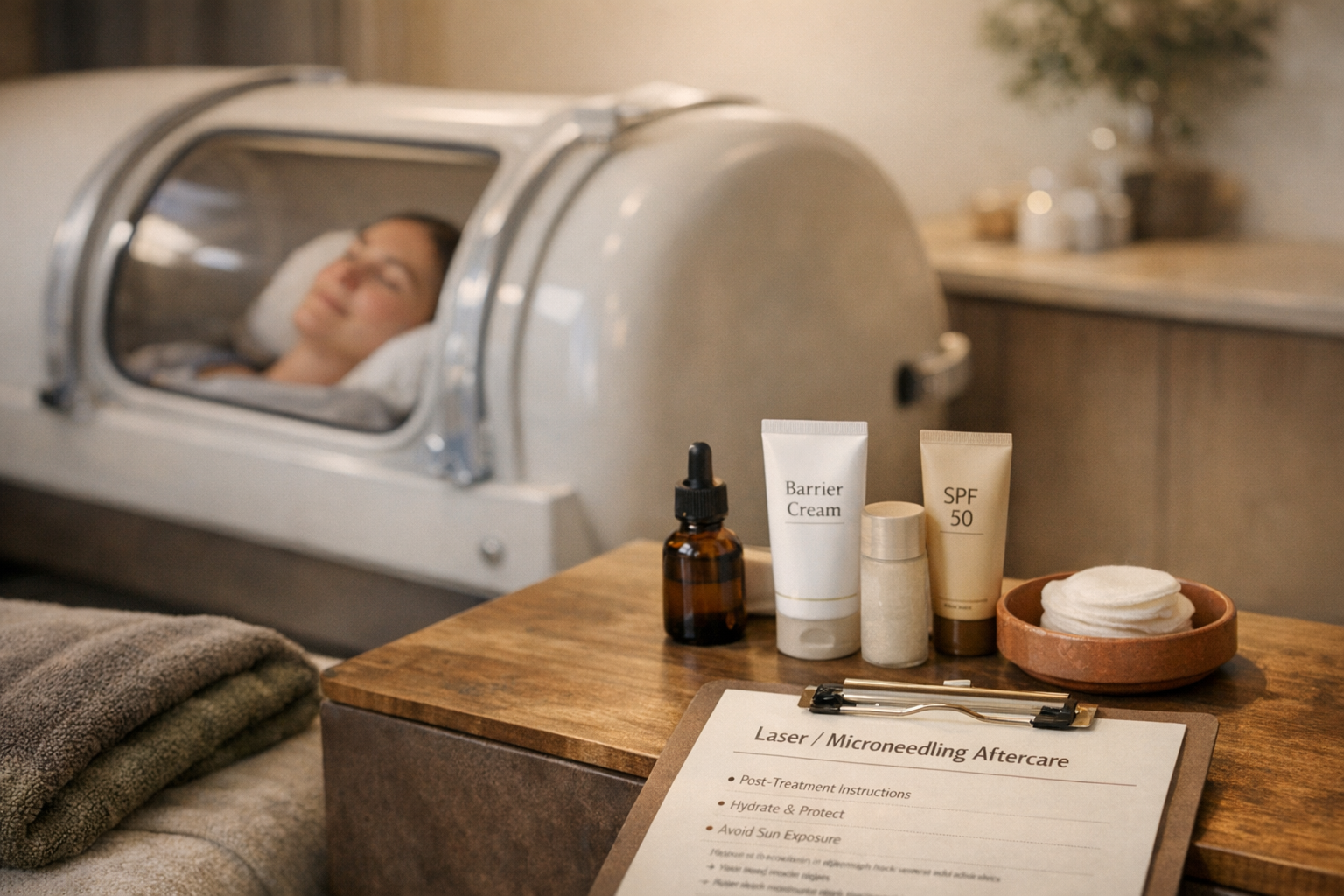
HBOT for Skin Repair After Aesthetic Treatments: A Practical Guide
Introduction
You’ve invested time (and usually a fair bit of money) into an aesthetic treatment, so it’s only natural to want the healing phase to be smooth, comfortable, and predictable. Yet that post-treatment window can feel like a guessing game: How long will the redness last? Is swelling normal? When can you train again? And is there anything evidence-based that may support the skin’s recovery?
Hyperbaric Oxygen Therapy (HBOT) is increasingly discussed in recovery circles because it increases the amount of oxygen your blood can carry for a period of time. In clinical medicine, hyperbaric oxygen has a long history in supporting tissue repair in specific settings. In wellness and performance contexts, many people explore HBOT as part of a broader recovery plan—particularly after skin-stressing aesthetic treatments.
This guide explains, in plain English, how HBOT works, what “skin repair” actually means biologically, how HBOT may fit after common aesthetic procedures, what a sensible timing plan can look like, and what to ask your practitioner. The goal is realistic expectations, not hype.
What “skin repair” really means after aesthetic treatments
Aesthetic treatments vary widely, but many share a common mechanism: they create controlled stress or micro-injury to prompt regeneration.
The key stages of skin recovery
After treatments such as laser resurfacing or microneedling, skin repair generally progresses through overlapping phases:
- Inflammation (hours to days): redness, heat, swelling, tenderness. Immune cells clear debris and signal the next steps.
- Proliferation (days to weeks): new tissue formation, re-epithelialisation (surface repair), and early collagen production.
- Remodelling (weeks to months): collagen fibres reorganise, skin texture and tone continue to improve.
Oxygen is relevant at every stage because healing tissues have high energy demands. However, “more oxygen” is not automatically better in every situation—timing, dose, and overall recovery habits matter.
Why oxygen matters for skin physiology
Your skin relies on microcirculation—tiny blood vessels delivering oxygen and nutrients. After many aesthetic treatments, there can be temporary swelling and vascular changes that alter oxygen delivery. Oxygen supports:
- Cellular energy production (ATP) needed for repair processes
- Fibroblast activity, which is involved in collagen and extracellular matrix production
- Angiogenesis signalling, the formation of new microvessels in tissue repair pathways
- Immune function, as certain immune cells use oxygen-dependent mechanisms
HBOT doesn’t “force” healing, but by temporarily raising oxygen availability it may support the body’s normal repair pathways.
What is HBOT (Hyperbaric Oxygen Therapy)?
HBOT involves breathing oxygen in a pressurised chamber. Under pressure, more oxygen dissolves into the plasma (the liquid part of blood), increasing overall oxygen delivery to tissues for a period of time.
A quick, science-backed explanation
At higher atmospheric pressure, the body can carry more oxygen beyond what is bound to haemoglobin. This increased dissolved oxygen can improve diffusion into tissues—particularly relevant in areas where circulation is challenged or metabolic demands are high.
HBOT vs “oxygen therapy” (important distinction)
Not all oxygen experiences are HBOT.
- HBOT: oxygen delivered under increased pressure in a regulated environment.
- Normobaric oxygen: oxygen at normal atmospheric pressure (e.g., a mask or nasal cannula).
- Oxygen bars: generally not comparable in dosing, clinical protocols, or evidence base.
If you’re considering HBOT for recovery support, it’s worth ensuring the protocol is genuinely hyperbaric, supervised, and appropriate for your health status.
How HBOT may support skin repair after aesthetic treatments
In medicine, hyperbaric oxygen is used in defined situations (e.g., complex wounds, compromised grafts/flaps, radiation injury) where oxygen delivery is a limiting factor. Aesthetic recovery is different, but there are plausible mechanisms by which HBOT may be helpful as part of a well-designed plan.
Potential benefits that may be relevant post-procedure
HBOT may support:
- Tissue oxygenation during periods of increased demand
- Management of swelling by supporting microcirculatory function (individual responses vary)
- Comfort during recovery for some people, particularly those who feel “run down” after procedures
- Overall recovery capacity when combined with sleep, hydration, and good nutrition
It’s not a substitute for your aesthetic clinician’s aftercare (like barrier repair, sun avoidance, or infection prevention), but it can be an adjunct.
What HBOT is unlikely to do
To keep expectations grounded, HBOT is unlikely to:
- Replace appropriate skincare and photoprotection
- “Erase” complications if aftercare instructions aren’t followed
- Guarantee faster healing for everyone
- Be appropriate immediately after every procedure in every person
Your starting health, the intensity of the treatment, and how you recover generally (sleep, stress load, alcohol intake, exercise, nutrition) will heavily influence outcomes.
Which aesthetic treatments might pair well with HBOT?
The more a treatment challenges the skin barrier or induces significant inflammation, the more people tend to ask about recovery support.
Common procedures where HBOT is often considered
HBOT is most commonly explored after:
- Laser treatments (fractional, resurfacing, pigment/vascular lasers)
- RF microneedling and microneedling
- Medium to deeper chemical peels
- Surgical or minimally invasive procedures where swelling and tissue recovery are a key concern (always confirm timing with your surgeon)
Injectables: fillers and toxin
For botulinum toxin injections, recovery is usually minimal and HBOT is often unnecessary.
For dermal fillers, the decision is more nuanced. Most people do well with standard aftercare, and any additional therapies should be agreed with the injecting clinician—particularly if bruising, swelling, or vascular concerns are present.
A practical timing guide: when to do HBOT around your treatment
There isn’t a one-size-fits-all HBOT schedule for aesthetic recovery. Protocols depend on chamber type, pressure, session length, and your goals. That said, a sensible framework can help you plan.
Option A: Pre-conditioning (before your treatment)
Some people consider HBOT in the days or week leading into a procedure to support general recovery capacity.
- When it may suit: higher-intensity procedures, busy schedules, frequent travel, or when you want to arrive at treatment well-rested
- Typical approach: a small series of sessions prior to the procedure
- Why it may help: improved oxygen availability during the peri-procedural period may support tissue readiness
Option B: Early recovery support (after your treatment)
This is the most common question: “Can I do HBOT right after?”
- Best practice: follow the instructions of your aesthetic practitioner first
- Considerations: infection risk management, skin barrier status, and comfort during chamber time
- Typical approach: sessions starting within a timeframe agreed by your clinician, then spaced over days to a couple of weeks
Option C: Remodelling phase support (weeks later)
For some treatments, the real improvements are happening beneath the surface over weeks.
- When it may suit: collagen-inducing treatments where you’re supporting overall recovery and performance habits
- Typical approach: periodic sessions as part of a broader plan (sleep, protein intake, strength training, stress management)
A simple, decision-based checklist
Consider HBOT as an add-on when:
- Your procedure is moderate-to-high intensity (laser resurfacing, deeper peels, aggressive microneedling/RF microneedling).
- You tend to swell or bruise noticeably.
- You have limited downtime and want to support recovery behaviours.
- Your clinician confirms it’s appropriate with your specific treatment and medical history.
What a typical HBOT session feels like
If you’ve never done it, HBOT can sound intimidating. Most people find it surprisingly straightforward.
What to expect
- You’ll enter a pressurised chamber and breathe oxygen.
- You may notice ear pressure similar to flying; you’ll be guided on equalising techniques.
- Sessions vary in length, commonly around 60–90 minutes depending on the protocol.
- Many people read, listen to audio, or simply rest.
How you might feel afterwards
People often report feeling relaxed or clear-headed. Some feel a bit tired, which can be normal after passive recovery interventions. Your experience will depend on sleep, stress, hydration, and how intense your aesthetic treatment was.
Safety first: who should be cautious with HBOT?
HBOT is generally well-tolerated when appropriately delivered and screened, but it is not for everyone.
Common considerations and contraindications to discuss
Always disclose:
- Ear or sinus issues (difficulty equalising pressure)
- Lung conditions (your provider will screen carefully)
- Recent chest infections
- Claustrophobia (many centres can help with acclimatisation)
- Certain medications (your provider will advise)
- Pregnancy (protocols vary—this requires medical oversight)
Potential side effects
Possible effects can include:
- Ear discomfort or barotrauma if pressure cannot be equalised
- Temporary fatigue
- Sinus pressure
- Rarely, more significant complications (risk depends on protocols and individual factors)
Choose a provider with clear medical screening, experienced staff, and transparent protocols.
Evidence, expectations, and what we can responsibly say
HBOT has established medical uses in wound healing and tissue recovery where oxygen delivery is impaired. When it comes to post-aesthetic “skin repair”, the evidence base is still emerging and often indirect.
How to interpret the science without overpromising
It’s reasonable to say HBOT:
- has plausible mechanisms relevant to repair and recovery
- is used clinically for certain tissue-healing indications
- may support recovery when used appropriately alongside standard aftercare
It’s not responsible to say it will guarantee faster healing, prevent complications, or produce specific aesthetic results.
Your at-home recovery plan (the non-negotiables)
If you do nothing else, these are the fundamentals that meaningfully influence skin repair.
1) Protect the barrier
- Use a gentle cleanser (or just water initially if advised)
- Apply a simple barrier moisturiser recommended by your clinician
- Avoid harsh actives (retinoids, strong acids, benzoyl peroxide) until cleared
2) Prioritise photoprotection
UV exposure can prolong redness and pigment changes.
- Use broad-spectrum SPF as instructed
- Consider hats and shade as your first line during early healing
3) Sleep like it’s your treatment plan
Aim for consistent sleep timing and a cool, dark bedroom.
- If swelling is an issue, modest head elevation can help
4) Eat for recovery (not perfection)
Focus on:
- Protein at each meal to support tissue turnover
- Colourful plants for polyphenols and micronutrients
- Omega-3 sources (food-first unless advised otherwise)
- Adequate hydration, particularly if you’re reducing caffeine/alcohol
5) Train smart
Depending on the procedure, you may need to avoid heat, sweating, swimming, and intense exercise for a period.
- Swap HIIT for walking or mobility work temporarily
- Resume training progressively once cleared
How LIVBETTER approaches HBOT for post-aesthetic recovery
At LIVBETTER, we take a performance-minded but clinically sensible approach: HBOT is considered a supportive tool, not a shortcut. If you’re exploring HBOT after an aesthetic treatment, we’d typically:
- Screen your medical history and pressure tolerance considerations
- Discuss your procedure type, timing, and aftercare instructions
- Build a session plan that fits your recovery window and schedule
- Coordinate with your aesthetic clinician where appropriate
The aim is to make recovery feel more supported and less stressful—without disrupting your life.
Questions to ask before booking HBOT after your procedure
Bring these to your HBOT provider and your aesthetic clinician:
- When is the earliest safe time to start HBOT after my specific treatment?
- How many sessions are recommended, and why?
- What pressure and session length will be used?
- What are the key safety checks and contraindications?
- What should I avoid on treatment days (exercise, alcohol, flying, skincare actives)?
- How will we track whether it’s helping (comfort, swelling, downtime, general recovery)?
Final thoughts
Great aesthetic outcomes are built on two things: an excellent procedure and excellent recovery. HBOT is one option that may support skin repair by temporarily increasing oxygen availability—potentially helping your body do what it already knows how to do.
If you’re considering HBOT after a laser session, microneedling course, or peel, treat it like any serious wellness tool: align it with your clinician’s aftercare, time it sensibly, and keep expectations realistic. Done well, it can be a calm, structured addition to your recovery plan—especially when life is busy and your downtime is precious.
Next Steps
Want to learn more? Check out these articles:
HBOT for Skin Repair After Aesthetic Treatments [Guide]
HBOT for Skin Repair After Aesthetic Treatments: A Clinician’s Guide
HBOT and Compression Therapy for Recovery: A Practical Guide
Check out our Therapies to see which options fit your goals.