
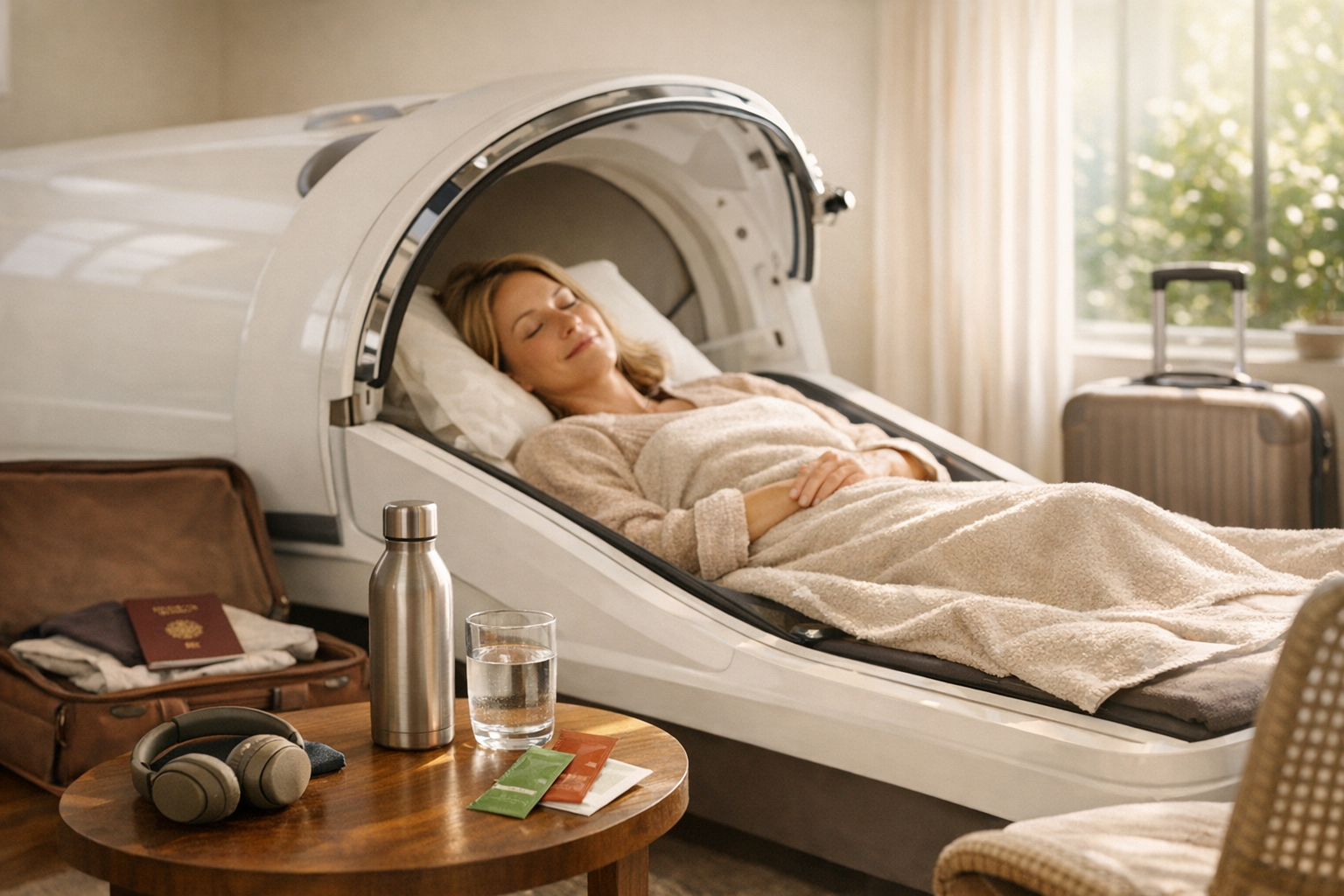
HBOT for Post-Travel Recovery [Guide to Reset Fast]
Why travel can leave you feeling “off” for days
Ever come back from a trip and think, “I had a great time… so why do I feel like I’ve been hit by a lorry?” You’re not imagining it. Even enjoyable travel can create a perfect storm of stressors: disrupted sleep, dehydration, long periods of sitting, unfamiliar food, higher alcohol intake, time-zone shifts, and exposure to new germs. Add a packed diary and straight back-to-work pressure, and it’s no wonder your energy, mood and focus can wobble.
This guide is a practical, science-informed approach to post-travel recovery—with a particular focus on HBOT (hyperbaric oxygen therapy) as an optional tool to help you bounce back. We’ll cover what’s happening in your body after travel, what you can do at home in the first 72 hours, and how HBOT may support recovery as part of a broader plan.
What “post-travel recovery” really means (and why it matters)
Post-travel recovery is less about “detoxing” and more about restoring normal physiology: stabilising your circadian rhythm, rehydrating, reducing inflammation and oxidative stress from sleep loss, re-establishing healthy digestion, and getting your nervous system out of “go mode”. When you do this well, you typically notice:
- More consistent energy through the day
- Clearer focus and fewer afternoon crashes
- Better sleep onset and deeper sleep
- Reduced bloating and digestive discomfort
- Improved training readiness and muscle recovery
It’s not about chasing perfection; it’s about shortening the “re-entry” period so you can feel like yourself again—without needing a week to recover from a weekend away.
The main stressors that hit your body during travel
1) Sleep disruption and circadian misalignment
Jet lag is the obvious culprit, but even short trips can disturb your circadian rhythm. Late meals, bright airport lighting, screen time, and early alarms all shift your sleep-wake timing. Poor sleep affects glucose regulation, appetite hormones, mood and pain sensitivity. It also increases perceived effort during exercise—so training can feel harder than it should.
2) Dehydration and fluid shifts
Cabin air is dry, and many people under-drink to avoid frequent toilet trips. Add alcohol, caffeine, heat, and higher activity levels, and you can end up mildly dehydrated without realising. Dehydration can contribute to headaches, constipation, fatigue, and “heavy legs”.
3) Long periods of sitting and reduced circulation
Extended sitting can cause fluid pooling in the lower limbs and stiffness through hips, back and neck. Reduced movement also means less lymphatic circulation (which relies on muscular contraction), and for some people it can worsen swelling or leave them feeling sluggish.
4) Digestive disruption (your gut likes routine)
Travel often changes meal timing, fibre intake, and food choices. Combine that with stress and sleep loss, and you can see changes in gut motility—constipation for some, looser stools for others. Even if you’re eating “well”, your gut may need a few days to settle.
5) Immune load and inflammation
Airports and crowded spaces increase exposure to pathogens. Meanwhile, sleep disruption and stress can temporarily dampen immune function. You may not become ill, but you might feel “low-grade off”: sore throat, heavy head, or achy muscles.
Your first 72 hours: the LIVBETTER post-travel reset
Think of this as a gentle protocol rather than a rigid plan. You’re aiming to re-establish predictable signals to your brain and body: light, movement, hydration, and regular meals.
Step 1: Re-anchor your body clock with light (Day 1–3)
- Get outdoor light within 30–60 minutes of waking (even 10–15 minutes helps). If it’s overcast, it still counts.
- Dim lights in the evening and reduce screen brightness 1–2 hours before bed.
- If you’ve travelled across time zones, shift bedtime and wake time gradually rather than forcing an extreme early night.
Why it works: Light is the strongest “zeitgeber” (time cue) for circadian rhythm. Consistent morning light helps reset melatonin timing and can improve sleep quality over subsequent nights.
Step 2: Hydrate strategically (not obsessively)
Instead of downing litres all at once, aim for steady intake across the day. A simple approach:
- Start with 500 ml water in the first hour after waking.
- Include water with each meal.
- If you’ve been sweating, flying, or drinking alcohol, consider electrolytes (especially sodium) to support fluid balance.
Practical tip: If your urine is very dark, that’s a cue to increase fluids. If it’s completely clear all day, you may be overdoing it—particularly if you’re not replacing electrolytes.
Step 3: Eat “boring on purpose” for 24–48 hours
After travel, your gut often does best with familiar, minimally processed meals. Try:
- Protein at each meal (eggs, yoghurt, fish, chicken, tofu, lentils)
- High-fibre plants (berries, oats, leafy greens, legumes—build gradually if you’re bloated)
- Simple carbs if you’re feeling wired or under-recovered (rice, potatoes, oats)
- Fermented foods if you tolerate them (live yoghurt, kefir, kimchi, sauerkraut)
Avoid extremes: Very spicy meals, heavy late-night eating, or a sudden high-fibre surge can backfire if your gut is already irritated.
Step 4: Move to restore circulation (but don’t smash a workout)
Movement is one of the best “recovery multipliers” after travel. The goal is circulation, joint mobility and nervous system downshift.
Try this 12–15 minute reset:
- 3 minutes brisk walk (or gentle cycle)
- 1 minute calf raises
- 1 minute deep squat hold (or supported)
- 1 minute thoracic rotations
- 2 minutes hip flexor stretch (each side)
- 3 minutes easy nasal breathing walk
If you’re an experienced exerciser, consider a Zone 2 session (easy conversational pace) or a technique-focused strength session. Save high-intensity work until you’ve had at least one solid night’s sleep and your resting heart rate feels normal for you.
Step 5: Rebuild sleep pressure the smart way
- Keep naps short (20–30 minutes) and avoid late afternoon naps.
- Stop caffeine after lunch for the first couple of days back.
- Try a warm shower or bath 60–90 minutes before bed to support sleep onset.
Sleep is the foundation—but forcing sleep rarely works. Focus on routine, light exposure and calming cues; sleep quality typically follows.
Where HBOT fits in: a clinically grounded overview
HBOT (hyperbaric oxygen therapy) involves breathing oxygen in a pressurised chamber. Under increased pressure, more oxygen dissolves into the plasma (the liquid part of blood), increasing oxygen delivery throughout the body. In clinical medicine, HBOT is used for specific indications (such as certain wound-healing contexts). In performance and wellness settings, people use it to support recovery, reduce fatigue, and promote tissue repair—with the understanding that responses vary and it’s best viewed as part of a wider recovery plan.
Why oxygen matters after travel
Travel can increase physiological strain: less sleep, more sitting, dehydration, and occasionally higher alcohol intake. These factors may increase perceived inflammation and slow recovery from training or long days on your feet. Supporting efficient oxygen delivery may help the body return to baseline more comfortably.
What HBOT may support (realistic expectations)
While individual experiences differ, HBOT is commonly used with the intention to support:
- Recovery after intense physical demands (long hikes, ski trips, business travel with minimal sleep)
- Reduced feelings of fatigue and “brain fog” in some people
- Tissue repair processes by supporting oxygen availability
- Post-exertional soreness as part of a recovery toolkit
Important note: HBOT is not a substitute for sleep, hydration, nutrition, or medical care. If you’re unwell, it’s vital to address that directly with a clinician.
How HBOT feels (for first-timers)
Most people describe HBOT as relaxing. You’ll sit or lie comfortably while the chamber pressurises. You may feel ear pressure similar to take-off and landing, and you’ll be guided on equalising techniques. Many clients read, listen to audio, or simply rest.
HBOT for post-travel recovery: who might consider it?
HBOT may be worth considering if you:
- Travel frequently for work and struggle to feel “switched on” after flying
- Have demanding trips (multiple time zones, short sleep, heavy schedules)
- Combine travel with sport (events, training camps, hiking or skiing)
- Feel physically drained after travel despite doing the basics well
It’s also a supportive option if you’re trying to maintain performance habits—training consistency, sharp thinking, stable energy—while travel keeps disrupting your routine.
Who should be cautious (or seek medical clearance first)
HBOT isn’t for everyone. You should seek medical advice and discuss suitability if you have:
- Ear or sinus infections, significant congestion, or difficulty equalising ear pressure
- Untreated pneumothorax (collapsed lung) or certain lung conditions
- Recent ear surgery or some forms of chest surgery
- Claustrophobia (many people still do fine with support, but it’s worth flagging)
- Pregnancy (requires individualised medical guidance)
At LIVBETTER, suitability and safety come first. A proper screening process matters.
Timing your HBOT session after travel
There isn’t a single “perfect” schedule, but these timing principles are commonly helpful:
Option A: Same day or next day (for rapid reset)
If you land feeling wired, foggy or heavy, a session within 24 hours may support recovery—especially when paired with hydration, light exposure and a low-intensity walk.
Option B: Day 2–3 (when inflammation and fatigue peak)
Many people notice the “travel hangover” peaks on the second or third day back—particularly after long-haul flights. HBOT here may complement your return-to-training plan.
Option C: A short series after intense trips
If you’ve had a highly demanding week (conferences, poor sleep, hard training or lots of time on your feet), a short run of sessions may be considered. Think of it like a recovery block—not a one-off rescue.
Pairing HBOT with other LIVBETTER-style recovery tools
At LIVBETTER, we’re big believers in stacking simple, evidence-informed habits with targeted therapies. If HBOT is your anchor, consider pairing it with:
Targeted movement and mobility
HBOT may support recovery, but you still need movement to restore circulation and tissue glide. A short daily mobility routine is often enough.
Nutrition that supports repair (without overcomplication)
- Protein: aim for a consistent intake across the day to support muscle repair
- Colour: 2–3 different coloured plants per meal is a simple antioxidant rule of thumb
- Omega-3 rich foods: oily fish a couple of times per week if suitable for you
Stress downshifting (your nervous system sets the tone)
Try a 5-minute protocol once or twice daily:
- Inhale through the nose for 4 seconds
- Exhale slowly for 6–8 seconds
- Repeat for 5 minutes
Longer exhalations can encourage parasympathetic activity, which supports digestion, recovery and sleep.
A simple 7-day post-travel recovery plan
If you like structure, here’s a realistic plan you can adapt.
Days 1–2: Stabilise
- Morning outdoor light + gentle walk
- Hydration with electrolytes if needed
- Simple meals, protein each time
- Early evening wind-down routine
- Optional: HBOT within 24–48 hours if you feel significantly flat
Days 3–5: Rebuild
- Return to normal meal timing
- Add one moderate training session (Zone 2 or technique strength)
- Prioritise bedtime consistency
- Optional: a second HBOT session if recovery still feels sluggish
Days 6–7: Resume performance
- Gradually reintroduce higher intensity training if sleep and energy are stable
- Continue morning light exposure
- Review alcohol and caffeine: keep what serves you, reduce what doesn’t
The goal is not to “do everything”. It’s to choose the few levers that give you the biggest return—then repeat them consistently.
Troubleshooting: common post-travel complaints
“I’m exhausted but I can’t sleep.”
- Get morning light and avoid late naps
- Move gently mid-morning or early afternoon
- Keep dinner earlier and lighter for 1–2 nights
- Try a warm shower 60–90 minutes before bed
“My legs feel heavy and puffy.”
- Walk and do calf raises several times a day
- Hydrate steadily and include electrolytes if appropriate
- Consider compression socks on future flights
“My gut is a mess.”
- Return to familiar meals
- Increase fibre gradually, not all at once
- Prioritise hydration and regular meal timing
“I feel foggy and irritable.”
- Anchor your circadian rhythm with consistent wake time and light
- Keep caffeine modest for 48 hours and avoid it late
- Consider HBOT as a supportive recovery tool, especially after long-haul travel
When to seek medical advice after travel
Most post-travel symptoms are temporary. However, seek urgent medical attention if you experience:
- Chest pain, severe breathlessness, or coughing up blood
- One-sided leg swelling, redness, or pain (especially after long flights)
- High fever, persistent vomiting, or severe dehydration
- Neurological symptoms (confusion, weakness, severe headache)
If symptoms are mild but lingering beyond a week, it’s sensible to speak with a healthcare professional to rule out infection, anaemia, thyroid issues, or other contributors.
How LIVBETTER can support your post-travel reset
If you’re looking for a more structured way to recover after trips, LIVBETTER offers a modern, technology-enabled approach—combining advanced therapies with practical lifestyle support. HBOT can be a helpful option for post-travel recovery, particularly for frequent travellers and performance-minded clients who want to restore energy and clarity without adding complexity to an already busy schedule.
If you’re curious, the best next step is a short consultation to discuss your travel pattern, current symptoms, and what a sensible recovery plan could look like for you.
Key takeaways
- Post-travel recovery is about restoring sleep rhythm, hydration, digestion, movement and nervous system balance.
- Start with the basics in the first 72 hours: light, fluids, simple meals, gentle movement and consistent sleep cues.
- HBOT may support recovery and reduce fatigue for some people, particularly after long-haul or high-demand travel.
- Best results come from combining therapies with consistent habits—rather than relying on any single intervention.
Next Steps
Want to learn more? Check out these articles:
HBOT for Soft Tissue Recovery: A Practical Guide 2
HBOT for Scar Recovery Support: A Practical Guide for Healing
HBOT for Sports Injury Recovery: A Practical Guide 2
Check out our Therapies to see which options fit your goals.