
HBOT for Training Recovery: A Guide for Busy Professionals
Introduction
If your calendar is packed and your training is non-negotiable, recovery can feel like the thing that always gets squeezed. You finish a session late, you sleep “well enough”, you tick the protein box… and yet your legs still feel heavy two days later, your motivation dips, and your next workout becomes more about grit than progress.
Hyperbaric oxygen therapy (HBOT) has become a popular recovery tool in high-performance sport, but it’s increasingly used by busy professionals who want to train consistently without feeling like recovery is a second job. This guide breaks down what HBOT is, what it may (and may not) help with, what the science suggests, and how to use it practically alongside training, sleep, nutrition and stress management.
What is HBOT (and what happens in a session)?
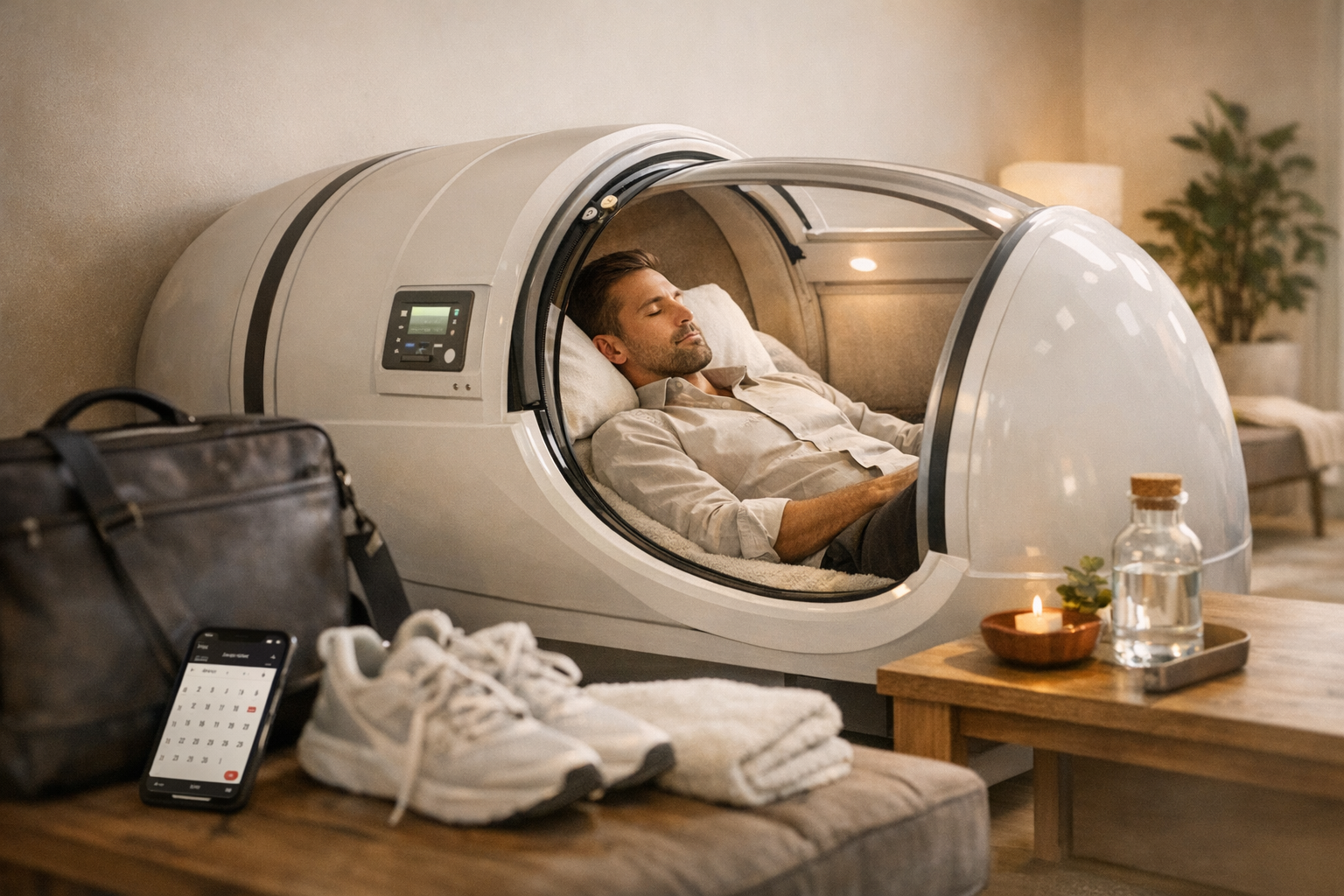
HBOT involves breathing oxygen in a pressurised chamber. The pressure is typically above normal atmospheric pressure, which increases the amount of oxygen dissolved in your blood plasma. In plain English: your body can carry and deliver more oxygen to tissues for a period of time.
Why pressure matters (simple physiology)
At normal pressure, oxygen is mainly carried by haemoglobin in red blood cells. Under increased pressure, more oxygen dissolves directly into the plasma. This can support oxygen delivery to areas where circulation may be temporarily reduced after hard training (for example, in tissues dealing with microtrauma and inflammation).
What a session feels like
Most people describe HBOT as calm and surprisingly easy to fit into the day.
- You’ll sit or lie comfortably in the chamber.
- As pressure increases, you may feel ear pressure (similar to take-off in a plane). You’ll be guided to equalise.
- You breathe oxygen while relaxing—many people read, listen to audio, or simply switch off.
- Sessions often last around 60–90 minutes, depending on the protocol.
At LIVBETTER, the emphasis is on a premium, time-efficient experience that supports real-world schedules—think recovery without the faff.
Why recovery is harder for busy professionals
Training recovery isn’t just about what happens in the gym. It’s what happens between sessions—and for professionals, “between sessions” is often filled with:
- Long workdays and late meetings
- Commutes and travel
- Screen exposure and digital overload
- High cognitive load and stress hormones staying elevated
- Sleep that’s shortened or fragmented
The hidden recovery tax: stress + poor sleep
Even with good programming, stress and poor sleep can slow the processes that rebuild tissue, restore nervous system balance, and replenish energy stores. You may notice:
- Persistent muscle soreness
- Reduced power output
- Heavier perceived exertion at the same pace/weights
- Mood changes and reduced motivation
- More frequent niggles (the “why is that tendon cranky?” problem)
HBOT isn’t a replacement for sleep, smart training, or nutrition. But it may be a useful adjunct—particularly when your lifestyle makes perfect recovery unrealistic.
How HBOT may support training recovery
Let’s keep this evidence-led and realistic. HBOT is not a magic wand. What it may do is support several recovery-related mechanisms that matter when you’re training hard and living harder.
1) Supporting tissue oxygenation
Increased oxygen availability may support tissues that are working through repair and adaptation. Oxygen is involved in cellular energy production and is relevant to how tissues respond after intense workloads.
Where this may be relevant:
- Heavy resistance training blocks
- High-intensity intervals
- Back-to-back training days
- Travel weeks where recovery is compromised
2) Modulating inflammation (not “eliminating” it)
Inflammation isn’t the enemy—it’s part of adaptation. The goal is not to shut it down, but to keep it appropriately regulated.
Some research suggests HBOT may influence inflammatory signalling and oxidative stress balance. Translation: it may support a more efficient recovery environment, especially when lifestyle stress adds extra inflammatory load.
3) Supporting microcirculation and recovery comfort
Hard training creates microtrauma in muscle and connective tissue. Improving oxygen delivery and supporting circulation may help some people feel less “stuck” or heavy after big sessions.
Important nuance: feeling better is helpful, but it doesn’t always equal full tissue readiness. HBOT can be part of the plan, not the only metric.
4) Nervous system downshift (an underrated benefit)
Many busy professionals live in a near-constant “sympathetic” state (wired, alert, reactive). Recovery requires periods of parasympathetic dominance (rest, digest, repair).
While HBOT’s primary mechanism is physiological oxygen delivery, many clients report that the session itself creates a protected window to decompress—quiet, device-free, and structured. That alone can support recovery behaviours.
What does the research say (without the hype)?
HBOT is well-established in certain medical contexts (for example, specific wound-healing indications), and its physiological effects are well understood.
For athletic recovery and performance, the evidence is still developing. Studies vary in chamber pressure, oxygen concentration, population, and outcome measures, which makes sweeping claims inappropriate.
What we can say responsibly:
- HBOT reliably increases oxygen availability in the body during treatment.
- There is emerging evidence that it may support recovery-related processes (inflammation regulation, tissue repair signalling) in some contexts.
- Outcomes in sport/performance settings are mixed, and benefits may be more noticeable for certain individuals, training loads, or recovery constraints.
So if you’re a busy professional: HBOT may be a practical tool to support recovery when your lifestyle limits the basics (sleep, downtime), but it should sit within a comprehensive recovery strategy.
Who HBOT may be most useful for
HBOT may be a good fit if you:
- Train 3–6 days per week and struggle with soreness or heaviness
- Have a cognitively demanding job and feel “tired but wired”
- Travel frequently and notice recovery dips after flights
- Have limited time for recovery modalities (sauna, long mobility sessions, massage)
- Want a structured, measurable recovery routine you can keep consistent
Sports and training styles that often pair well with HBOT
- Strength and hypertrophy blocks
- Hyrox-style training and functional fitness
- Endurance training during high-volume phases
- Team sports with repeated sprint demands
- Racquet sports with frequent weekly play
Who should be cautious (or seek medical advice first)
HBOT is not for everyone. You should seek medical guidance and be properly screened, especially if you have:
- Certain lung conditions or a history of spontaneous pneumothorax
- Uncontrolled respiratory infections or sinus/ear issues that make pressure changes difficult
- Specific contraindicated medications (your provider should review these)
- Claustrophobia (often manageable, but worth discussing)
At LIVBETTER, appropriate screening and safety-first protocols matter. A high-end service should never skip the fundamentals.
HBOT protocols for busy professionals (practical frameworks)
The biggest barrier is usually time. The second biggest is not knowing how to schedule sessions around training.
Below are simple ways to think about HBOT frequency without turning your week into a medical diary.
Framework A: The “High-Load Week” reset (1–2 sessions)
Best for: intense training blocks, high work stress, or travel weeks.
- Book HBOT after your hardest session of the week or the day after.
- Add a second session if you’re stacking sessions or playing sport multiple times.
Framework B: Consistency for cumulative benefit (2–3 sessions)
Best for: people training 4–6 days weekly who want steady recovery support.
- Schedule sessions on your two most demanding training days.
- Keep at least one session midweek to prevent “recovery debt” building.
Framework C: Event or competition support (short block)
Best for: a race, tournament, or a peak training period.
- Consider a short series in the lead-up and/or immediately after, depending on your schedule and how you respond.
- Pair with sleep prioritisation and reduced alcohol for best results.
A useful rule: start conservatively. Track how you feel and perform, then adjust.
How to combine HBOT with the recovery basics
HBOT works best when it complements the pillars that drive adaptation.
Sleep: the non-negotiable
If you can only improve one thing, improve sleep.
Action steps:
- Set a hard “screens down” time 45–60 minutes before bed.
- Aim for a consistent wake time, even on weekends.
- Keep caffeine earlier (many people do best with no caffeine after late morning).
HBOT can be supportive, but it can’t outwork chronic sleep restriction.
Nutrition: recovery-friendly, not complicated
You don’t need perfection—just consistency.
- Prioritise protein distributed across the day (especially around training).
- Include carbohydrate around harder sessions to support training output and replenish glycogen.
- Don’t neglect hydration and electrolytes, particularly if you sweat heavily.
Training programming: avoid accidental overreaching
If you’re always sore, always flat, or always pushing, it may be a programming issue—not a willpower issue.
Practical check:
- Do you have at least one true low-intensity day per week?
- Are you stacking hard leg days with poor sleep nights?
- Are you progressing volume and intensity simultaneously for too long?
A coach or clinician can help you tune this so HBOT becomes an enhancer, not a patch.
Stress downshifts: tiny but frequent
Busy professionals often benefit from short, repeatable downshifts.
Try:
- 5 minutes of nasal breathing after training (longer exhales)
- A 10-minute walk outside after lunch
- A hard stop to work at least 30 minutes before dinner
HBOT can slot into this mindset—scheduled recovery that protects your nervous system.
What to expect: timelines and realistic outcomes
Some people notice they feel looser, calmer, or less heavy after early sessions. Others notice subtler changes over a few weeks—more consistent training quality, fewer “dragging” days, and better tolerance of back-to-back sessions.
Reasonable expectations include:
- Feeling more recovered subjectively after hard weeks
- Better consistency in training output
- A supportive routine that encourages recovery compliance
Unrealistic expectations include:
- Instant performance jumps without training consistency
- “Curing” injuries without addressing load management and rehab
- Replacing sleep, nutrition, and intelligent programming
A simple 7-day recovery plan (with HBOT options)
Use this as a template and adapt it to your training.
Example week for a 4-day training schedule
- Monday (Strength): train + protein-forward meals + 10-minute walk after dinner
- Tuesday (Zone 2 / Mobility): easy aerobic + mobility + earlier bedtime
- Wednesday (Intervals): train + carbohydrate around session + optional HBOT later that day or Thursday
- Thursday (Recovery): HBOT session + light walk + low-stimulation evening
- Friday (Strength): train + hydration focus + relaxed evening
- Saturday (Sport / Longer session): train + post-session meal + feet up
- Sunday (Rest): gentle movement + plan the week + prepare sleep routine
If you only have time for one HBOT session
Put it after your most demanding session or during the most stressful workday week-to-week.
FAQs busy professionals actually ask
“Will HBOT make me sleepy?”
Some people feel deeply relaxed afterwards; others feel normal. If you’re sleep-deprived, you may notice your body takes the chance to downshift.
“Can I do HBOT on the same day as training?”
Often yes. Many people schedule it after training or later in the day. Timing can be personalised based on how you feel and your training goals.
“Is it worth it if I only train three times a week?”
It can be, especially if your job stress is high or sleep is inconsistent. But you’ll still get the best return by tightening the basics first.
“Is it safe?”
HBOT is generally safe when delivered under appropriate clinical oversight with screening and clear protocols. Like any therapy involving pressure, it’s important to assess suitability.
How LIVBETTER approaches HBOT for recovery
At LIVBETTER, HBOT is positioned as part of a modern recovery toolkit for people who want to perform well in real life—training, work, travel, and family included.
Where it fits best:
- As a time-efficient recovery session you can schedule like an appointment
- As support during high-load training phases or high-stress work periods
- As part of a broader plan that includes nutrition, sleep, stress reduction and other advanced therapies where appropriate
If you’re curious, the most helpful next step is a short consult to review your training schedule, recovery bottlenecks, and any medical considerations—so the protocol fits you, not the other way round.
Conclusion
Recovery shouldn’t be another full-time job. For busy professionals who take training seriously, HBOT may offer a practical, science-informed way to support recovery—especially when life limits sleep, downtime, and perfect routine.
Start with the basics, be clear on your goals, and consider HBOT as an adjunct that can help you show up to your next session feeling more ready. Consistency beats intensity here—both in training and in recovery.
Next Steps
Want to learn more? Check out these articles:
HBOT for Post-Travel Recovery: A Practical Guide (2026)
HBOT for Soft Tissue Recovery: A Practical Guide (2026)
HBOT for Scar Recovery Support: Your Guide to Healing
Check out our Therapies to see which options fit your goals.