
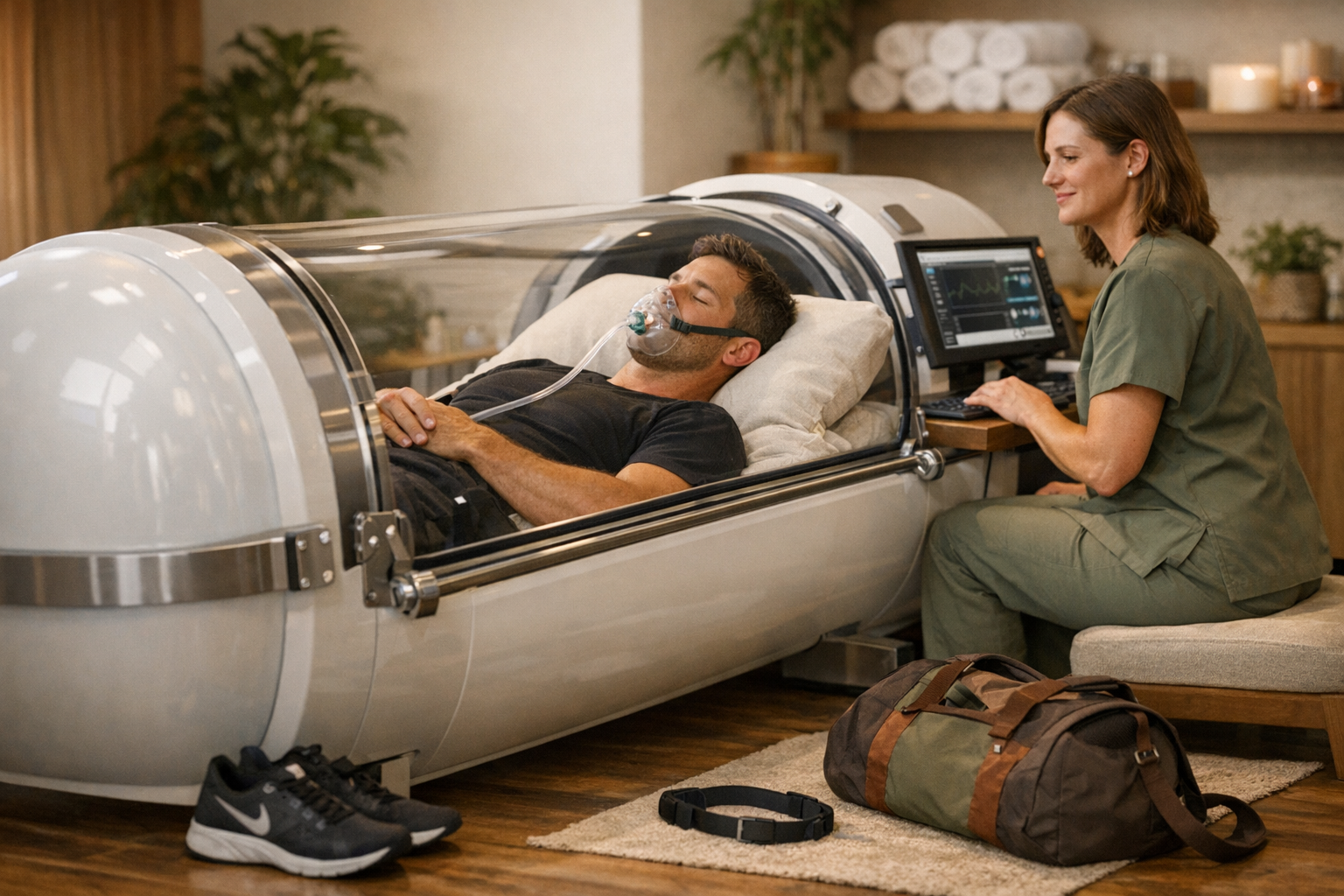
HBOT for Recovery After Intensive Training: Evidence-Based Guide
Hard training is meant to challenge you. But when the “push” never quite turns into “progress”, it’s usually not your motivation that’s missing—it’s recovery. Soreness that lingers, heavy legs that show up too often, sleep that feels shallow, and a general sense that you’re running on fumes are all signs your body is asking for a smarter approach.
One recovery tool you may have seen mentioned in elite sport, biohacking circles, and performance clinics is hyperbaric oxygen therapy (HBOT). It’s not a shortcut and it’s not a replacement for the basics (sleep, fuelling, training design). But used appropriately, HBOT may support recovery by improving oxygen delivery and influencing the biology of tissue repair.
In this guide, we’ll break down what HBOT is, what the research suggests for recovery after intensive training, who it may suit, what a session feels like, and how to integrate it into a realistic recovery plan—without hype.
What “recovery” really means after intensive training
Recovery isn’t just the absence of soreness. After a demanding session (strength, intervals, long endurance, competitive sport), your body is busy with several overlapping processes:
- Micro-damage repair: training causes tiny disruptions in muscle fibres and connective tissue that need rebuilding.
- Inflammation regulation: inflammation is part of adaptation, but excessive or prolonged inflammation can delay recovery.
- Glycogen replenishment: muscles and liver restock carbohydrate stores for future sessions.
- Nervous system recalibration: heavy training affects the balance of sympathetic (“on”) and parasympathetic (“restore”) activity.
- Sleep-driven adaptation: growth factors, immune activity and memory consolidation of movement patterns are influenced by sleep quality.
Most of these processes depend, directly or indirectly, on oxygen availability and circulation. That’s one reason HBOT has gained attention for recovery after intensive training.
What is HBOT (hyperbaric oxygen therapy)?
HBOT involves breathing oxygen in a pressurised chamber. By increasing the pressure around you, more oxygen dissolves into your blood plasma (not just carried by haemoglobin). This can raise the amount of oxygen available to tissues, particularly in areas where circulation may be temporarily compromised after strain or impact.
In clinical medicine, HBOT has established uses for specific indications (for example, certain non-healing wounds). In the performance and wellness world, it’s used more as a supportive modality—aimed at recovery, resilience, and readiness for the next training block.
Hard-shell vs soft-shell: what’s the difference?
You may see different types of chambers:
- Hard-shell (medical-grade) chambers: typically reach higher pressures and can deliver higher oxygen concentrations under controlled protocols.
- Soft-shell chambers: usually operate at lower pressures and often use an oxygen concentrator rather than 100% oxygen.
Pressure and oxygen concentration matter because the physiological effect depends on the “dose” of oxygen under pressure. If you’re comparing options, it’s worth asking what pressure (ATA) the chamber reaches, what oxygen concentration is delivered, and what safety protocols are in place.
How HBOT may support recovery after hard training
When you train intensely, local muscle oxygen levels can drop and metabolic by-products build up. Your body responds by increasing blood flow and initiating repair. HBOT doesn’t “erase” the need for these normal processes, but it may help create an environment that supports them.
1) Increased oxygen availability for tissue repair
Oxygen is required for many steps in healing and adaptation, including collagen synthesis, angiogenesis (formation of new blood vessels), and cellular energy production. By increasing dissolved oxygen in plasma, HBOT may improve oxygen diffusion into tissues during recovery—particularly where swelling or microvascular disruption limits delivery.
2) Inflammation modulation (not elimination)
Inflammation is part of how your body adapts to training. The goal is not to shut it down indiscriminately (which is one reason routine overuse of anti-inflammatories after training is often discouraged). Research suggests HBOT can influence inflammatory signalling and oxidative stress pathways. In practice, this may support a more efficient resolution phase of inflammation—helping you feel “back online” without blunting adaptation when used sensibly.
3) Support for muscle soreness and perceived fatigue
Some athletes report reduced delayed onset muscle soreness (DOMS) and a better sense of readiness after HBOT. The evidence is mixed and varies by protocol, but perceived recovery matters: if you feel more recovered, you’re more likely to move well, sleep better, and train with good mechanics.
4) Recovery of high-demand systems: brain, sleep, and stress load
“Intensive training” isn’t only mechanical load. Many high performers also run high cognitive load: long workdays, travel, screens, and elevated stress. Oxygen availability and autonomic balance can affect sleep quality and mental clarity. While HBOT is not a treatment for stress or burnout, some people find it supports a calmer, more restored feeling—especially when combined with strong sleep hygiene and nutrition.
What the science says (and what it doesn’t)
HBOT has a strong medical evidence base for certain clinical conditions, but sports recovery research is more variable. Studies differ in chamber type, pressure, oxygen concentration, number of sessions, and the type of training stress tested (endurance vs strength vs impact).
Overall, the research suggests HBOT may offer recovery benefits through oxygen delivery and modulation of inflammatory processes, but results are not uniform and the ideal “dose” for post-training recovery is not yet definitive. The most realistic, evidence-aligned approach is to view HBOT as a supportive tool that may help certain people in certain phases—rather than a guaranteed performance enhancer.
When HBOT may be particularly useful
- High training density: multiple hard sessions per week, two-a-days, or tournament schedules.
- Travel and sleep disruption: when recovery resources are compromised and you need additional support.
- Return-to-training phases: when you’re rebuilding capacity and want to support tissue quality (under appropriate clinical guidance).
- High soreness tendency: people who reliably get heavy DOMS and struggle to bounce back.
When expectations should be more conservative
- Under-fuelling or low protein intake: no therapy replaces adequate nutrition.
- Chronically poor sleep: HBOT may support recovery, but it won’t substitute for consistent sleep.
- Overtraining patterns: if you’re in a persistent energy deficit with performance decline, the priority is a training and lifestyle reset.
Is HBOT allowed in sport?
Rules vary by sport and governing body. Historically, HBOT has generally been permitted, but it’s always wise to check current regulations if you compete under anti-doping codes. HBOT is not a supplement and does not involve prohibited substances; it’s a modality that changes environmental pressure and oxygen exposure.
What an HBOT session feels like
If you’re new to HBOT, the idea of a chamber can sound more intense than it is. Most people find sessions relaxing.
Typical experience
- Preparation: you’ll be briefed on safety, what to wear, and what to expect. You may be asked to avoid certain skincare/hair products depending on the clinic protocol.
- Pressurisation: as the chamber pressure increases, you’ll feel ear pressure similar to take-off in an aeroplane. You’ll be guided to equalise (swallowing, gentle jaw movement, or a specific technique).
- Oxygen period: you’ll breathe oxygen while resting. Many people read, listen to a meditation, or simply switch off.
- Decompression: pressure gradually returns to normal. Ears may need equalising again.
How long does it take?
Session length depends on protocol, but many are around 60–90 minutes. Recovery-focused programmes may use a series of sessions rather than a one-off, because cumulative exposure can matter.
Safety, suitability, and who should avoid HBOT
HBOT is generally well-tolerated when delivered in a professional setting with appropriate screening. That said, it’s not for everyone.
Common considerations
- Ear/sinus issues: difficulty equalising pressure can make HBOT uncomfortable. Recent colds, sinus infections, or severe hay fever may require rescheduling.
- Claustrophobia: some people feel anxious in enclosed spaces; many clinics can help you acclimatise gradually.
- Lung conditions: certain untreated lung issues can increase risk under pressure and must be screened for.
- Pregnancy: policies vary; many providers avoid non-essential HBOT during pregnancy unless medically indicated.
Important: always disclose your medical history and medications. A reputable clinic will conduct a thorough pre-session assessment and explain risks clearly.
How to use HBOT for recovery after intensive training
The “best” timing depends on your training style and your recovery bottlenecks. Here are practical, evidence-informed ways to think about it.
Option A: A recovery block during peak training load
If you’re in a high-volume or high-intensity phase, consider HBOT as a short supportive block to help you maintain training quality.
- When: during your hardest 2–4 weeks of a programme.
- Goal: support recovery so you can hit key sessions with better readiness.
- How to pair it: keep nutrition and sleep consistent; don’t use HBOT to justify adding more intensity.
Option B: Post-competition or tournament recovery
When you’ve accumulated fatigue (travel, disrupted sleep, repeated efforts), HBOT may help you feel more restored.
- When: within 24–72 hours after competition, depending on logistics and how you feel.
- Goal: accelerate return to baseline so you can train normally again.
Option C: As part of a “repair and rebuild” phase
If you’re managing recurring niggles, HBOT may be considered as part of a broader plan with physio, progressive loading, and recovery hygiene. It’s not a substitute for rehab, but it may support tissue environment.
Practical timing tips
- Don’t neglect the window after training: within a few hours post-session, prioritise protein, carbs (if appropriate), and hydration first.
- Choose days that matter: place HBOT around your toughest sessions or when soreness typically peaks (often 24–48 hours after unaccustomed load).
- Track response: note sleep quality, soreness ratings, resting heart rate, HRV (if you track it), and how your warm-up feels.
HBOT vs other recovery tools (and how to combine them)
Most athletes do best with a recovery “stack” that’s simple, consistent, and evidence-led. Here’s how HBOT fits alongside common tools.
Sleep: the non-negotiable
If you only optimise one thing, optimise sleep. HBOT may complement sleep by supporting relaxation and recovery physiology, but it won’t outwork a chronically short night.
Action steps:
- Keep a consistent wake time, even on rest days.
- Get 10 minutes of daylight exposure in the morning.
- Limit intense training late evening if it disrupts sleep onset.
Nutrition: build the raw materials
Recovery requires energy, amino acids, and micronutrients. Under-eating is one of the fastest routes to slow recovery and poor adaptation.
Action steps:
- Aim for a protein-containing meal within a couple of hours after hard training.
- Include carbohydrates after intense sessions to support glycogen restoration (amount depends on your goals and training).
- Hydrate and replace electrolytes when you sweat heavily.
Cold water immersion: use strategically
Cold exposure can reduce soreness and perceived fatigue, but frequent use immediately after strength/hypertrophy sessions may interfere with some adaptation signals in certain contexts. It’s a tool, not a default.
Where HBOT may differ: HBOT focuses on oxygen delivery and cellular environment rather than aggressively dampening inflammation. Many athletes use cold for “feel better now” and HBOT for deeper recovery support—timing and goals matter.
Compression and active recovery
Gentle movement (walking, easy cycling) and compression can support circulation and reduce stiffness. HBOT may be a useful addition when you need more than the basics—particularly during heavy load or when recovery time is limited.
A realistic recovery plan you can start this week
If you’re considering HBOT for recovery after intensive training, start by tightening the fundamentals, then add HBOT where it makes sense. Here’s a simple, high-yield plan:
Step 1: Pick one key marker to track for 14 days
- Morning resting heart rate
- Sleep duration and quality (subjective score 1–10)
- DOMS score (1–10) and how long it lasts
- Warm-up “readiness” (heavy/light feeling)
Step 2: Upgrade your post-training routine (10 minutes)
- Hydrate (include electrolytes if you sweat a lot).
- Protein + carbs (as appropriate) within 2 hours.
- 5–10 minutes easy movement and mobility to downshift.
Step 3: Consider HBOT during your highest-demand week
If your markers suggest you’re not bouncing back, that’s the moment HBOT may be most useful. A short series of sessions is often more meaningful than a single session, depending on your goals and schedule.
What to look for in an HBOT provider
Because HBOT involves pressure and oxygen, professional standards matter. When choosing a provider, consider:
- Clinical oversight and screening: there should be a clear medical questionnaire and safety briefing.
- Transparent protocol: pressure (ATA), oxygen delivery, session duration, and number of sessions should be explained.
- Hygiene and maintenance: a clean environment and well-maintained equipment.
- Clear contraindications: reputable providers will happily tell you when HBOT is not appropriate.
- Integration mindset: the best clinics talk about sleep, training load, and nutrition too—not just the chamber.
How LIVBETTER approaches HBOT for recovery
At LIVBETTER, we’re interested in recovery that actually fits real life: demanding jobs, tight diaries, and training goals that matter. HBOT can be a valuable part of a performance-oriented recovery plan, but we position it as one tool within a broader, evidence-based strategy that includes stress management, nutrition support, and smart training habits.
If you’re curious about whether HBOT could support your recovery after intensive training, the most useful next step is a quick conversation about your training week, sleep, and recovery bottlenecks. From there, we can suggest a sensible protocol and help you track whether it’s making a meaningful difference for you.
FAQs: HBOT for training recovery
Will HBOT stop DOMS?
It’s unlikely to “stop” DOMS completely. Some people experience less soreness or faster return to baseline, but responses vary. Think “may support recovery”, not “guaranteed soreness-free training”.
How many sessions do I need?
It depends on your load, goals, and how you respond. Some people notice benefits after a few sessions; others use HBOT in short blocks during peak training. A provider should tailor this rather than using a one-size-fits-all plan.
Can I do HBOT on the same day as training?
Often yes, but timing matters. Many people prefer later in the day or on a rest/recovery day. If you’re trialling HBOT, keep the rest of your routine consistent so you can evaluate the effect.
Is HBOT the same as breathing oxygen at home?
No. The pressure is a major part of the therapy. Pressurisation allows more oxygen to dissolve into plasma, which changes delivery to tissues in a way standard breathing does not replicate.
The bottom line
Recovery after intensive training is where progress is built. HBOT is not a magic fix, but it is a scientifically plausible, clinically used modality that may support recovery—particularly when training load is high, schedules are tight, and you need to stack the odds in your favour.
If you’re already doing the basics well and you still feel like you’re not bouncing back, HBOT could be a worthwhile addition to your recovery toolkit. Aim for measured expectations, good tracking, and a plan that fits your training—not the other way round.
Next Steps
Want to learn more? Check out these articles:
Facelift and HBOT: Healing, Recovery and Skin Support
Tummy Tuck and HBOT: A Smarter Recovery Plan Guide
Liposuction and HBOT: A Science-Led Recovery Plan
Check out our Therapies to see which options fit your goals.