
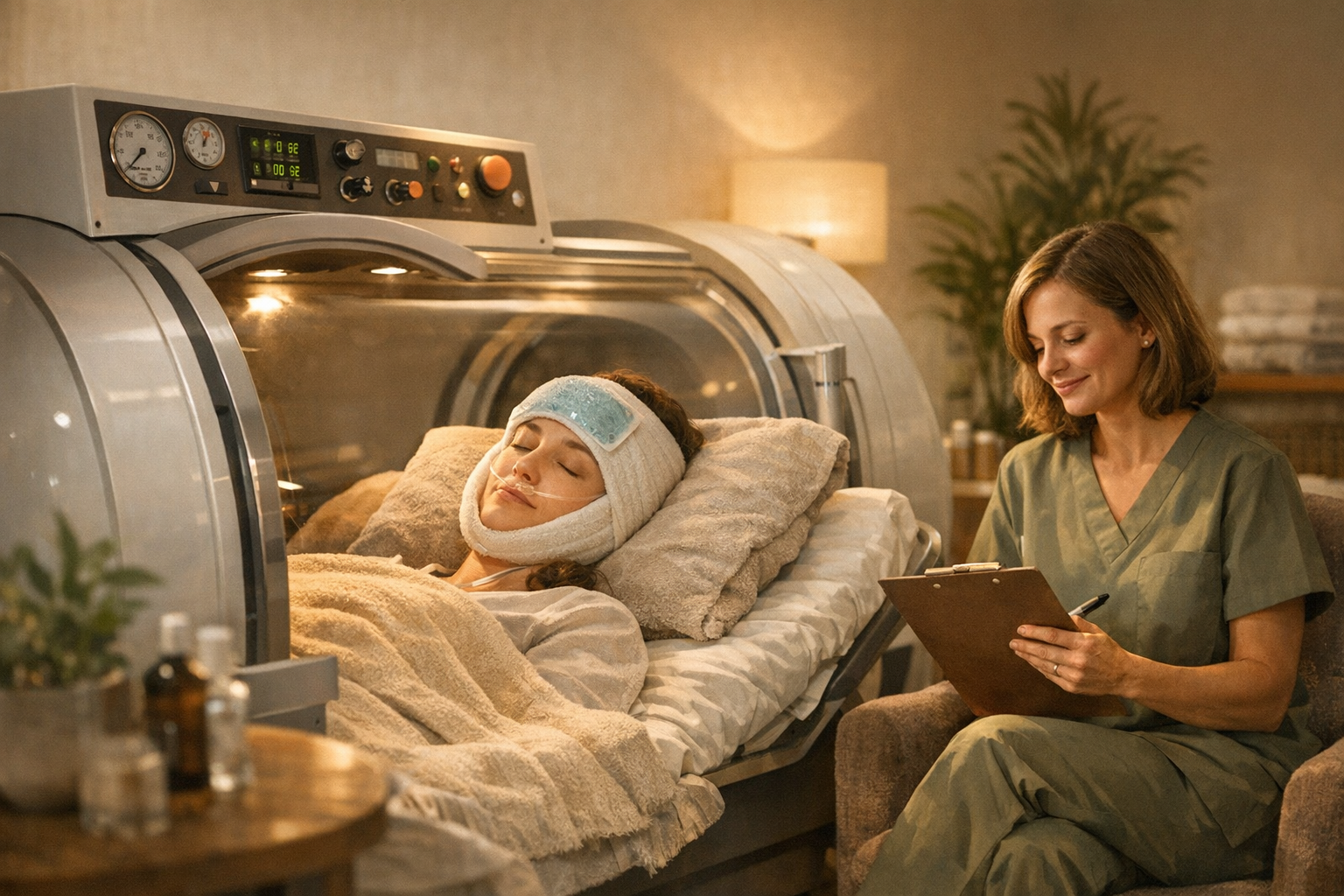
Facelift and HBOT: Healing, Recovery and Skin Support
If you’ve booked (or are considering) a facelift, you’re probably thinking about results: a natural lift, smoother contours, and looking well-rested rather than “done”. What many people don’t realise is that the outcome is shaped not only by the surgeon’s skill, but also by how well your tissues heal in the days and weeks afterwards. That’s where HBOT—Hyperbaric Oxygen Therapy—often enters the conversation.
HBOT isn’t a beauty gimmick. It’s a medical-grade therapy used in healthcare settings to support wound healing by increasing oxygen delivery to tissues. In aesthetic medicine, it’s sometimes used as an adjunct to help manage post-procedure recovery—particularly bruising, swelling, and overall tissue repair.
In this guide, we’ll look at how facelift healing works, what HBOT is actually doing physiologically, where the evidence is strongest, and what a sensible, realistic plan could look like if you’re exploring HBOT as part of your facelift recovery.
What a facelift involves (and why recovery is variable)
A facelift (rhytidectomy) typically repositions facial tissues to improve sagging along the jawline, cheeks, and neck. Modern techniques often address deeper layers (such as the SMAS—superficial musculoaponeurotic system) for a more natural, longer-lasting result.
Even with the most refined surgical technique, a facelift creates controlled tissue trauma. Healing depends on:
- Blood supply and microcirculation
- Inflammation and immune signalling
- Collagen formation and tissue remodelling
- Lymphatic drainage (which affects swelling)
- Individual factors such as age, smoking status, stress, sleep, and nutrition
Two people can have the same procedure and a completely different recovery profile. That variability is one reason supportive, evidence-informed recovery strategies matter.
What is HBOT (Hyperbaric Oxygen Therapy)?
HBOT involves breathing near-100% oxygen inside a pressurised chamber (typically 1.5–2.5 atmospheres absolute, depending on the protocol). Under pressure, oxygen dissolves more readily into plasma (the liquid part of blood), allowing it to reach tissues more efficiently—especially areas that may be relatively oxygen-poor after surgery.
Put simply: HBOT increases the amount of oxygen your body can deliver beyond what is possible at normal atmospheric pressure.
In clinical medicine, HBOT is used for several recognised indications (such as certain wound-healing scenarios). In the aesthetics space, it’s considered an adjunctive therapy—meaning it may support recovery but does not replace good surgical care or standard post-op instructions.
How HBOT may support facelift recovery
To understand why HBOT is used after cosmetic surgery, it helps to look at the biology of healing.
1) Supporting tissue oxygenation during early repair
After surgery, tissues can experience temporary reduced perfusion (blood flow) due to swelling, microvascular disruption, and the body’s inflammatory response. Oxygen is a key ingredient for:
- Fibroblast activity (cells that help produce collagen)
- Angiogenesis (formation of new blood vessels)
- Epithelial repair (skin and surface tissue restoration)
- Immune defence and infection resistance
HBOT may help by increasing oxygen availability during this period, potentially supporting the normal repair cascade.
2) Helping manage bruising and swelling (indirectly)
Bruising and swelling are largely driven by inflammation, fluid shifts, and small blood vessel leakage. HBOT is sometimes used with the aim of:
- Reducing tissue hypoxia (low oxygen)
- Supporting microcirculation
- Encouraging more efficient tissue recovery
It’s important to be precise here: HBOT is not a guaranteed “bruise eraser”. However, some patients and clinicians report a smoother recovery trajectory when sessions are timed appropriately.
3) Supporting flap viability in select cases
In surgery where skin flaps are involved (as in many facelift techniques), maintaining healthy tissue perfusion is essential. In certain medical contexts, HBOT has been used to support compromised flaps and grafts. This does not mean a routine facelift automatically requires HBOT—most recover well without it. But it helps explain why HBOT is discussed in postoperative care, particularly where tissue quality, circulation, or healing capacity may be a concern.
What does the evidence say?
HBOT has a solid foundation in wound-healing physiology, and there is meaningful medical use for difficult wounds and compromised tissues. For elective cosmetic surgery recovery specifically, the evidence base is growing but mixed, and tends to include:
- Small clinical studies
- Case series
- Extrapolation from reconstructive surgery and wound care literature
The most responsible way to interpret this is:
- HBOT is biologically plausible for supporting healing.
- Some data and clinical experience suggest benefit in recovery quality and tissue repair in selected situations.
- It should be viewed as supportive rather than essential, and outcomes vary.
If you’re considering HBOT around a facelift, the best approach is collaborative: your surgeon’s advice comes first, and any HBOT plan should align with their post-op protocol.
Who may consider HBOT as part of a facelift plan?
HBOT is not “for everyone”, and it doesn’t need to be. It may be worth discussing if you:
- Want to optimise recovery support in a time-sensitive period (e.g., upcoming event)
- Tend to bruise heavily or swell significantly after procedures
- Have a history of slow healing
- Are having a more extensive procedure (e.g., combined facelift and neck lift)
- Are focusing on best-possible tissue support as part of a comprehensive plan
Equally, many people will do extremely well with excellent surgical care, rest, good nutrition, and standard aftercare alone.
When HBOT is not appropriate (and safety considerations)
HBOT is generally well-tolerated when appropriately screened and supervised, but it isn’t suitable for everyone.
Common reasons to avoid or delay HBOT include:
- Untreated pneumothorax (absolute contraindication)
- Certain ear or sinus conditions (pressure changes can be uncomfortable)
- Some lung conditions that increase risk with pressure changes
- Uncontrolled fever or acute infection (depending on scenario)
- Severe claustrophobia (though many modern chambers are more comfortable)
Potential side effects can include:
- Ear pressure or barotrauma
- Sinus discomfort
- Temporary vision changes (typically with repeated sessions)
- Fatigue or light-headedness
A reputable clinic will complete a thorough screening and will advise you to confirm your surgeon is happy for you to proceed.
A practical HBOT timeline for facelift recovery (example framework)
Exact timing varies based on surgeon preference, the type of facelift, and how you’re healing. The following is a general framework often used in supportive recovery planning—not a one-size-fits-all prescription.
Pre-procedure (optional)
Some people choose a small number of sessions before surgery with the aim of optimising tissue oxygenation and readiness. Evidence here is less direct for cosmetic procedures, but some clinicians use it as part of an overall preparation approach.
Post-procedure (more commonly used)
HBOT is often considered after surgery once your surgeon confirms it is appropriate.
Example approach:
- Early phase: 1–3 sessions within the first week (if cleared), aiming to support early tissue oxygenation
- Peak swelling/bruising phase: additional sessions over days 3–10 as needed
- Later phase: occasional sessions in week 2–3 depending on goals and recovery
Your plan should be tailored based on:
- How extensive the surgery was
- How much swelling/bruising you develop
- Skin quality and circulation
- Your schedule and comfort
At LIVBETTER, we focus on practical protocols that fit real lives—especially for busy professionals who want recovery support without turning healing into a full-time job.
HBOT vs “oxygen facials” and at-home oxygen trends
It’s easy to confuse HBOT with beauty treatments that use topical oxygen or mild oxygen delivery at normal pressure.
Key differences:
- HBOT uses a pressurised environment, which is what significantly increases oxygen dissolved in plasma.
- Topical oxygen treatments may feel refreshing and can support skin hydration or temporary glow, but they do not deliver the same systemic tissue oxygenation.
- At-home “oxygen” devices vary widely and are not equivalent to medical-grade hyperbaric therapy.
If your goal is genuine recovery support after surgery, you want a clinically run HBOT service with proper screening and monitoring.
How to support facelift healing alongside HBOT
If you do HBOT, it should sit within a broader recovery plan. In clinic, the people who recover most smoothly usually do the fundamentals consistently.
Here are evidence-informed, surgeon-aligned steps that often help:
1) Prioritise protein and micronutrients
Wound healing is metabolically demanding. Aim for high-quality protein across the day. Nutrients commonly involved in healing include vitamin C, zinc, iron, and copper—but supplementation should be guided by diet and clinician advice, especially around surgery.
Simple, practical options:
- Greek yoghurt with berries
- Eggs and leafy greens
- Lentils, fish, chicken, tofu
- Soups and stews if chewing feels uncomfortable
2) Sleep like it’s part of the treatment plan
During deep sleep, growth hormone and repair processes are supported. Plan for:
- A consistent bedtime
- A cool, dark room
- Head elevation if recommended post-op
3) Reduce alcohol and avoid smoking
Smoking is strongly associated with poorer wound healing and increased complication risk due to vasoconstriction and impaired oxygen delivery. Alcohol can worsen swelling and disrupt sleep.
4) Manage stress (because inflammation listens)
Stress affects cortisol, immune regulation, and recovery behaviours (sleep, food choices, movement). Keep it simple:
- 10 minutes of slow nasal breathing twice daily
- Short walks as cleared by your surgeon
- Light, calming routines rather than intense training
5) Follow surgeon instructions precisely
This sounds obvious, but it’s the highest-impact advice:
- Wound care as directed
- Avoid premature exercise or heat exposure
- Attend follow-ups
- Report unusual pain, asymmetry, fever, or increasing redness promptly
What to ask before booking HBOT for facelift recovery
To make sure HBOT is safe, aligned, and worth your time, consider asking:
- Do you work with post-surgical clients regularly?
- What pressure and session length do you use for recovery support?
- How do you screen for ear, sinus, and lung risks?
- How should sessions be timed relative to surgery and dressings?
- Will you liaise with my surgeon if needed?
- What should I expect to feel during and after sessions?
A good provider will welcome these questions and keep the plan grounded in realistic expectations.
What results can you realistically expect?
With any recovery-support therapy, it’s best to think in terms of probabilities and support—not promises.
HBOT may support:
- A more comfortable recovery experience for some people
- Tissue oxygenation during early healing
- A smoother return to “public-ready” appearance in selected cases
HBOT cannot:
- Replace surgical technique
- Guarantee a specific aesthetic result
- Eliminate bruising or swelling entirely
- Override poor sleep, smoking, or inadequate nutrition
When used thoughtfully, HBOT can be one supportive piece of the puzzle—particularly for people who value performance-oriented recovery and want to do what they reasonably can to help their body heal well.
How LIVBETTER approaches HBOT for aesthetic recovery
At LIVBETTER, we take a clinically responsible, modern approach: we screen carefully, build a plan around your surgery timeline, and focus on safe, practical protocols. If you’re exploring HBOT around a facelift, we encourage you to:
- Confirm your surgeon is happy with HBOT timing
- Share your planned procedure and dates so sessions can be scheduled sensibly
- Treat HBOT as part of a wider recovery strategy (sleep, nutrition, stress, aftercare)
If you’re not sure whether HBOT is appropriate for you, a brief consultation can help clarify suitability and expectations.
Key takeaways
- A facelift result is influenced by healing quality as much as surgical technique.
- HBOT increases oxygen delivery to tissues under pressure and is used in medical settings to support healing.
- For facelift recovery, HBOT may support tissue repair and comfort for selected individuals, but it’s not essential and outcomes vary.
- Safety screening and surgeon alignment are non-negotiable.
- The best results come from combining smart recovery basics with any advanced therapy.
If you’re planning a facelift and want a recovery plan that respects your time and your physiology, HBOT may be a worthwhile option to discuss—calmly, clinically, and with realistic expectations.
Next Steps
Want to learn more? Check out these articles:
Tummy Tuck and HBOT: A Smarter Recovery Plan Guide
Liposuction and HBOT: A Science-Led Recovery Plan
CO2 Laser and HBOT: A Science-Backed Recovery Pairing
Check out our Therapies to see which options fit your goals.