
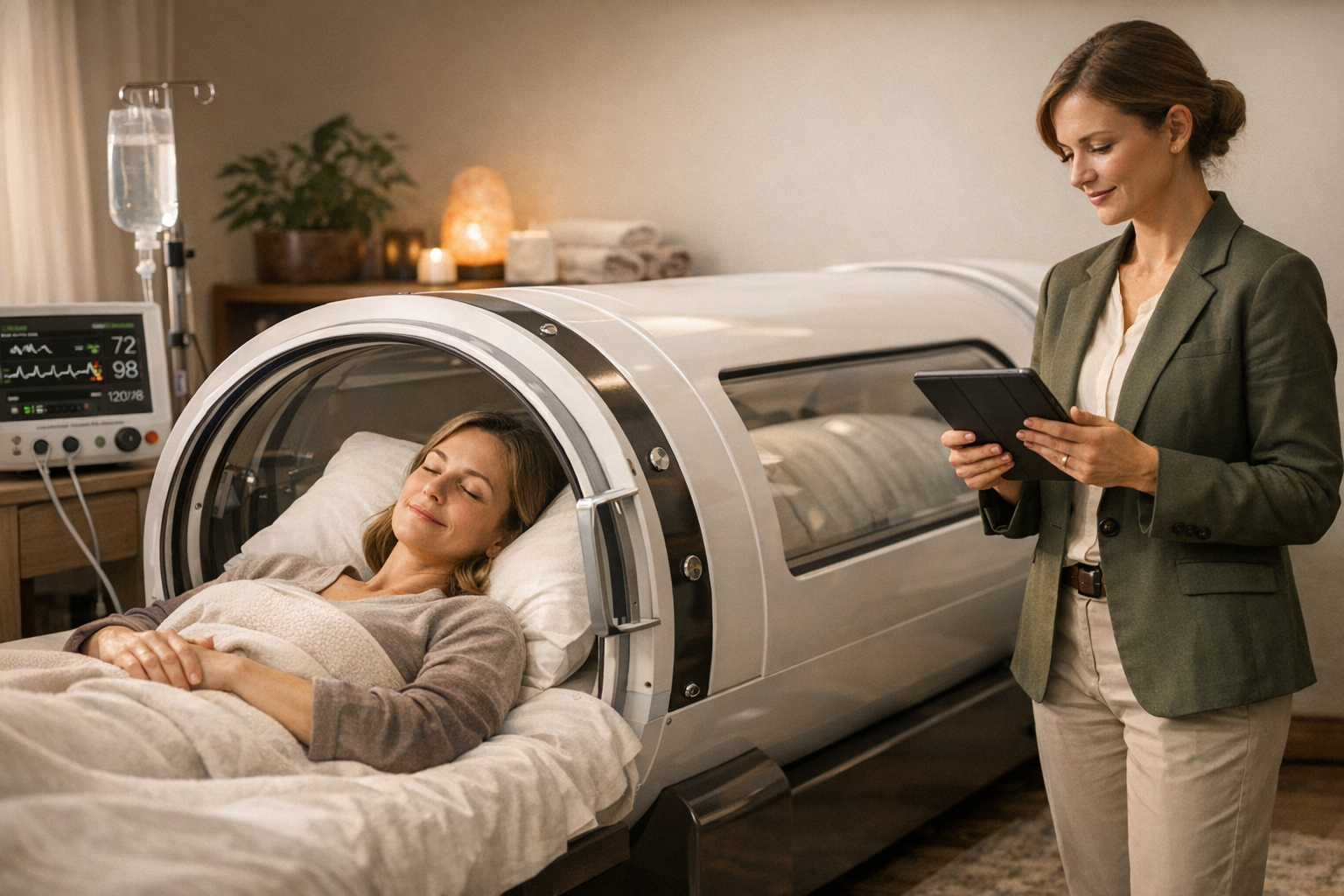
HBOT for Longevity-Focused Recovery: Evidence & Practical Use
If “longevity” sounds like an abstract goal, here’s a more relatable translation: you want your body to bounce back faster, stay resilient under pressure, and keep your brain and energy levels dependable as life gets busier. That’s where recovery stops being a nice-to-have and becomes a strategy.
Hyperbaric oxygen therapy (HBOT) is often discussed in medical settings for specific indications, but it’s increasingly being explored for longevity-focused recovery: supporting the biology that helps you repair, adapt, and perform. The key is separating what HBOT is clearly used for in medicine from what early evidence suggests it may support in generally healthy people who are aiming to function at their best.
In this guide, we’ll break down what HBOT actually does, how it might fit into a longevity-oriented routine, what the science says (and doesn’t say), and how to think about protocols, safety, and realistic expectations—especially if you’re managing stress, poor sleep, heavy training loads, or cognitive fatigue.
What HBOT is (and what it isn’t)
HBOT involves breathing oxygen in a pressurised environment. Increasing the pressure allows more oxygen to dissolve into the plasma (the liquid part of your blood), which can improve oxygen delivery to tissues beyond what’s possible at normal atmospheric pressure.
That’s the core physiological idea: higher pressure + higher oxygen availability = a temporary shift in how oxygen moves through the body.
Two common sources of confusion
- HBOT is not the same as “oxygen therapy” at home. Nasal oxygen or oxygen concentrators can increase oxygen percentage, but without pressure the effect on dissolved plasma oxygen is far smaller.
- HBOT isn’t a guaranteed “anti-ageing” hack. Longevity is multi-factorial: sleep, nutrition, exercise, stress management, social connection, and medical care matter more than any single modality. HBOT can be a supportive tool—ideally used thoughtfully, not worshipped.
Why oxygen under pressure matters for recovery biology
Longevity-focused recovery is less about “feeling good today” and more about supporting the underlying processes that keep you robust over time: tissue repair, vascular function, mitochondrial efficiency, and nervous system balance.
Under HBOT conditions, the body experiences brief, repeated shifts in oxygen availability. Research has explored how these shifts may influence cell signalling, inflammation balance, and repair pathways.
Key mechanisms being studied
- Improved tissue oxygenation: Higher dissolved oxygen may support areas with relatively limited perfusion, especially during recovery and repair.
- Angiogenesis (new blood vessel formation): Some studies suggest HBOT can influence signalling related to vascular growth and tissue remodelling.
- Inflammation modulation: HBOT has been studied for effects on inflammatory markers. The picture is nuanced: inflammation is not “bad”; it’s necessary for adaptation. The goal is appropriate, well-resolving inflammation.
- Mitochondrial and oxidative signalling: Oxygen exposure can influence redox biology. In controlled doses, oxidative signalling can drive adaptive responses; in excess, it can be counterproductive. This is one reason protocols and supervision matter.
Think of HBOT as a “dose-dependent stimulus”. Done properly, it may support recovery capacity. Done haphazardly, it’s less likely to be useful and could be uncomfortable or risky for some people.
HBOT and longevity: what does the evidence actually suggest?
Let’s be refreshingly honest: HBOT is a well-established medical therapy for certain conditions, but using it as a longevity-oriented recovery tool is an evolving area. There are promising findings, but not a single definitive protocol that applies to everyone.
Areas with growing interest
1) Cognitive performance and brain resilience
HBOT has been studied in contexts involving brain metabolism and perfusion. Some research suggests potential benefits for aspects of cognitive function in selected populations. For generally healthy, high-performing adults, the question becomes: could HBOT support mental clarity and reduce the “wired but tired” feeling that comes from stress and insufficient recovery? It may help some people, particularly when paired with fundamentals like sleep consistency and stress regulation.
2) Exercise recovery and training adaptation
Recovery is where training becomes fitness. HBOT is being explored for how it may support recovery from intensive physical workloads via tissue oxygenation and inflammation modulation. It’s not a replacement for programming, nutrition, hydration, and sleep—but it may be a useful add-on during high-volume phases, travel, or when life stress is high.
3) Skin, connective tissue, and repair capacity
Oxygen plays a role in collagen formation and wound healing. In clinical settings, HBOT is used for certain wound-healing indications. In wellness settings, people often seek it for general repair support, particularly if they feel “slow to bounce back”. Expectations should be realistic: HBOT may support the environment for repair, but it doesn’t override poor protein intake, low iron status, or chronic sleep debt.
4) Healthy ageing markers (including telomere-related research)
There has been scientific interest in HBOT’s effects on ageing-related cellular markers in small studies. These findings are intriguing, but they’re not a green light to promise “reversal” of ageing. What they do suggest is that oxygen and pressure exposure may influence biological pathways relevant to ageing, which warrants further research.
What HBOT does not do
- It does not replace a medical evaluation for fatigue, low mood, brain fog, breathlessness, or sleep disruption.
- It does not compensate for alcohol excess, ultra-processed diets, or chronic under-recovery.
- It is not a shortcut for fitness or a guarantee of specific outcomes.
Who might consider HBOT for longevity-focused recovery?
At LIVBETTER, we see “longevity” as the ability to show up well—mentally and physically—year after year. HBOT may be worth considering if you’re broadly healthy but experiencing signs your recovery bandwidth is being exceeded.
You may be a good candidate if you recognise these patterns
- You train regularly and want to support recovery during heavier phases.
- You work long hours, spend significant time on screens, and feel cognitively drained.
- You travel often and notice sleep and energy disruption.
- You’re “healthy on paper” but feel slower to bounce back than you used to.
- You’re proactive and prefer structured, data-informed wellness rather than guesswork.
When you should be cautious or seek medical input first
HBOT is generally well-tolerated when appropriately delivered, but it’s not for everyone. You should discuss suitability with a qualified clinician, particularly if you have:
- Ear or sinus problems (pressure equalisation can be uncomfortable)
- Uncontrolled asthma or certain lung conditions
- A history of spontaneous pneumothorax
- Claustrophobia (some people do fine with preparation and support, others prefer different modalities)
- Recent viral illness with lingering chest symptoms
- Pregnancy (requires clinical decision-making)
Safety and screening aren’t “red tape”; they’re how you make advanced therapies genuinely supportive.
What a typical HBOT experience looks like
For newcomers, the biggest concern is usually: “What does it feel like?” The most noticeable sensation is pressure change, similar to take-off and landing in a plane.
What you’ll typically do during a session
- Settle in comfortably
- Breathe normally (no special breathing techniques required)
- Equalise your ears as needed (swallowing, yawning, gentle techniques)
- Relax—many people listen to audio, meditate, or simply rest
Afterwards, people often report feeling calm or clear-headed, though experiences vary. Some feel energised; others feel ready for a great night’s sleep.
HBOT protocols for longevity-focused recovery: how to think about dosing
In medicine, HBOT protocols are condition-specific. In longevity and performance contexts, protocols are more individual and goal-led. The right approach depends on your baseline health, recovery needs, schedule, and how your body responds.
Principles that matter more than a “magic number”
- Consistency over intensity: A well-tolerated programme repeated over time tends to outperform sporadic “hero sessions”.
- Progressive exposure: If you’re new, starting gently helps you learn ear equalisation and assess response.
- Stacking intelligently: HBOT pairs best with good sleep, protein adequacy, hydration, and stress reduction. Without those, the ceiling is low.
- Monitor your response: Sleep quality, training readiness, mood, and HRV (if you track it) can help you judge whether the dose is appropriate.
Example goals and how HBOT may fit
High-stress professionals: HBOT may support recovery by encouraging a downshift in perceived stress and improving recovery quality when paired with sleep hygiene and nervous system work.
Active adults in heavy training blocks: HBOT may support muscle recovery and overall readiness, especially when training volume and life stress collide.
Longevity-minded individuals: HBOT can be one pillar in a wider plan that includes strength training, cardio fitness, mobility, nutrition, and proactive health screening.
Important: protocols should be personalised by trained staff, with clear goals and review points. More is not always better.
How to combine HBOT with a longevity routine (without overcomplicating life)
The most effective longevity routines are the ones you can sustain. HBOT should fit your schedule, not hijack it.
A practical weekly structure
- Strength training: 2–4 sessions per week (the backbone of healthy ageing)
- Zone 2 cardio: 2–3 sessions per week for cardiovascular and mitochondrial support
- Sleep routine: consistent wake time, light exposure in the morning, reduced late-night screen intensity
- Nutrition basics: protein at each meal, fibre-rich plants, hydration, minimal alcohol
- HBOT: used in blocks (e.g., during travel-heavy months, intense project cycles, or heavier training phases)
Simple action steps to get more from HBOT
- Arrive hydrated (but not overhydrated). Dehydration can worsen headaches and reduce recovery quality.
- Eat a light, balanced meal beforehand. Avoid very heavy meals immediately before sessions.
- Protect your sleep that night. HBOT is not a substitute for sleep; it works best when sleep is prioritised.
- Track one or two markers for two weeks: sleep quality and training readiness, or mood and afternoon energy dip.
- Don’t stack stressors. If you’re doing intense training, sauna, cold exposure, and HBOT all in the same 24 hours, consider whether you’re adding recovery—or just adding more physiological load.
HBOT vs other recovery tools: where it fits
Recovery tools are everywhere: cold plunges, saunas, red light, compression boots, breathwork apps, supplements. Most can be helpful in the right context. The decision point is: what’s the bottleneck in your recovery?
A simple decision filter
- If sleep is poor: start with sleep interventions first. HBOT may complement, but it shouldn’t be your first move.
- If stress is high: combine nervous system practices (breathwork, boundaries, daylight walks) with structured recovery modalities.
- If training load is high: nutrition, hydration, and programming come first; HBOT can support alongside them.
- If you want “whole-system” support: HBOT may be appealing because oxygen delivery and cellular signalling touch multiple domains of recovery.
In short: HBOT is best viewed as an amplifier of good basics, not a replacement for them.
Safety, side effects, and realistic expectations
Most people tolerate HBOT well when screened and supervised, but it’s still a medical-grade modality. Side effects are usually mild and manageable, and the team should brief you thoroughly.
Possible side effects
- Ear pressure or discomfort (most common; improved with coaching and gradual pressurisation)
- Sinus pressure if you’re congested
- Temporary fatigue in some people, especially early in a programme
- Headache occasionally, sometimes linked to hydration or tension
Rare risks exist, which is why proper clinical oversight and adherence to protocols matter.
Setting expectations
- Some people feel benefits quickly (sleep, calm, clarity); others notice changes after a series of sessions.
- HBOT tends to work best when it’s targeted: a defined goal, a defined block, and a review.
- Longevity is a long game. Think “supporting recovery capacity” rather than chasing dramatic, overnight results.
Making HBOT part of a personalised longevity plan at LIVBETTER
LIVBETTER exists for people who want high-end wellness that still respects science and real life. If you’re considering HBOT for longevity-focused recovery, the most helpful approach is to start with clarity:
- What are you recovering from? (training load, stress, travel, poor sleep, cognitive fatigue)
- What would success look like? (better sleep consistency, improved readiness, steadier energy, sharper focus)
- What else needs attention? (nutrition, workload, medical checks, mental recovery)
From there, HBOT can be positioned as one component within a broader, technology-enabled plan—often alongside evidence-based support like nutrition coaching, recovery tracking, and other advanced therapies where appropriate.
A gentle, effective starting point
If you’re new to HBOT, consider a short introductory block with clear check-ins. This allows you to learn the process, assess comfort with pressure changes, and evaluate whether it’s supporting your recovery goals.
Frequently asked questions
Is HBOT the same as a mild hyperbaric chamber?
Not always. “Mild” chambers operate at lower pressures and may deliver different oxygen concentrations. They may still be useful for some goals, but effects and evidence can differ from clinical-grade HBOT. Ask what pressure and oxygen delivery are being used.
Can I do HBOT if I have a cold?
It’s usually best to avoid sessions when you’re congested, because ear and sinus pressure equalisation becomes harder and more uncomfortable. Rescheduling is often the sensible choice.
Will HBOT help my energy?
It may support energy and clarity for some people, particularly if fatigue is linked to under-recovery. If fatigue is persistent, it’s worth checking basics first (sleep, iron status, thyroid function, vitamin B12, stress load) with an appropriate clinician.
How do I know if it’s working?
Choose two measurable outcomes for a few weeks: sleep quality, HRV, training readiness, afternoon slump severity, or focus. Subjective improvements matter, but pairing them with simple tracking reduces guesswork.
The takeaway: HBOT as a modern recovery tool for long-term performance
Longevity-focused recovery is about giving your body the conditions it needs to adapt, repair, and stay resilient—without turning wellness into a second job. HBOT is a compelling tool because it targets oxygen availability and the downstream biology of recovery, and it may complement a well-designed routine for stress, training, and cognitive load.
Used intelligently, HBOT can be part of a comprehensive plan to help you think better, feel better, and genuinely live better—today, and for the long run.
Check out our Therapies to see which options fit your goals.